PHOTO
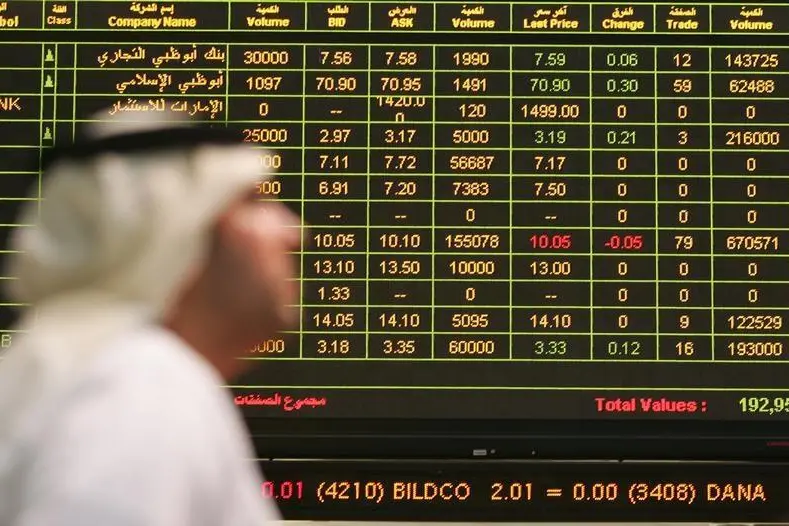
Most Gulf stock markets ended lower on Monday, led by losses in Dubai as the U.S. and Israel's war with Iran weighed on investor sentiment. Over the weekend, Trump threatened further strikes on Iran's Kharg Island — which accounts for roughly 90% of the country's oil exports — after earlier attacks on military targets prompted a defiant response from Tehran and raised the prospect of further retaliation.
Shortly after the attacks on Kharg, Iranian drones struck a major oil terminal in Fujairah, United Arab Emirates. Although oil loading operations at Fujairah have resumed, four sources said it was unclear whether activity has fully returned to normal.
Dubai's main share index declined 2.5%, dragged down by a 4.9% slide in blue-chip developer Emaar Properties and a 1.7% retreat in top lender Emirates NBD .
Since the conflict began, the index has shed more than 18%, bringing its valuation down to 843.25 billion dirhams ($229.61 billion). Citigroup is keeping most branches and offices in the UAE closed until further notice after temporarily closing them last week, the bank said on Monday, the latest sign of the impact on the industry of the Iran war.
Gulf equities are showing a growing divergence as the regional conflict drives a swift repricing of risk amid persistently high trading volumes, said Ahmad Assiri, research strategist at Pepperstone.
"While the overarching narrative remains anchored by energy fundamentals, the price action reveals a market at a crossroads where investor conviction is being tested by shifting security dynamics in critical maritime corridors."
In Abu Dhabi, the index lost 0.2%, hit by a 3.5% drop in Aldar Properties.
Meanwhile, the bourse's market capitalization has shrunk to $771.9 billion, down nearly $77.2 billion from pre-conflict levels.
Earlier this month, the Dubai and Abu Dhabi exchanges introduced a temporary 5% daily downside limit on listed securities and suspended trading on March 2 and March 3, as part of broader measures to curb volatility and maintain orderly market conditions.
Saudi Arabia's benchmark index gained 0.6%, led by a 1.1% rise in the country's biggest lender by assets Saudi National Bank .
According to Assiri, Saudi Arabia's TASI stands out as the region's clearest dip-buying story, with equities showing notable resilience by testing the key 11,000 level before easing slightly ahead of the Eid holiday. The trading pause could offer a timely breather as global efforts intensify to secure energy routes through the Strait of Hormuz.
However, oil major Saudi Aramco eased 0.2%. Oil prices were mixed, with benchmark Brent crude slightly higher and U.S. crude prices down amid attacks on Gulf oil production and Trump's call for global efforts to secure the Strait of Hormuz. The Qatari index fell 1.2%, with Qatar National Bank , the Gulf's biggest lender by assets, losing 2%.
Oman's index was down 0.7% and Bahrain's dropped 1.8%.
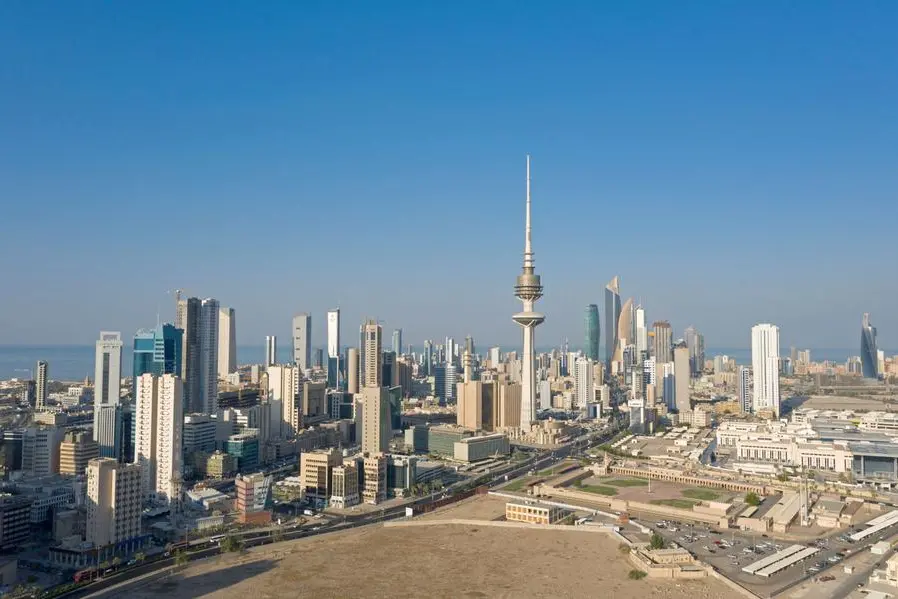
Boursa Kuwait lost 0.4%. Outside the Gulf, Egypt's blue-chip index slipped 1.6%, as most of its constituents were in the negative territory.
($1 = 3.6726 UAE dirham)
(Reporting by Ateeq Shariff in Bengaluru; Editing by Jan Harvey, Bernadette Baum and Leroy Leo)