PHOTO
HSBC secured the top spot in the MENA bond bookrunner ranking for 2025, with $19.2 billion in related proceeds, representing an 11% market share. The bank attributes this record performance to the region’s strong credit story and global investor appetite for the transformation of key markets such as Saudi Arabia and the UAE. HSBC also topped the MENA Islamic bonds league table last year, according to LSEG data.
MENA bond issuance reached $171.1 billion in 2025, up 43% from 2024 and marking the highest annual total since records began in 1980. The number of deals surged 46% year-on-year, surpassing all previous full-year tallies. Saudi Arabia led issuance, accounting for 44% of total proceeds, followed by the UAE at 25% and Qatar at 10%.
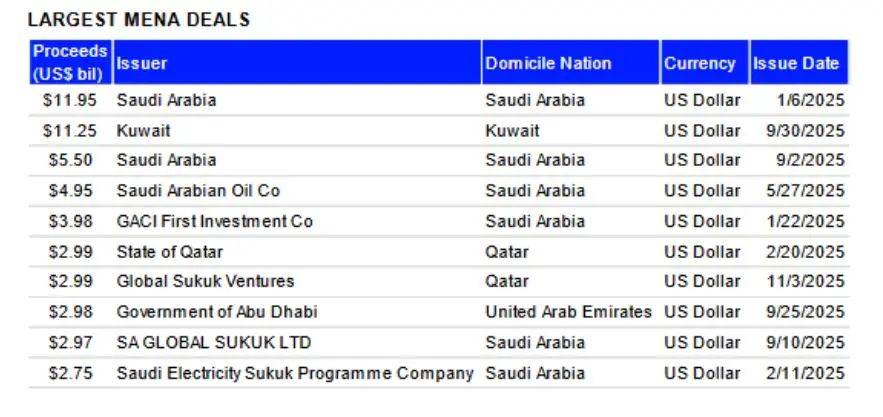
The largest MENA deal was Saudi Arabia's $11.95 billion triple tranche global bond. While Kuwait made a landmark return to global debt markets in late 2025 with an $11.25 billion three-tranche sovereign bond issuance, its first such deal since 2017, Qatar tapped the international debt market in October with a $2.99 billion sovereign bond issuance.
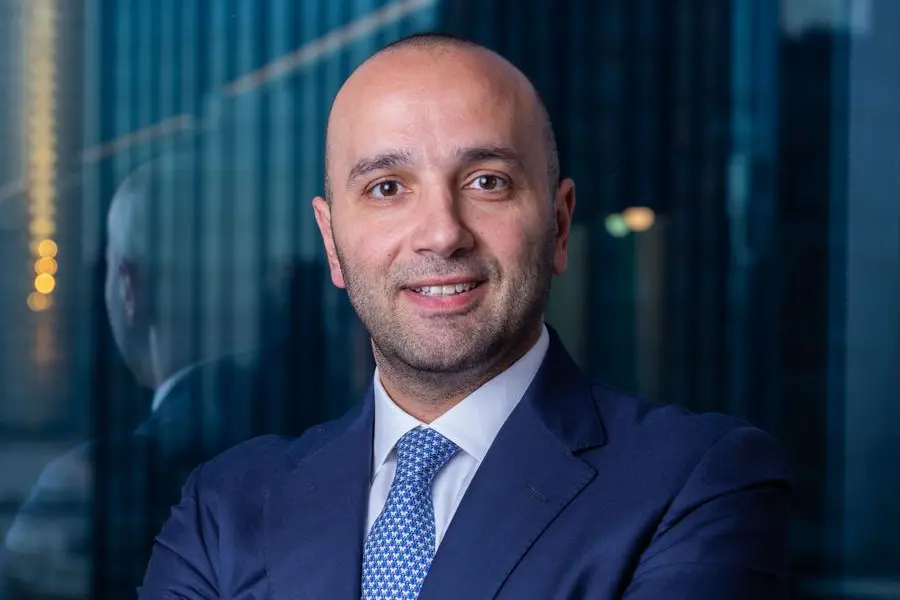
"Saudi Arabia's demand for capital will continue to increase this year. We expect 50 to 60% of the regional supply coming from Saudi in 2026. Clearly, sovereign and FIs will lead the majority of the supply side in the kingdom, Samer Deghaili, Co-Head of Capital Markets and Advisory, MENAT at HSBC told Zawya.
HSBC revamped its investment banking division in MENAT, adding additional debt driven products like private credit and structured finance. Under its new strategy, a team of more than 100 falls under Capital Markets and Advisory.
Financial issuers accounted for 57% of proceeds raised during 2025, while Government & Agencies accounted for 28%, LSEG data revealed.
“We expect more issuances from Abu Dhabi and Sharjah. Dubai appears to be focused on deleveraging and is unlikely to tap the market in the near term unless it shifts its capex program toward a more expansionary stance,” Deghaili said.
Islamic bonds in the region raised $63.7 billion during 2025, a 38% increase year-on-year to reach an all-time annual record. Sukuk accounted for 37% of total bond proceeds raised in the region, compared to 39% in 2024.
HSBC, with 115 issues last year, was followed by Standard Chartered, JPMorgan, Citi and Goldman Sachs in the top five rankings. Emirates NBD emerged as the leading regional bank with 77 issues, generating proceeds of $7.6 billion.
AI funding hasn’t picked up
Deghaili said his team has been focusing on finding financial solutions for AI projects, but with an emphasis on the underlying sector.
“We are yet to see whether AI clients will require bonds or whether the funding will be more product specific. Funding in the technology sector is best guided by financing sponsors. It’s often easier to find high quality sponsors looking to expand further into the space, and their needs may range from general corporate purposes to other requirements, which they can eventually channel into the sector.”
Overall, AI funding in the Middle East has yet to pick up and banks still need to understand the risks involved, he said.
“Data centres have a higher propensity for financing because their infrastructure and real estate components allow banks to structure funding more easily. But when it comes specifically to AI, Middle Eastern banks need to evaluate the credit story of the project owner or the underlying investment. In many cases, private credit takes the lead here,” Deghaili added.
Investment Banking fee
An estimated $2.1 billion worth of investment banking fees were generated in the MENA during 2025, 23% more than the value recorded in 2024 and the highest annual total in the region, LSEG data revealed.
DCM underwriting fees increased 29% to $532.7 million, an all-time high, while syndicated lending fees increased 26% to $707.9 million.
Equity capital markets underwriting fees declined 19% to $331.6 million during 2025, a two-year low. Advisory fees earned from completed M&A transactions totalled $533.9 million in 2025, 64% more than the value registered in 2024.
The UAE and Saudi Arabia together accounted for 78% of investment banking fees generated in the region during 2025. Overall MENA investment banking fees represented 1.53% of the global total in 2025, a share that has grown for two consecutive years.
LSEG Investment Banking fees are imputed for all deals without publicly disclosed fee information.
(Reporting by Seban Scaria seban.scaria@lseg.com; editing by Daniel Luiz)