PHOTO
Middle East bonds are wider across the board in early European trading, with desks receiving a flurry of selling requests.
The attacks in the region over the weekend have left a solemn mood in the market, with bankers and investors watching headlines and hoping for a cessation of the conflict as soon as possible.
As far as markets are concerned, one banker said that that "up to now people had been looking at [the Middle East] as a haven". Instead, now, "there will be a whole reassessment" of Gulf credit.
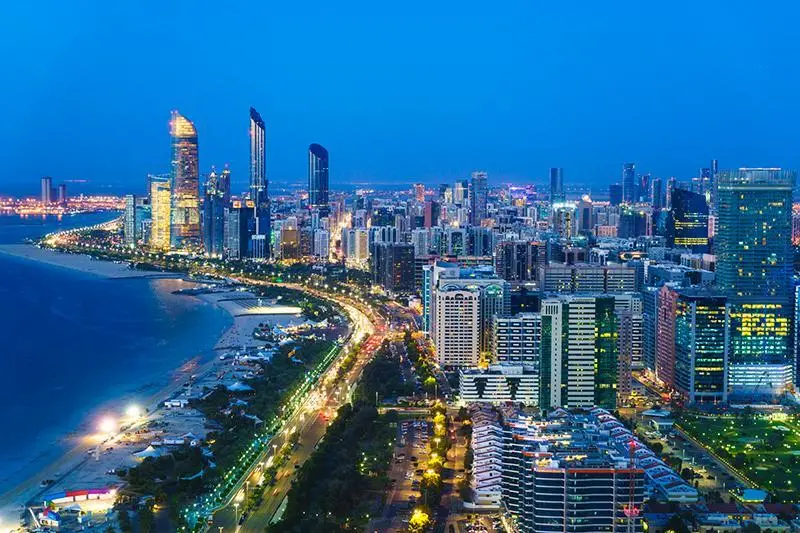
For example, Abu Dhabi ((Aa2/AA/AA), which raised US$3bn last week through US$1.25bn of five-year notes at 20bp over Treasuries and US$1.75bn of 10-year bonds at plus 25bp, has seen the longer tranche widen by 30bp. "In the context of Abu Dhabi, that's quite a lot," said the banker.
Another banker said that, in general, investment-grade sovereigns in the Gulf are 10bp–15bp wider, equivalent to 1–1.25 points lower in cash price.
He said that low investment-grade and high-yield sovereigns have seen their bonds fall by 1.75bp to two points on average. Egypt, for example, is about 25bp wider in spread terms, highlighting how the selloff is spreading beyond the Gulf and into broader EM. Bankers have said that Sub-Saharan Africa and Turkey are also markets getting impacted.
"We're seeing a flurry of selling requests; it's a one-way street at the moment," said the second banker.
Some Middle East corporates, though, are outperforming, with Aramco, for example, only 5bp wider.
In terms of primary markets, the Middle East has become arguably the most important EM region, and already this year, issuance is just shy of US$58.5bn, according to LSEG data.
Bankers said, however, that near-term pipelines aren't especially big because of Ramadan, and that even if the conflict continues for a few weeks, it shouldn't have too much of an impact.
"I don't think a month is concerning," said the first banker. "No client is down to the wire and if they don't fund in the next month it's problematic. And there's been a ton of issuance already. Issuers can sit out for a period of time."
One credit positive move for many Gulf states is that oil prices have spiked the most in four years. Brent jumped as much as 13% before settling about 6% higher near US$77 a barrel, as traders reacted to the effective halt in tanker traffic through the Strait of Hormuz, said an MUFG report this morning.
"While OPEC+ agreed to modest production increases, concerns persist that additional supply would be inaccessible if Hormuz remains disrupted. Oil could exceed USD100/b if flows are not restored quickly, underscoring the market’s vulnerability to prolonged geopolitical instability despite prior expectations of a global surplus," wrote Soojin Kim, a research analyst at the Japanese bank.
Source: IFR