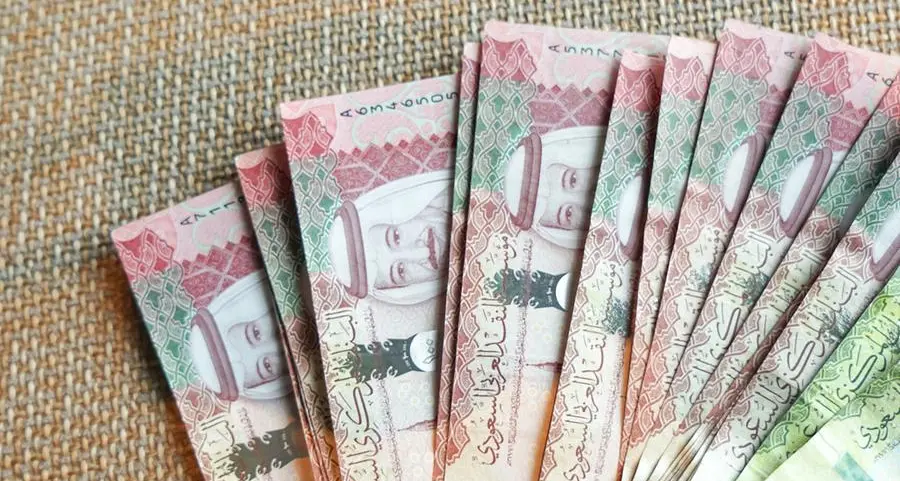
PHOTO
Kenya returned to the international debt market for the fourth time in two years, raising $2.25 billion to refinance maturing Eurobonds. But in doing so, it appears to have brushed aside a World Bank warning that such buybacks could heighten long-term repayment risks.
Economists now caution that the strategy, while easing short-term pressures, is swelling the country’s commercial debt in defiance of its own borrowing policy.
Last week’s decision saw Nairobi commit to buying back $500 million worth of Eurobonds, despite warnings from the Bank that such moves could increase Kenya’s long-term repayment burden.
In the past two years, Kenya has raised $6.75 billion in new Eurobonds to buy back maturing debt. This includes the $2.25 billion issue last week, which refinanced $500 million of Eurobonds due in February 2028 and May 2032. The dual-tranche issue comprised a seven-year $900 million bond priced at 7.875 percent, maturing in 2034, and a 12-year $1.35 billion bond priced at 8.7 percent, due in 2039.
Proceeds will be used to refinance existing obligations, including the buyback of up to $150 million of a Eurobond priced at 7.25 percent and maturing in February 2028, and up to $350 million of another priced at 8 percent and maturing in May 2032.
In 2025, the World Bank cautioned African states against issuing Eurobonds to refinance maturing bonds and commercial loans, warning that higher-cost borrowing could exacerbate default risks and undermine economic stability. “Sub-Saharan African countries might face significant refinancing pressures as previously issued Eurobonds near maturity, posing significant challenges to debt sustainability,” the Bank noted in its Africa Pulse report of October 2025.“Global uncertainty, heightened geopolitical tensions, and continued monetary tightening in advanced economies have significantly the cost of capital for African sovereigns.”National Treasury Principal Secretary Chris Kiptoo told The EastAfrican in January that the latest issue was motivated by improved market conditions, allowing countries with sound economic performance to raise funds competitively. He added that the issuance aimed to reduce domestic borrowing and create space for private sector credit.
Unsustainable debt“The IMF funding has not been factored into the 2025/2026 budget following the lapse of the programme in April 2025. Discussions on a successor programme are ongoing,” Dr Kiptoo said. “Talks with the World Bank on Development Policy Operations VII are also progressing, with related funding expected in the second half of FY 2025/2026.”Economists remain sceptical, arguing that it is not a sustainable debt management plan in the long run.“It’s not viable—you can’t use more expensive debt to pay off the old one. The only immediate benefit is avoiding default. In the long run, we will run out of options,” said Prof XN Iraki of the University of Nairobi.“We need to live within our means or raise funds from other sources such as taxes, despite political costs. The concessional borrowing has tough conditions with political implications…remember the protests over finance bill.”Ken Gichinga, Chief Economist at Mentoria Economics, added that the pressure to avoid default is so high that even contracting expensive debt becomes an option. “While bond buybacks may provide short-term stability, they carry significant long-term risks,” Gichinga said.
In February 2024, Nairobi issued a $1.5 billion Eurobond to pay down part of a $2 billion bond maturing that June. In February 2025, it repeated the move with another $1.5 billion issue, this time with an 11-year tenor, to refinance a $900 million Eurobond maturing between May 2025 and May 2027. Later that year, Kenya raised $1.5 billion to refinance a $1 billion Eurobond due in 2028.
These bonds were costly, with yields of 10.375 percent in 2024 and 9.95 percent in 2025—far higher than Kenya’s past borrowing costs.
President William Ruto announced the bond-buyback programme in June 2023 at the New Global Financing Pact in Paris, aiming to avert default on the $2 billion Eurobond maturing in June 2024.
By June 2025, Kenya’s public debt had risen 11.7 percent to Ksh11.81 trillion ($91.55 billion), equivalent to 67.8 percent of GDP, up from Ksh10.58 trillion ($82.01 billion), or 66.9 percent of GDP, a year earlier. Debt service obligations surged to Ksh1.72 trillion ($13.33 billion), equal to 71.2 percent of ordinary revenue in FY 2024/2025, compared with Ksh780.6 billion ($6.05 billion), or 50 percent of revenue, in FY 2020/2021.
Several African countries have also issued Eurobonds to refinance maturing debt, easing short-term pressures but raising sustainability concerns. “The region’s redemption schedule reveals liquidity pressures in multiple Sub-Saharan sovereigns, with peak pressures in 2026 that could have key implications for risk premiums,” the World Bank warned.
© Copyright 2026 Nation Media Group. All Rights Reserved. Provided by SyndiGate Media Inc. (Syndigate.info).