Gulf states are expected to spend USD 29 billion over the next two years on their electricity infrastructure to meet an inexhaustible demand, says Moody's.
March 27, 2012
27 March 2012 Gulf states are expected to spend USD29-billion over the next two years on their electricity infrastructure, according to ratings agency Moody's Investors Services.
"Over 2006-2010, companies in our rated universe had earmarked around US$58.0 billion in cash to invest in generation capacity and networks," said Moody's in a note. "We expect that aggregate spending will increase significantly as the optimisation of assets is due to accelerate, notably in Saudi Arabia."
There is good reason for this breathless growth. Gulf states are pumping vast amounts of money into billion dollar projects ranging from transportation, ports, hospitality, infrastructure, oil and gas and real estate.
Projects planned and under way in the Gulf stand at USD1.8-trillion, according to Citibank Group estimates. This is supported by the region's largest market, Saudi Arabia, which has close to USD650-billion - and rising. Even though the UAE has cancelled a number of projects over the past few years, it's still sitting close to USD600-billion project pipeline.
These projects span massive economic cities, sporting projects, air, rail and road transportation and infrastructure projects, apart from oil and gas, alternative energies, hospitality, real estate and healthcare, among other.
All of these projects will need power lines, otherwise the efforts will come to nought.
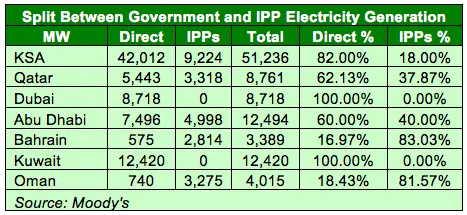
While power projects are often seen as public sector domains, Gulf governments have increasingly looked for private sector to share the burden.
Over the past few years, GCC governments have made considerable investments in their respective utilities to match the significant growth in demand as a result of population growth, infrastructure projects and the development of the industrial sector.
At the same time, the various governments have put in place regulatory frameworks in order to facilitate international investors' participation, notably through independent power projects (IPPs).