Dubai International Financial Centre (DIFC) is a triumph of ambition in a troubled financial world, says DIFC Authority chief executive Abdulla Mohammed al Awar
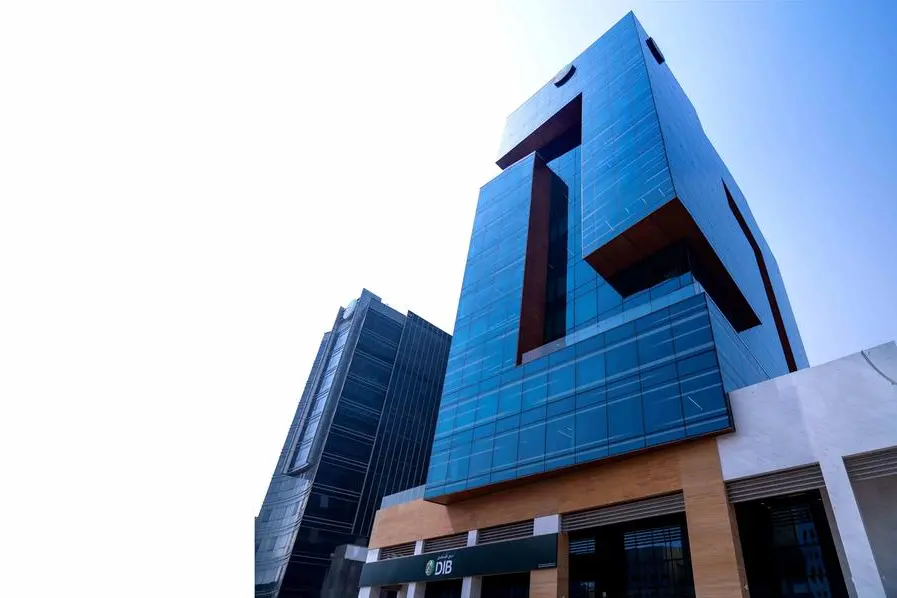
Rising 15 stories above a podium and reminiscent in scale of L'Arc de Triomphe in Paris, The Gate is the monumental entrance to the Dubai International Financial Centre (DIFC), a financial free zone which, when established in 2004, was yet another symbol of the city's almost limitless ambitions.
In the almost eight years since, Dubai has been on quite a ride: spectacular economic growth and diversification followed by a debt crisis and real estate crash, exacerbated by global economic turbulence.
Amid the turmoil, DIFC has tried to portray itself as a haven of tranquility. Its chief executive Abdulla Mohammed al Awar - the man tasked to execute the Centre's ambitions as a global hub for institutional finance and regional gateway for capital and investment - is upbeat.
"The UAE remains always a safe haven and will continue to support trade regardless of the Arab Spring and unrest in the region. Dubai's underlying strategy promotes a very business-friendly environment with laws and regulations that support business development, and stimulate international trade and investment. That, in my opinion, is the foundation of Dubai's success," he says.
As the shockwaves resounded through regional and international financial markets in the first half of 2011, DIFC performed positively, al Awar points out. That said, the Centre adopted new pricing matrices for office rentals adopted in January 2011 to remain cost-competitive. Benchmarked against other financial centres, the rates were, says al Awar, reduced by up to 60 per cent.
Sixty four companies joined the Centre in the first half of 2011, bringing the net total of active companies up to 813. Eighteen of the world's top 25 banks, eight of its largest asset managers, seven of the 10 largest insurers and six of the 10 largest law firms now call DIFC home. In 2010, meanwhile, the Centre contributed $2.92 billion, or 3.6 per cent, of the emirate's total gross domestic product (GDP), about one per cent of the UAE's total GDP.
In the Xinhua-Dow Jones International Financial Centres Development Index for 2011, which examined 45 international financial centres in terms of development capacity, DIFC ranked eighth globally in terms of growth and development, up three places from 2010.
The seeds of DIFC were sown in 2003, when Dubai hosted the annual meetings of the board of governors for the World Bank Group and the International Monetary Fund. It was the first time the meetings had convened in the Arab world, and coincided with a paradigm shift in the UAE's banking and financial aspirations.
DIFC was formally established the following year as a financial free zone with its own independent financial and ancillary services regulatory body, the Dubai Financial Services Authority (DFSA), and the DIFC Courts, an independent common law judiciary based in DIFC with jurisdiction over civil and commercial disputes.
A career technocrat born into a banking family and a graduate of the University of Colorado in Boulder, US, al Awar joined DIFC in late 2004, having cut his teeth at Dubai Internet City (DIC).
"I wanted to be part of the DIFC initiative and help accelerate the development of the economy in Dubai," he recalls.
"DIC was one of the first projects that focused on creating a cluster for a knowledge-based economy mainly focusing on services rather than industry or logistics, a concept which evolved into many such initiatives across various knowledge sectors including Dubai Media City and Dubai Healthcare City," he notes.
"At that time, DIC was flourishing, and technically speaking it was a knowledge cluster, housing a significant number of institutions. I wanted to be part of something that would continue the development of Dubai. The financial sector was something a bit different and a new challenge, and the vision of DIFC was even more ambitious - to bridge the gap between West and East," he says.
The idea, he says, was for DIFC to tap the commercial opportunities on offer in the 42 countries between London and Hong Kong.
"At the time, there was no international financial centre that could offer the same platform, legislative infrastructure, soft infrastructure for the region which cities such as Hong Kong, London or New York provided in other regions.
"International financial institutions and investment companies were very keen to become active in the region but lacked the necessary financial platform. We saw an opportunity to create something very new and unique," he remembers.
Al Awar says to create such clusters DIFC ultimately offered a very similar legal infrastructure to the more established capital markets such as London, New York or Hong Kong.
"We implemented a common law system rather than the civil law that is applicable in the rest of the UAE," he adds, referring to an amendment to the UAE constitution in 2003.
"When we talked with HSBC, Citibank and Credit Suisse, we could tell them that DIFC operates in the same legal environment that these banks have been operating in for the past 60 to 70 years," he explained. This is, he points out, a critical element differentiating DIFC from other financial centres.
"DIFC's legal infrastructure ultimately provides the necessary contractual integrity that international financial institutions and multinational businesses want in order to trade and invest in this region," he insists.
Al Awar emphasises that DIFC does not seek to recycle existing business from regional neighbours. Rather, it is, he notes, a conduit connecting the region's emerging markets with the developed markets of Europe, Asia and the Americas, attracting investment and supporting the economic growth across the region.
"With the increasing role and confidence in Dubai as a safe haven, the emirate has confirmed its position as the financial, logistics, tourism and business hub of the Middle East, with DIFC the central component of the banking and financial sector," he continues. However, he admits there is a long way to go for DIFC to be recognised as a truly global financial hub.
"We are determined to keep pushing harder to achieve our goal," al Awar says.
While the Arab Spring may not have diminished Dubai's trading status, global economic uncertainty has precipitated a shift in strategy for DIFC towards emerging markets. Since 2009, around 44 per cent of new businesses joining DIFC have been from the Middle East, North Africa and Asia, with about 50 per cent from Europe and North America and six per cent from the rest of the world.
"In the next two to three years, DIFC will continue to focus on emerging markets, the GCC and the broader Middle East, and also South Asia and East Asia," al Awar explains.
"These institutions are becoming increasingly active international investors. So we see a lot of south Asian institutions now having interests in Africa in order to support their growing investments there. At the same time east Asian real estate developers, construction companies and infrastructure development companies are looking for financial institutions that are willing to invest in Africa and are prepared to support their global expansion plans.
"I believe we can connect China with Africa, and also South America with China. There continues to be an increasing volume of interaction between Chinese institutions and South American institutions, specifically Brazil. We have the same value proposition for them. Despite the distance, DIFC can easily connect Shanghai or Beijing with Africa and the Americas," he says.
More than 50 memoranda of understanding exist with other regulators and financial centres including the UK's Financial Services Authority, four regulators in the US and their counterparts in China. Al Awar underlines the importance of these international relationships.
"They not only share information and best practice but also our engagement with the international network of regulators helps attract institutions who are also transacting business in multiple jurisdictions. Our aim and vision is for DIFC to become a global financial centre comparable with London, New York or Hong Kong."
The chief executive believes in the next three or four years DIFC will focus on developing the scale and scope of its financial activity at least to match other international financial centres."
Despite the bold visions, al Awar is realistic about DIFC's ambitions in the context of the global economy and regional market conditions.
"The global economic crisis had a profound effect on the source of business for DIFC. One of our biggest challenges is making sure that we adapt accordingly," he says.
One of the key challenges faced will be to attract and develop human capital at DIFC. The Centre has invested in so-called 'centres of excellence', which bring together top schools for finance and business, al Awar explains. "You cannot expect the world's leading financial institutions to maintain growth here without being able to develop talent and expertise," he acknowledges.
Now a seasoned hand at building economic clusters capable of attracting the world's leading blue chip companies, al Awar says up to 60 per cent of the total planned physical infrastructure at DIFC has now been developed.
"When DIFC is complete and fully occupied, it will be able to attract 50,000 to 55,000 people to work, live and visit the financial centre, within four to five years," he concludes.
© The Gulf 2012