Excitement is building at the South Rub Al-Khali Company (SRAK) as preparations get underway to drill its first well deep in the remote and hostile environs of the Empty Quarter, in the heart of Saudi Arabia, one of the world's major hydrocarbon producing countries. SRAK is a joint venture between Shell, with a shareholding of 40 per cent, and Saudi Aramco and Total, each with 30 per cent shareholdings. SRAK was awarded a contract in 2004 to explore for gas in two contract areas totalling an area of 210,000 square kilometres. Preparations for the drilling of the company's first well have been challenging, and started over a year ago. A new drilling contract for the supply of equipment, materials and services have been awarded. Civil works, such as the construction of roads, well sites and air strips, have had to be carried out, and the final 2,000-kilometre journey for the drilling rig itself will involve about 200 loads in several convoys, starting in Dubai and arriving just a few kilometres north of Saudi Arabia's border with Yemen. 'Shell in the Middle East' goes to Al-Khobar to talk to some of the people involved in driving the run-up to the historical spudding of SRAK's first well...
Koen Bracquene, Manager for Drilling Operations with SRAK, on secondment from Total, says, "The preparation for the drilling of our first well has been in progress for over two years, although the bulk of the effort has been put in over the course of the last 12 months or so.
"The extreme remoteness of the operations and the terrain make this a particularly challenging project, however, there is nothing I enjoy better than a challenge and I have enjoyed working together with my team to overcome those with which we have been faced so far.
"Our goal is to drill a number of wells and to drill them as safely and as cheaply as possible, but getting to that point is not proving to be easy.
"The first well is some 365 kilometres to the east of Sharourah in SRAK's Contract Area Number Two, just 70 kilometres from the Yemeni border. Rub Al-Khali is the Arabic for Empty Quarter and it is not called that for nothing!
"Over the last 18 months there has been a tremendous increase in drilling activity worldwide but especially in Saudi Arabia where, for example, Saudi Aramco has nearly doubled its number of rigs in the field in 2004 to over 100 today with further increases planned for 2006. This has put an enormous pressure on the industry, not just for drilling rigs but for all associated drilling materials and equipment, such as casing and well heads. It has also impacted on the availability of transportation equipment in Saudi Arabia, such as specialised six-and eight-wheel drive desert trucks, which today just cannot be found in the market. The consequence of this has been that SRAK has had to build 80 kilometres of road to enable the company to use normal trucks to get all its equipment to the well site.
"Due to the nearest medical centre being at Sharourah, 365 kilometres from the well site, we also need to have aircraft on standby in case we need to evacuate any member of the crew in the event of an emergency. This naturally means we have ahd to build a runway close to the well site.
"As a new company SRAK has had to develop, amongst other departments, a new drilling team and as a joint venture this team consists of secondees from the joint venture companies. This means that we have a mix of people from different countries and cultures with different ways of working who speak different languages. Even so, after a lot of hard work we have now developed into a closely-knit, strong team ready for the many challenges ahead," concludes Koen.
Harry Verkuil, Senior Well Engineer with SRAK, on secondment from Shell, says, "Recently SRAK's Board challenged us to get the drilling campaign on to a fast track approach. This we are now implementing, but it would not have been possible without the co-operation and support of Saudi Aramco, which is providing us with both well heads and casing, to enable us to start the drilling campaign early.
"As the team has never worked in Saudi Arabia before we still have a lot to learn and so our approach has been conservative. To ensure we can obtain support from Saudi Aramco we have adopted a Saudi Aramco approach to the design of our first two wells in terms of the equipment to be used for the wells and this has already paid off.
"We are facing enormous challenges in both Contract Areas. We expect to encounter almost every type of subsurface and drilling problems. Contract Area Two, where we will drill our first two wells, will be our learning territory and here we are going to face every possible drilling scenario.
These scenarios will include severe losses, difficult carbonate and shale formations, unconsolidated sands, as well as fractured and faulted zones and possibly H2S [hydrogen sulphide] gas. In other words, many of a driller's worst nightmares which can lead to problems such as stuck pipe, drill string failure and collapse of the casing during cementation.
"In Contract Area One we will face high pressure formations. When we start drilling there we will need to contract a specialised drilling rig to handle the high subsurface pressures which can reach 15,000 psi [pounds per square inch]. Drilling these kind of wells requires special care and a very well-trained crew to ensure that the drilling operations are managed efficiently and effectively to avoid any accidents.
"So, before we drill our first actual high pressure exploration well in Contract Area One, we will drill a 'shake down' well to break in the new crew and test all the equipment which is being used. We will also test all the special procedures for high pressure wells to make sure that everyone is trained and ready to go
"So, all in all, it is a very exciting time and reports from the geologists and results from the seismic surveys are extremely encouraging. With all the effort which has gone into this venture we should be looking forward to a very big discovery!"
Ahmed Al-Otaibi is a Geological Consultant with Saudi Aramco Upstream Ventures. He is also Saudi Aramco's Technical Adviser to the SRAK joint venture, he says, "My role as Technical Adviser to SRAK is to provide technical, logistical and material support for SRAK's exploration effort under the terms of a Technical Service Agreement.
This includes providing drilling equipment, supporting seismic data acquisition and processing, using Saudi Aramco's local knowledge to transfer our experiences through workshops and to participate, as a shareholder, in formalising issues pertaining to technical, financial and corporate governance.
"Before drilling there are four major stages which have to be carried out. The first includes the acquisition, processing and interpretation of seismic data. The second includes basin modelling, regional geological studies and geological field trips to study outcrops, both in and out of the Contract Areas, to relate the geological findings from outcrops to the sub- surface rock facies. The third stage is to analyse and integrate existing data from offset wells, core plugs and the geochemical analysis of source rocks to evaluate the maturation of the source rock in addition to understanding current play concepts from previous studies. Finally, you have to drill the well.
"Saudi Aramco has held several workshops to assist SRAK's drilling team, which have included well design, and evaluation, and Saudi Aramco's drilling experience in Palaeozoic reservoirs to identify drilling problems.
"We have also shared experiences with SRAK in drilling high pressure zones and other drilling problems, such as loss of circulation, wash out and possible elliptical hole conditions. The last workshop we held brought everyone together to discuss the optimisation of our wire line logging programme, focusing on selecting the right tools for various reservoir zones.
"Most Palaeozoic formations have the potential to develop an elliptical well bore geometry. To overcome this problem and for porosity measurement Saudi Aramco uses dual density and neutron logs with axes offset at 90 degrees to mitigate the risk of being unable to log accurate data.
"In terms of logistics Saudi Aramco has been able to provide SRAK with well heads and casing for its first two wells and has dedicated personnel from supply and logistics departments to work with SRAK to assist its staff with equipment requirements. "We have also been able to provide SRAK with lists of local contractors who have been evaluated by Saudi Aramco. This has enabled SRAK to deal with proven and experienced suppliers and contractors whilst SRAK builds up its own network of contacts.
"Saudi Aramco has also provided SRAK with telecommunications equipment, including satellite phones, VHF and HF radios. "Saudi Aramco considers SRAK to be its partner and success for SRAK is a success for Saudi Aramco, so we wish SRAK all the very best," he concludes.
Jacques Boutaud is SRAK's Head of Logistics and Supply and is on secondment from Total. He says, "The preparations needed to drill SRAK's first well in terms of logistics and supply started more than a year ago. There are many contracts which had to be placed, including the purchase of a wide range of drilling equipment, such as casing and well heads, and Saudi Aramco has been able to help us out until our own supplies become available.
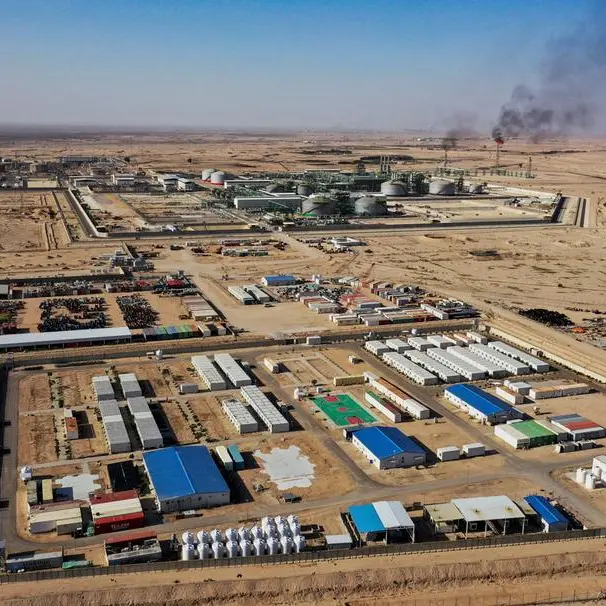
"To prepare the well site there are civil works such as putting in roads and preparing the drilling platform, the camp site and a runway for our aircraft. Transport contracts also have to be drawn up for both land and air.
"To move the KCA-Deutag T79 drilling rig from the Jebel Ali Free Zone in Dubai to the well site involves a journey of more than 2,000 kilometres, the last 365 kilometres of which are on a desert access road, which is not tarmac.
"The first 285 kilometres of this stretch of road is being used to build a new border road between Saudi Arabia and Yemen.
However, the final 80 kilometres to the well site is virgin desert and SRAK has had to issue a civil engineering contract to build these 80 kilometres of compacted earth or 'skid' road.
"To transport the rig will involve the use of more than 180 trucks, each with a 20-tonne pay load, moving in convoys which will transport the rig and other equipment west to the Saudi border and then on to Riyadh, before turning south to the town of Sharourah and, finally, eastward along the Yemeni border to the well site.
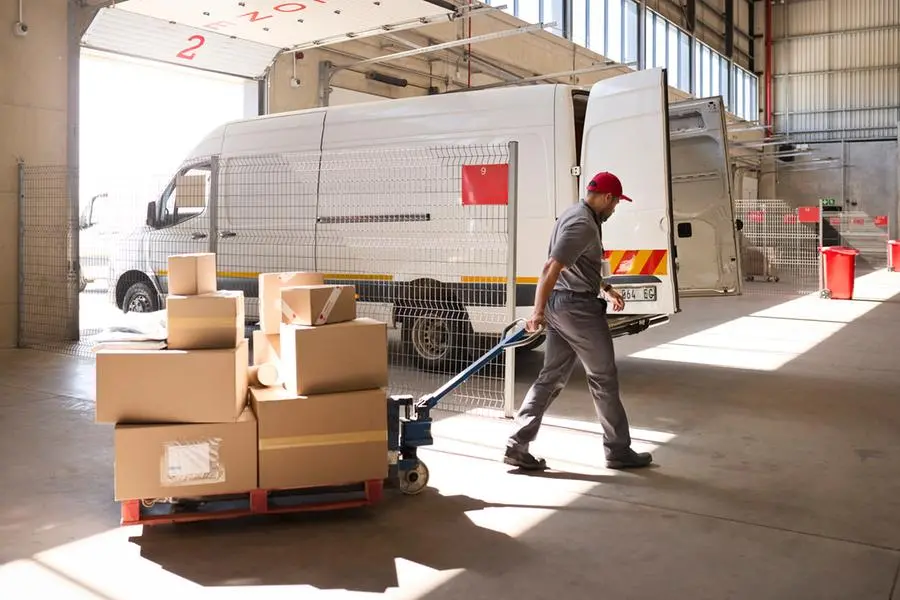
"To transport the other equipment we will need, such as the well heads and casing, from Al Khobar to the well site, 1,400 kilometres away, we will require a further 80 loads and there will be many more items which will need to be supplied.
"SRAK has contracted three Twin Otter aircraft, two for the seismic operations which are still under way and one as a standby Medivac [Medical Evacuation] aircraft and for the transport of personnel to and from the rig.
"To service our operations in the drilling areas we have established a logistics and service base in Al Khobar of some 20,000 square metres, with offices, a warehouse and secure cool storage facilities for sensitive and valuable equipment.
"Communications are a vital element of any deep desert operations, so we have established three V-SAT communications systems. One of these will be based at SRAK's head office in Al Khobar, one at the logistics base and one at the well site.
These will provide SRAK staff with constant voice and data communications between all three locations and, if necessary, with shareholder offices in Dammam, Paris and The Hague.
"Once drilling operations start, SRAK will have over 100 people working at the well site, all of whom will need to be fed and watered daily. As part of our civil works preparation at the site, we have already drilled a water well which will provide water to support the drilling operations and which can be used for washing and toilet purposes, but not for drinking.
"Drinking water, along with food and other provisions and consumable materials, such as drilling mud, will have to be shipped in either from Al Khobar or from Sharourah by road transport.
"Drilling operations at the site of the first well are expected to last for about three months and then we will move everything to the location of the second well. This will require moving the whole rig, camp and all our equipment over 1,000 kilometres, half of which will be on desert roads. With sand dunes 80 metres high in places we will certainly have our work cut out," Jacques concludes..
Marc Vanderschaeghe is a Drilling Superintendent with SRAK, on secondment from Total. He went to Dubai in March - along with other SRAK staff and main contractors who will be providing services to SRAK in its drilling campaign - to participate in an HSE (Health, Safety and Environment) workshop which focused on identifying the risks and hazards in SRAK's operations to enable the team to mitigate those risks. The workshop was run to ensure that SRAK's HSE policies, Management System and Safety Cases are firmly embedded into everyone's culture.
Marc says, "During my trip to Dubai I also took the time out to visit the KCA Deutag T79 drilling rig which at that time was being prepared for commissioning at KCA's Jebel Ali Free Zone yard, prior to mobilisation for the drilling of SRAK's first well in the Rub Al-Khali.
"Before the rig's move to Saudi Arabia it will have been fully tested. To do this the rig will have had to be completely assembled and all the ancillary equipment, such as the mud system and pumps, will have been connected and run to ensure that they are all functioning correctly. All the hoisting equipment, travelling blocks and the top drive system will also have been checked to ensure they are operating properly.
"Once the rig had been assembled it will have been checked by KCA Deutag and commissioned by SRAK, assisted by MODU-SPEC, a specialist rig commissioning company. Then it will have had to be dismantled before being delivered to Saudi Arabia in the convoy of road transport vehicles.
"It is not just the actual drilling rig that has had to be examined and commissioned but the whole camp and ancillary facilities. These include offices, accommodation quarters, workshops and other equipment which will be needed on site. "All this, too, forms part of the convoy which will travel the long journey by road to Saudi Arabia," Marc concludes.
© Shell in the Middle East 2006