PHOTO
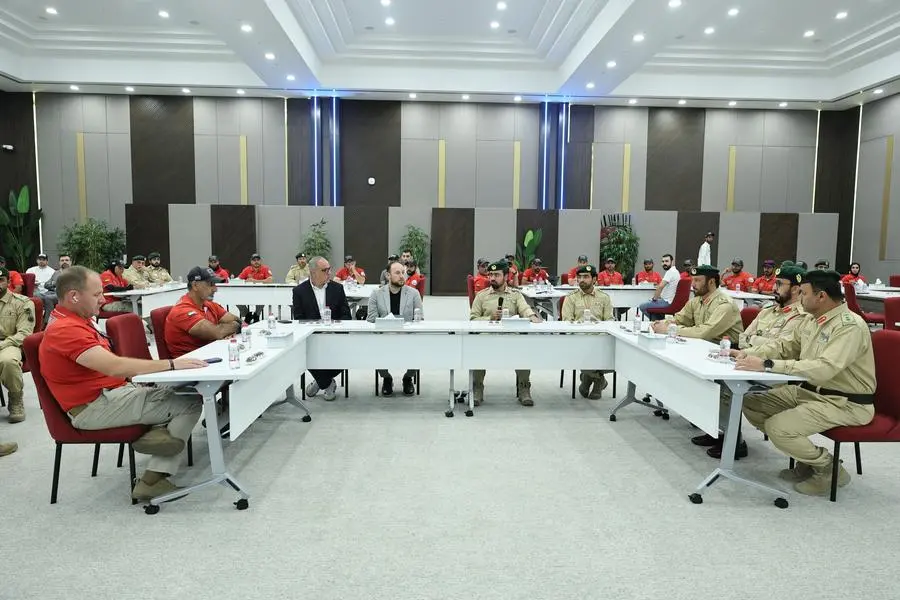
In line with government directives to adopt artificial intelligence (AI) systems, the Police Operations Training Department at the General Department of Protective Security and Emergency of Dubai Police held a dialogue session with police training specialists.
The session aimed to explore the future of using artificial intelligence in training human resources, thereby supporting ongoing efforts to enhance safety and security by keeping pace with the latest advancements and modern technologies.
Brigadier Musabah Al Ghafli, Director of the General Department of Protective Security and Emergency, inaugurated the dialogue session, titled "Using Artificial Intelligence in Specialised Training and Development Operations," at the Dubai Police Officers Club.
The session was attended by Brigadier Hisham Al Suwaidi, Deputy Director of the General Department of Protective Security and Emergency for Emergency Affairs; Colonel Abdullah Sultan Al Jallaf, Director of the Police Operations Training Department; and a number of officers and representatives of companies working in artificial intelligence for training.
Brig. Musabah Al Ghafli affirmed that the session stems from the commitment of the Dubai Police, under the directives of His Excellency Lieutenant General Abdullah Khalifa Al Marri, Commander-in-Chief of Dubai Police, to strengthening the capabilities of its personnel through training and qualification and by keeping abreast of the latest technologies and artificial intelligence applications used in police work.
He stressed the importance of working towards utilising artificial intelligence technologies to measure training impact and develop the work system, in pursuit of Dubai Police's objectives of enhancing safety and security and entrenching leadership and excellence in policing. He also commended the session's themes and its aim of generating ideas that contribute to advancing leadership in police training.
Meanwhile, Colonel Abdullah Sultan Al Jallaf said that the session seeks to explore the future of artificial intelligence in the specialised training and development of police personnel through smart, sustainable, and forward-looking training that bolsters capabilities across various police fields and specialisations.
He explained that the dialogue session discussed three main themes. The first, "Future Challenges in Developing the Training System," examined how to keep pace with rapid technological progress, digital skills and competencies, data quality and system integration, cybersecurity, impact measurement, and other related areas.
Col. Al Jallaf added that the second theme, "Future Plans for Artificial Intelligence in Training," reviewed experiences and analysing data to predict training needs, the use of smart assistants, automation, partnerships, and flexible and sustainable training.
He further noted that the third theme addressed "Zero Bureaucracy" by aligning with government directives within training operations, simplifying procedures, automation, digital platforms, and related matters.
The dialogue session witnessed extensive discussions among the participants — police training specialists from Dubai Police and strategic partners from the private sector working in the training field — culminating in a set of developmental recommendations and proposals.