As Syria suffers, Lebanon is starting to feel the pinch and many of the key economic indicators are starting to point towards a slowdown.
December 7, 2011
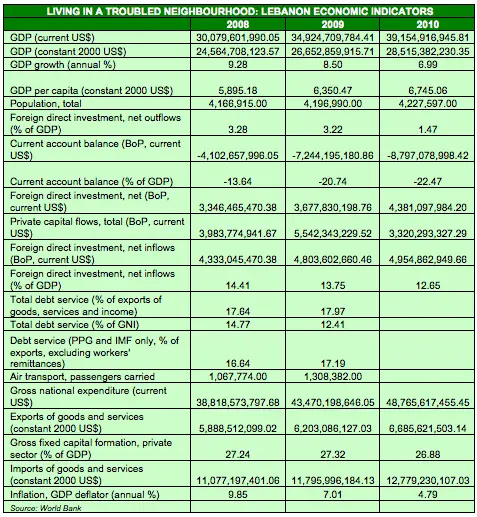
07 December 2011 If Syria sneezes you can be certain that Lebanon will catch a cold and it is no different this time around. Right now Damascus has caught the chills, which has infected Beirut which is suffering from a bout of economic malaise. The International Monetary Fund notes that the Lebanese economy will only eke out a 1-2% growth this year, compared to the 8% annual growth between 2007-10. "After four years of strong growth, Lebanon's economy has lost momentum reflecting domestic political uncertainty and regional unrest," says the IMF in a note on Lebanon. "Growth could increase to 3-4% in 2012. But risks are high and to the downside, reflecting among others an uncertain global and regional environment, particularly in Syria. Thus, strong domestic policies are needed to instil confidence." As a small, open economy Lebanon thrives on the well-being of the region. It relies heavily on remittances from the Lebanese diaspora especially from the Gulf and tourists from the wider MENA region, but with the Arab Spring serving as a great distraction there has been little time to partake off Beirut's nightlife for regional tourists.
"The government collapse in early 2011 and the inability of the designated Prime Minister Najib Mikati to form a new government until June, drove the country into a new episode of stagnation over the first half of the year," notes Blominvest Bank analyst Gaelle Khoury, in a report.
"The economic sluggishness was more intensified following regional developments, particularly from Syria, that clouded further the domestic economic environment through a sharp fall in consumers' and businesses' sentiment."
Bank Audi says that regional disturbances have negatively affected the tourism sector. "The worsening of the situation in Syria also contributed to have a negative impact on Lebanon's tourist activity," says the Beirut-based bank.
Total number of tourists declined 24.4% during the first ten months of 2011 to 1.4 million from 1.85 million during the same period last year. Arab tourists, which comprised 41.3% of all tourists last year, only made up 34% of the total this year.
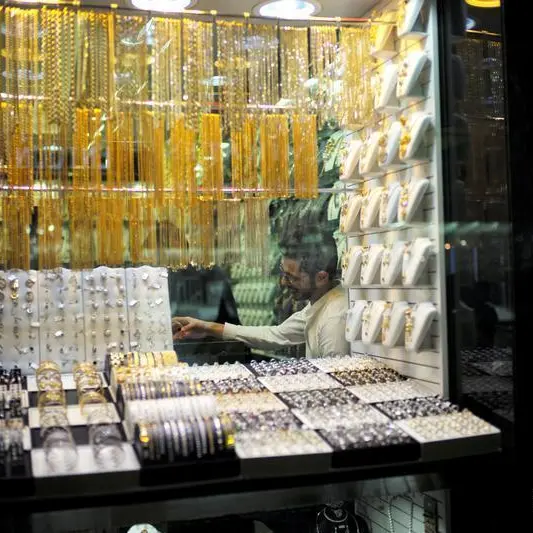
With the big spenders staying away, tax-free purchases grew only by 8% in the first ten months of the year, compared to 21% during the same period in 2010.
Interestingly, spending by Syrian nationals rose 18%, potentially as a result many fleeing the troubled country.
The Consumer Confidence Index (CCI), published by ARA Marketing Research & Consultancy, fell by 9.24% in October 2011 compared to the same month a year earlier to settle at its lowest level since May 2011.
On a monthly basis, the CCI dropped 12.2% as the domestic and regional political uncertainties as well as the Shura Council's rejection of the Cabinet's wage increase draft weighed negatively on sentiments.
This was reflected by the 13.54% drop in the current security sub-index to 281 points, whereas the sub-index measuring personal income dropped 4.9% to 136 points. However, the economic sub-index increased 14.3% from 175 points to 200 points.
As for the expected economic index (6 months forward), it retreated by 28.73% to 67 points, its lowest level since May 2011, and the expected personal income index fell 15.48% to 71 points, while the expected durable goods consumption index jumped 30% to 130 points, says Blombank.
"On the private expenditure and private investments fronts, indicators point to a weak performance," says Blombank. "Claims on the private sector were down by 4.7% y-o-y over the first half of 2011 and consumption of durable goods, tracked by new vehicle sales, fell by a severe 6.1% to 16,299 vehicles up to June. The growth in the value of cleared checks remained almost flat at 0.2% y-o-y in H1 despite an 11.9% y-o-y rise in their numbers, mostly boosted by interest rates incentives."
REAL ESTATE DOWN The Syrian effect is making its presence felt in real estate too, which has been traditionally a strong sector given the finite space available and the growing wealth of Lebanese expatriates.
The Directorate of Real Estate showed the number of property sales fell 14.5%% during the first ten months of the year, with purchases by foreigners falling 26.5% during the period.
"The fall in demand for property in Lebanon during the first ten months of this year was coupled with a decline in the value of property sales during the said period," says Bank Audi. "Indeed, the value of property reached USD6,843 million in the first ten months of 2011, down by 10.8% relative to corresponding period of 2010. The average value per property sales in the first ten months of 2011 went up by 4.3% relative to the same period of 2010 to reach USD103,500."
Other economic indicators also pointed to a downward trend. Lebanon's trade deficit widened to US$13.3-billion during the first ten months of the year - up 18.8% compared to last period.
"The key policy challenges are to maintain macroeconomic stability and lay the foundation for a more dynamic economy that leads to inclusive growth, while reducing the country's debt-to-GDP ratio, which is among the highest in the world," says the IMF.
ZAWYA NEWSLETTERS
Get insights and exclusive content from the world of business and finance that you can trust, delivered to your inbox.