The financial crisis and piracy have shaken what is typically a reliable revenue source as the canal authority prepares for infrastructure upgrades
In recent years, Egypt's Suez Canal Authority (SCA) has enjoyed record revenues, thanks in part to high levels of trade and increased transit rates. However, both the shipping slowdown, following the global financial crisis, and the increase in piracy off the Horn of Africa threaten what has been a steadily-growing source of income for the past 140 years.
In the 2007/2008 fiscal year the canal contributed 3.3% of Egypt's gross domestic product (GDP), making its earnings the third-highest source of foreign currency revenue, after tourism and remittances from nationals working overseas. Year-end revenues for the canal totaled over $5.4 billion (LE 29.7 billion) the SCA's highest-grossing year yet and a dramatic increase from the $2 billion (LE 11 billion) collected at the end of 2002.
The growth comes largely as a result of increased trade volumes to Asian markets, as well as capacity problems with alternative routes, such as the Panama Canal.
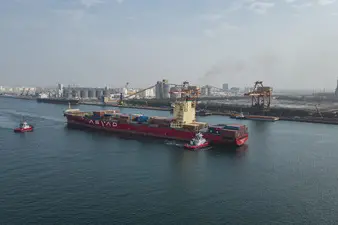
Part of the increased revenue is attributed to the SCA's fee increases, which have grown sizeably as traffic through the canal has exploded. In April 2008, the SCA increased fees by 7.1%, a 16.7% increase compared to the previous year. Rates for container ships rose by 5.7% while charges for oil tankers increased by 7.3% and 10.5% for vessels carrying natural gas. This increase came after the SCA raised fees by an average of 2.8% in 2007. While the fee raises caused some complaint amongst shipping companies, traffic volumes remained steady, with the canal benefiting from the summer's high oil prices as exporters sought to minimize fuel consumption and delivery time. In fact, in spite of the increased cost of using the canal, the number of vessels passing through the canal rose from 9,800 in the first eight months of 2007 to 10,497 over the same period in 2008.
In early January, however, in response to the slowing growth, SCA Chairman Ahmed Ali Fadel confirmed an indefinite freeze on transit fees. According to statements from the SCA, ship owners may even be able to negotiate for considerable discounts, perhaps slicing bills by a quarter or more.
The SCA is directing the additional revenue to finance new infrastructure upgrades for the canal, including a set of new dredging projects to increase the canal's capacity. Deepening the canal will help it to retain its competitive advantage over alternative shipping conduits, including the Panama canal, which has grappled with capacity issues and long delays. The newest class of container ship, which has a draft of over 12 meters, is known as post-Panamax, due to the fact that it is too large for the trans-American waterway. While Panama is working to expand its canal to accommodate ships with more than 12 meters of draft, the Suez can already handle 16 meters of draft, a result of the six enlargements it has undergone since it opened in 1869.
The Panama Canal Authority is working on an expansion project to install new locks and reduce congestion, but the Suez is benefitting from the slowdowns. As waiting times at the Panama Canal jumped 56% in the second quarter of 2008 from the previous year, the Suez increased its control of world trade to 8%.
In spite of its current advantage, however, the SCA is preparing for even larger ships. To keep up with the ever-expanding size of bulk vessels, the SCA is working on one deepening project set to finish in 2009, and is planning another to follow in 2010 to accommodate loaded supertankers. The first project, which will deepen the waterway from 19 meters to 20 meters and add a new bypass to the four existing ones, was scheduled to be completed in 2007, but heavy traffic left little time for the dredging work to be carried out, so it is estimated that it will finish in early 2009. The second effort will cost $5 billion (LE 27.5 billion) and will deepen the canal to allow for the passage of supertankers, without the time-consuming business of offloading into the Sumed pipeline. The five year project will let vessels carrying 350,000 tons pass security by deepening the canal to 22 meters.
Egypt's efforts to bolster its status as a destination port for Mediterranean trans-shipment and cargo handling have also increased traffic through the region. The Suez Canal Container Terminal (SCCT), the leading terminal serving the canal, which holds 20% of the market share in the Mediterranean, is expanding its facilities at East Port Said. "The expansion of the terminal will cost around $490 million," says Jens Flow, the SCCT's managing director. It will double its total size by its projected completion in 2010. The terminal's present capacity is 1.5 million twenty-foot equivalent units (TEUs) per annum. Sokhna Port, located at the southern entrance of the canal, is also expanding, adding another five basins to its present capacity by 2020, allowing it to handle 4 million TEUs of containers by that date.
Given the current decline in trade, however, the expansion plans for both the SCA and the SCCT do seem increasingly ambitious. While Fadel cited official estimates of a 7% dip in traffic in the coming fiscal year, there are indicators that December 2008's figures may be down by as much as 20%.
Certainly, 2009 looks like it is shaping up to be a challenging year for the shipping industry. As more markets start to see growth rates falter, trade volumes are beginning to suffer. The global economic crisis has already led to an overall reduction in international trade, with the Baltic Dry Index (BDI) - a composite index for bulk shipping rates for various types of cargo such as iron ore, crude oil and grain shipments - declining from 8,756 points at the beginning of 2008 to 733 points at the end of November.
The Suez Canal is also suffering from the recent surge in piracy in the Gulf of Aden. Pirates have seized about 40 vessels this year, convincing some shipping companies to avoid the canal all together. While diverting boats around the Cape of Good Hope does lengthen the voyage by up to two or three weeks, at least two major companies have decided that the additional expense is worth the reduced risk. Denmark's AP Moller-Maersk, Europe's largest shipping firm, has ordered its slower ships to take the southern route, while Odfjell, a Norwegian shipping company which operates a fleet of more than 90 tankers, is staying away from the Gulf of Aden entirely. Similarly, the rapid decline in shipping rates since summer has reduced the cost of transporting goods by some 90% from $150,000 per day to about $15,000 per day, making it significantly easier for firms to cover the additional cost of the longer route.
The challenges the Suez Canal faces have prompted an assertive response from Egyptian authorities. Certainly, with the canal contributing such a sizable amount to Egypt's GDP, and combined with the exogenous complications of the financial crisis and dropping oil prices, Egypt is looking to take a more decisive approach to protect one of its most reliable revenue streams. While the external hurdles of the global economic situation and crude prices are more difficult to address, Egypt is pursuing a multi-pronged strategy to address the problems of piracy and address regional maritime security. A November meeting in Cairo brought together representatives from around the region, including Saudi Arabia, Jordan, Sudan, Yemen and the Transitional Federal Government of Somalia to discuss the situation. While no concrete decisions were made, a number of feasible measures were proposed, including the establishment of a piracy monitoring center, joint maneuvers by Arab navies and warning systems. Currently, US, India, Russia and the EU have already dispatched naval forces to the Horn in an attempt to reduce pirate attacks.
In spite of the challenges, however, the canal's strategic position means that it will continue to be one of Egypt's primary revenue earners. Its reform agenda may be difficult to finance on the initial time-frame, given the slowing growth, but the dredging and expanded port network will lay the groundwork for additional traffic in the future, as the financial situation stabilizes and normal trade levels resume.
By Peter Grimsditch, Oxford Business Group
© Business Today Egypt 2009