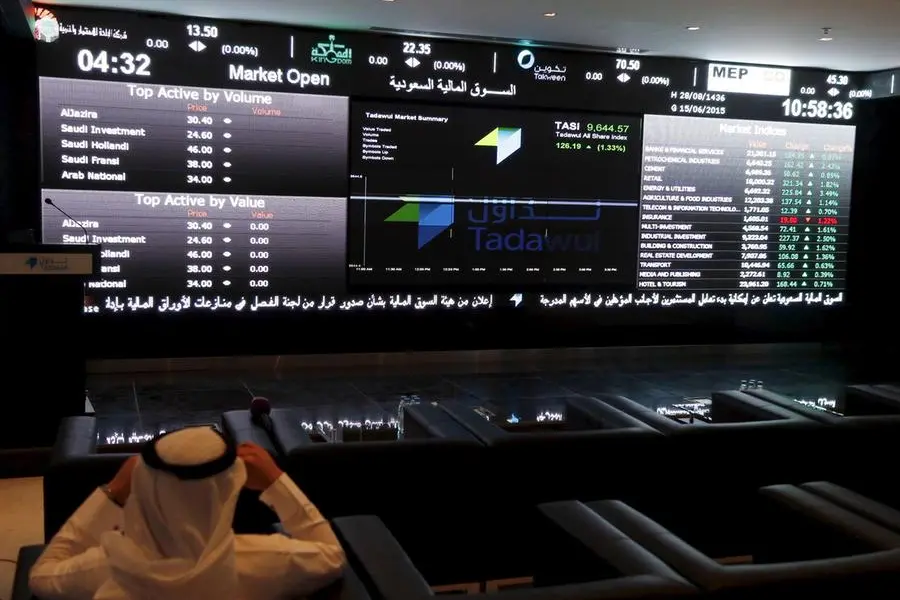
The Saudi banking sector is marching forward, shrugging off global fiscal challenges facing the rest of the world.
The country's deposits rose SAR1.18 trillion in September, an impressive 12% rise over the previous month. This has given Saudi banks the wherewithal to flex their financial muscle and expand their loan offerings.
Indeed, Saudi loans portfolio has risen to an all-time high of SAR973.2-billion, a remarkable 16.2% increase compared to the same period last year, according to National Commercial Bank research.
"The pace of credit growth in the Saudi economy is gaining momentum and reaching growth levels of early 2009 as banks feel more comfortable to take on risk," said Majed A. Al-Ghalib, senior economist at National Commercial Bank. "The maturity of credit maintains its direction towards the medium term category by reaching a share of 17.9%, adding SAR37.7 billion since the beginning of the year."
Mr. Al-Ghalib notes the local banks' are working aggressively to finance small to medium enterprises to position themselves in this nascent segment of the market - SME financing grew by 30.6% in September.
"Short term funding still holds the largest share at 57.1% with an annual gain 14.7% and long term credit posted a growth of 10.7% Y/Y," said the analyst. "The strong growth in lending this year and the, relatively sluggish, pace of deposits has aided the loans to deposits ratio to 82.5% from 77.6% last year."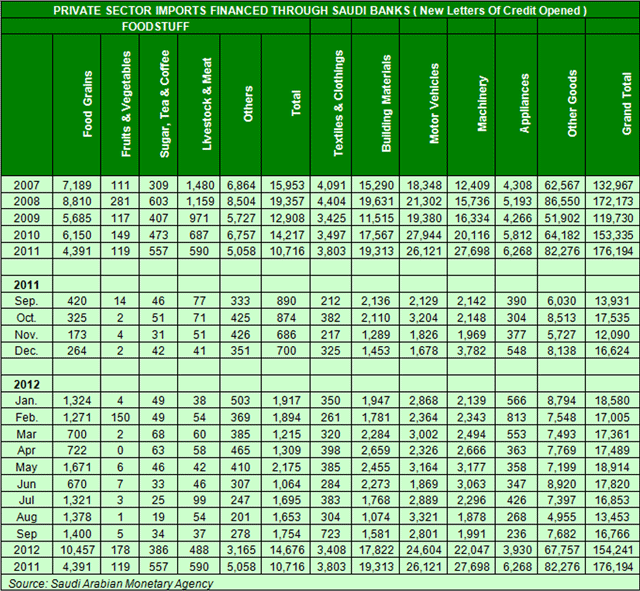
NON-OIL DRIVING GROWTH
The Saudi economy is set to grow by 5.8% this year and a less impressive 3.8% in 2013, according to investment bank Jadwa.
Unlike recent years, the non-oil private sector will drive growth, clocking 6% growth in both 2012 and 2013, according to Jadwa. Oil GDP will shrink from 6.1% in 2012 to a negative 1% in 2013.
"Despite the prevailing global economic gloom, the Saudi economy continues on a solid growth path. While this year expansion is not likely to match that of last year, it is more likely to register one of the highest growth rates among the G20 countries," Fahad Alturki, senior economist at Jadwa Investment, wrote in a recent note.
The Saudi Central Department of Statistics and Information, shows consumer price index inflation is slowing with an annual rate of only 3.6%, lower still than the 3.8% recorded in August. On a monthly basis, the kingdom's CPI rose 0.6% in September.
However, the oil sector - which had driven the Saudi economy during the global financial crisis - is finally showing signs of slowing down.
OPEC report shows Saudi oil exports fell by 238,000 barrels per day in September, at 9.695 million bpd - its lowest exports since the first quarter.
Overall, the economy has been driven by four key factors, according to EFG-Hermes:
1 the oil and gas sector
2 Expansionary fiscal policy with a significant positive impact on the non-oil private sector,
3 Robust domestic consumption and
4 Supportive bank lending to the private sector.
The non-oil private sector has been a key component of the Kingdom's all-round growth. Consumer and business sentiment has risen over the past month, suggesting strong growth. Purchasing Manager's Index (PMI) has been rising steadily and touched 60.3 points in September from an all-time low of 56.3 a year before.
Other indicators also suggest growth expanding across the economy.
"The wholesale and retail sector expanded by 7.1% in the first half of this year compared to 7.4% in the same period last year," the Jadwa analyst wrote. "While we expect consumption spending to have slowed during the third quarter, we expect the Hajj season to increase consumption spending leading to a solid growth in retail sector over the fourth quarter.
"We thus expect the retail sector to expand by 4.6% this year compared with 7.1% last year. The direct impact of a strong retail sector is likely to be reflected on the level of imports; the volume of consumer goods imports through the ports over the first six months of this year is 20% higher than in the same period of 2011."
The construction sector also saw robust growth. Sales of cement has risen 11% in the first nine months of the year, while the volume of construction goods has risen 42% during the first six months of the year.
"While activities are likely to have slowed during the third quarter, we expect a strong recovery toward the end of the year and we expect this sector to expand by 8% this year compared with 11.6% last year," said Mr. Turki. "With the government committed to a substantial infrastructure and house-building programs over the next few years, construction should remain one of the fastest growing sectors."
BANKING ON GROWTH
The Kingdom's banking sector has been on a growth path, shrugging off global concerns and even as its international counterparts recoil from low growth in the world economy.
Here are some key strengths of the Saudi banking sector:
However, earnings of the 11 listed banks fell 11% in the third quarter, compared to the same period last year, an estimated 43% Q-o-Q increase in aggregate provisioning costs.
"Similar to 3Q2010, when provisioning costs across the sector rose sharply as banks worked to improve their NPL coverage, the spike in provisioning costs in 3Q2012 has come as a major negative surprise," says EFG-Hermes.
However, the high provisioning does not point to a "broader asset quality deterioration cycle," the bank said.
Manama-based SICO put its bluntly.
"Saudi banks' 3Q12 net profits disappointed investors, with earnings declining 13% on a year on year basis, owing to an increase in provisioning charges," said SICO Chiradeep Ghosh in a note.
"Weak net profits overshadowed the banks' steady operating performances, with continued healthy lending and deposit growth. Overall, banks' performances were mostly in line with our expectations as far as total revenues, pre-provisioning profits, and lending growth were concerned; however, aggregate profits missed our estimates by 9% due to an unexpected increase in provisions."
ALL-ROUND GROWTH
Most segments of the sector have benefited from Saudi Arabia banking sector's lending spree.
New loans to building and materials sector is set to exceed 2011 levels and indeed loans in the past few years.
"With the government committed to a substantial infrastructure and house-building programs over the next few years, construction should remain one of the fastest growing sectors," said Jadwa.
Lending for machinery has also been rising, although the second half is proving to be less robust than the first half of the year.
Consumer-oriented sectors have also shown robust growth. Motor vehicles loans looks set to eclipse 2011 figures.
However, the Kingdom's authorities are also keeping a sharp eye on food imports.
Food grains have already doubled from last year with a full three months still to go.
Although fruits and vegetables, sugar, tea and coffee and livestock and meat are either at par with, or below, 2011 levels.
Overall, high government spending has made lenders and borrowers more comfortable with the economic environment.
"At the same time, banks have covered all the non-performing loans that built up on their books in recent years and so have much less need to devote funds to building up provisions, rather than lending," says Jadwa.
"The local outlook is supportive for continued growth in bank lending, but this would be disrupted by a dramatic intensification of the banking problems in the Eurozone, even though the Kingdom's banks would probably not be directly impacted."
CONCLUSION
The Saudi banking sector's impressive performance underlines the Kingdom's non-oil private sector strength and the key role they are set to fuel the Kingdom's economy.
With oil prices showing signs of rising on account of Middle East turmoil, expect Saudi oil export figures to balloon as well.
Of course, the rise in oil exports needs to be tempered with the worrying situation in the region which could escalate and dampen consumer and investment sentiment.
For now, though, the Saudi consumer and business seems focused on the pace of growth and the opportunities ahead for growth.
© alifarabia.com 2012