Muted lending and deleveraging continues to haunt UAE banks. While most regional banks have shrugged off the after effects of the global financial crisis, the UAE banks remain hamstrung by the real estate crash and exposure to Dubai Inc's debt woes.
Lending in the UAE grew by a paltry 1.8% in the first six months of the year, compared to 7% in Saudi Arabia and nearly 14% in Qatar.
"The UAE banking sector's balance sheet remains considerably leveraged, as reflected by a loans-to-deposit ratio of 98%, which stands at the higher end in comparison to regional and emerging market peers," notes Shuaa Capital.
"However, the sector has witnessed a consistent move towards a healthier balance sheet structure during the past three years due to a combination of 1) a more conservative approach adopted by banks, 2) government support and 3) tighter regulations."
Still, there is much work that needs to be done, especially by Dubai banks.
UAE banks saw mixed results in the second quarter, with Abu Dhabi banks outperforming Dubai institutions.
"ADCB was the only bank, which reported margin improvement over last year, while other banks struggled to maintain their margins owing to low corporate borrowing appetite and improved liquidity in the system," said Chiradeeep Ghosh, analyst at Bahrain-based SICO.
All eyes are on Emirates NBD, the country's largest bank by assets, and which has significant exposure to Dubai Inc. and the real estate market.
Emirates NBD reported net profit of AED648-million, up 1% quarter-on-quarter but down 13% year-on-year, on lower net interest income, rising expenses and costs associated with the merger with Dubai Bank.
The bank's revenue fell 7% quarter-on-quarter, on account of a 7.7% decline in net interest income. EFG-Hermes estimates that ENBD's net interest spreads declined 22bps to 2.08% on lower asset yields. Non-interest income was ahead of analyst expectations on stronger fee and investment income.
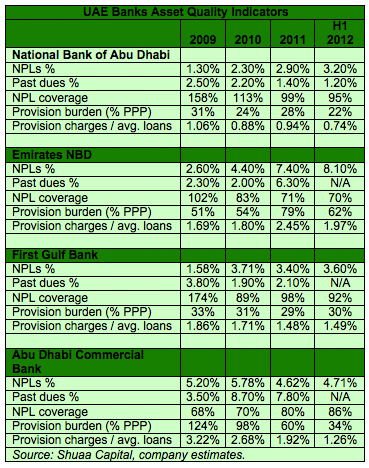
However, the bank's asset quality continues to deteriorate. The bank's non-performing loans rose during the second quarter to 14.3% from 14.1% in the first quarter, apart from deterioration in its Sharia'h-compliant loan portfolio.
"The 2Q12 loan loss provisioning charges fell 17% QoQ, which is surprising considering that the bank's loan loss reserves cover only 53% of non-performing loans, excluding the restructured exposure to Dubai World," SICO's Mr. Ghosh states.
In an April ruling, the Central Bank tightened lending rules and curb excessive lending to one segment of the economy to reduce their risk. While this would go a long way in strengthening the banks, in the short-term poses challenges for some of the banks such as Emirates NBD and National Bank of Abu Dhabi.
"We believe that ENBD has reallocated its collective provisioning reserves towards specific provisioning reserves, as collective provisions came down to 1.4% of risk-weighted average in 2Q12 from 1.6% as of 2011 end. We estimate that the bank did not provide for collective provisioning reserves this quarter, thereby lowering its total loan loss provisions which boosted profitability."
REAL ESTATE OVERHANG
Shuaa Capital's data suggests that real estate loans make up nearly 22% of the UAE banks' combined loan book - similarly to the average of 23% during the past three years.
"Despite the recent improvement in overall price trends and real estate activity, we still believe that the road to recovery in the real estate market will not be short," says the investment bank.
Real estate and construction loans make up an average of 22% of the total loans of the four major banks, similar to the 2009.
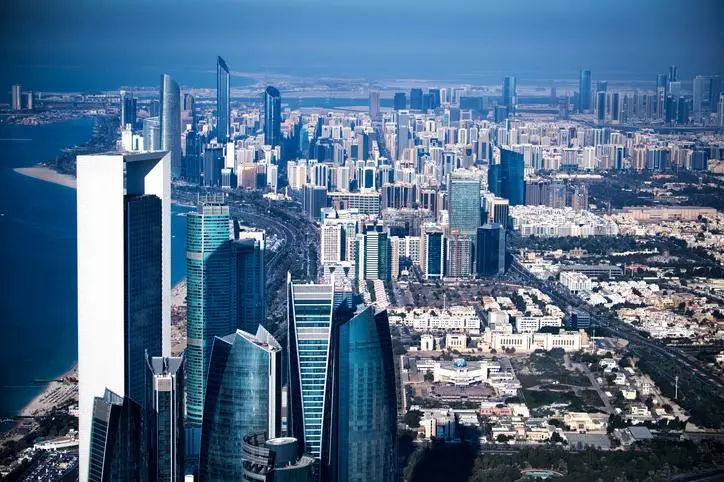
The Dubai real estate market has shown marginal improvement this year. After falling off a cliff over the past few years, apartment prices have remained flat this year, while prices of premium villas jumped 21%.
"Since mid-2008, real estate prices have fallen by more than 60% in Dubai, and to a lesser extent in Abu Dhabi," said the International Monetary Fund. "The large supply overhang and the completion of additional projects in the coming years render an early and broad-based recovery of the sector unlikely."
However, the authorities have cancelled more than 220 projects to ease some of the oversupply issues.
Real estate consultants Jones Lang La Salle says that the emirate's villa market is expected to continue to outperform the apartment sector and whilst prime residential assets in well established locations continue to see improved performance, secondary buildings and locations are still suffering from both rental and pricing declines.
With most analysts predicting continued pain for the emirate's real estate market, along with Dubai Inc.'s debt woes, the country's financial institutions will continue to carry the burden.
"We believe UAE construction market still poses challenges in terms of operational performance, liquidity, financing and working capital requirements,"
notes Shuaa. "We are of the view that this concentration risk in real estate and construction sectors could be a source of potential asset quality deterioration moving forward."
NO DOOM, JUST ANXIETY
While the emirate's real estate sector is not out of the woods, most analysts think the worst is over, and the industry is in recovery mode.
Indeed, other parts of the economy have shown tremendous promise. The UAE economy is expected post a 4.9% growth in 2012 and 3.4% next year, which is impressive given the global economic gloom, according to Samba estimates.
"In Dubai the hotel and retail segments are showing positive trends, although concentrated in the upper end of the market, while the residential market appears to have bottomed out," noted Samba in a report. "Prime office rents have remained stable for the past 12 months, but vacancy rates remain high (35%+ depending on area) and secondary location office rents continue to trend down."
Meanwhile, land transactions in the emirate grew by 63% in the first of the year to reach AED63-billion, according to the Dubai Land Department.
"The real estate market in Dubai has shown high levels of flexibility in meeting investor requirements and trends during the first half of 2012, specially the new investors looking to benefit from the market's price correction in the past two years," said Sultan Buttin Bin Mejrin, director general of the Dubai Land Department, noting that the emirate saw 133 transactions per day in the first half of the year.
In a report earlier this year, the International Monetary Funds' stress tests showed that the emirate's domestic banking system could handle a significant increase in NPLs.
The IMF notes that improved economic prospects and a more proactive approach to managing rollovers mitigate the refinancing risks.
"Non-hydrocarbon GDP growth is gradually picking up, supporting asset prices and improving GREs cash flows, and GREs are now focusing less on expansion and borrowing than on consolidation and deleveraging," the IMF said in an earlier assessment of the UAE's economy.
"A number of GREs are planning to use cash from asset sales and operational cash flow to repay part of the maturing debt. In response to the prospects that some European banks may not renew their credit, GREs are actively looking for alternative investors, particularly in Asia and the Gulf region. At the same time, the authorities noted that lenders are becoming more diligent in evaluating borrowers' repayment capacity."
CONCLUSION
High oil prices will ensure that the Dubai economy continue to benefit from the petrodollars from Abu Dhabi and other Gulf states.
The emirate's tourism, transportation and retail sectors have done well in the face of global economic slowdown and that highlight the underlying strength of the economy.
The emirate's status as a regional hub for business and the strength of Abu Dhabi are comforting and means that while the banking sector's exposure to the real estate market is serious, it remains manageable.
© alifarabia.com 2012