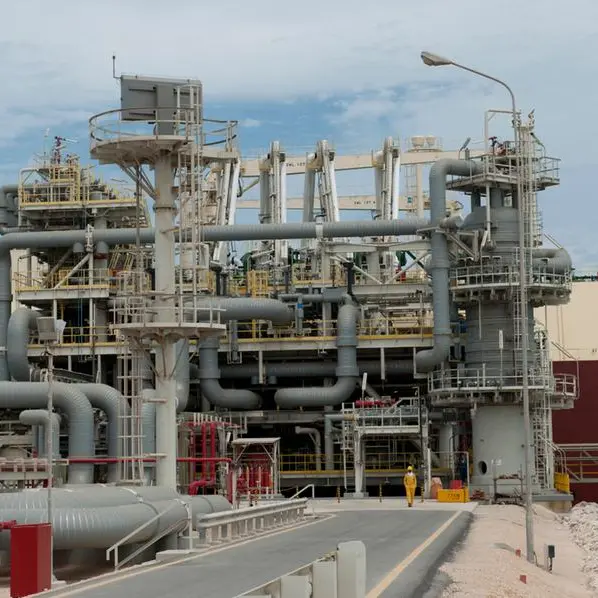
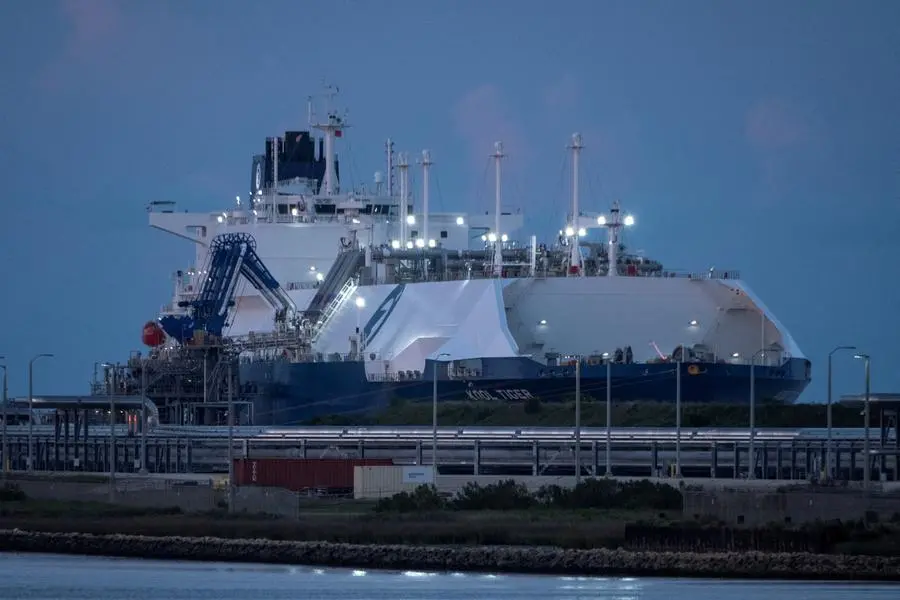
Qatar's moratorium on natural gas development in its massive North Field is expected to continue for some time, but the country will likely face headwinds when it looks to revive developments in the world's third natural gas basin.
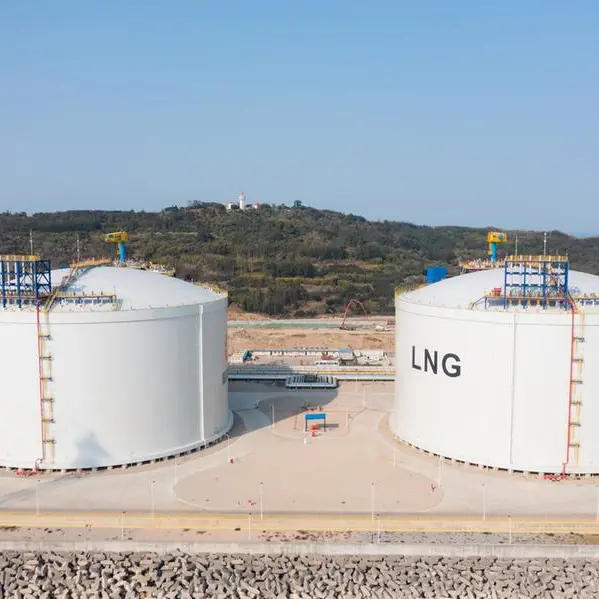
Qatar has raked in huge revenues with admirable and diligent development of the natural gas field it shares with Iran, and it has emerged as the world's largest exporter of liquefied natural gas.
The country has grown at a blistering pace with an average annual growth rate of 12% during 2008 to 2012, as billions of investments in its natural gas started paying off handsomely.
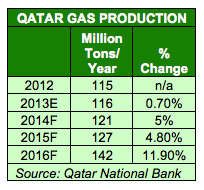
However, gas extraction has now reached full capacity and is unlikely to increase significantly thanks to the moratorium.
The moratorium is in place until at least the end of 2014, while studies are carried out on the appropriate rate of sustainable extraction from the North Field.
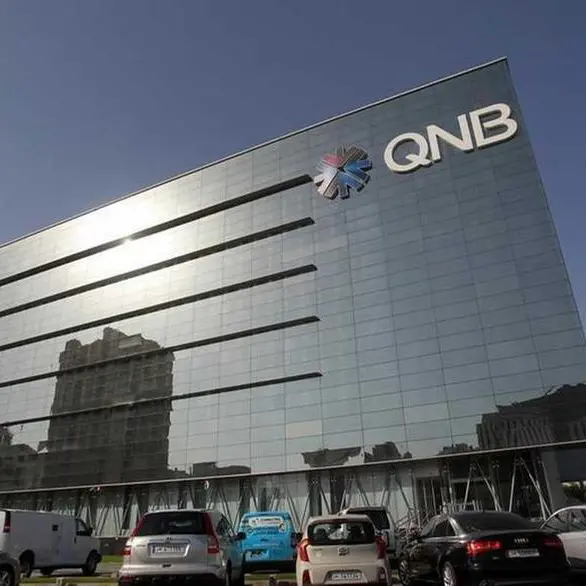
"There may be some small increases to supply existing gas-fed projects, such as the Pearl GTL project," according to Qatar National Bank. "The next substantial increase will come from the Barzan gas project, which is expected to add about four million tons per year to production from 2015. The gas is to be used domestically to feed power stations and industrial projects."
Qatar's oil production is also in decline. The country has comparatively paltry reserves of just over one billion barrels from its onshore and offshore fields. Qatar produced around 725,000 barrels per day last year compared to a peak of 845,000 bpd in 2007.
State-owned Qatar Petroleum is looking to invest USD 6.6 billion to raise crude oil production and has recruited major oil producers such as Exxon Mobil Corp. to develop its Dukhan field. Another project to double production at Bul Hanine field to 90,000 bpd is also under development.
US independent oil producer Occidental Inc. is also investing USD 3 billion in water injection to sustain production of around 100,000 bpd at the Iddi al-Shargi field North and South Domes.
"Production increments are likely to continue into the medium term as the benefits of investment and development programs are realized. We therefore expect crude oil production to gradually rise to an average of 800,000 bpd by 2017," QNB estimates.
CHANGING GLOBAL LNG
The global LNG sector is in the midst of rapid changes, with more than 50 countries looking to send natural gas to Asia.
Australia is set to beat Qatar as the world's largest LNG exporter by 2017 with a spate of new developments and a number of other heavyweights including Russia, United States, Canada, Angola, Tanzania, Mozambique and Papua New Guinea are expected to build new terminals to sate the world's rising natural gas demand.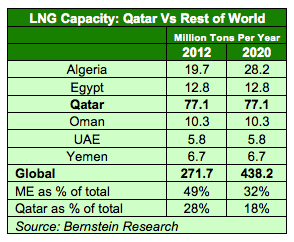
Amid this backdrop, the normally-aggressive Qatar has been coy about its plans to develop its share of the North Field basin, noting that it does not want to exhaust its supply with overproduction.
"The ban's other priority was to preserve Doha's cordial relations with Tehran by avoiding over-production of its side of the North Field, also known as the North Dome; Qatar and Iran share the same natural gas deposit which is the world's largest," said Leslie Palti-Guzman, analyst at Eurasia Group.
"While Qatar has monetized its gas, with the help of international companies, and has become the world's largest LNG exporter, international sanctions have kept Iran's share of the field, South Pars, largely underexploited. The currently uncertain outcome of the diplomatic talks with Iran makes the extension of the moratorium a safe choice for now."
CHANGING DYNAMICS
Qatar Petroleum is also in the midst of a restructuring, which would give the corporation more authority and separate it from the energy minister.
"The timeline of this change, as with all critical changes in the country's leadership, remains tightly guarded among key members of the government. Saad Sharida Al-Kaabi, QP's director of oil and gas ventures, is rumored to become the company's next managing director," said Palti-Guzman in a note to clients.
"Should his appointment go through in 2014, it would signal that Qatar's moratorium is unlikely to be lifted in the same year - Al-Kaabi was after all the man who developed the ban and has a tough negotiating reputation among international energy companies."
As Qatar considers its internal structuring, other markets may start sewing up fresh Asian deals. In addition, most Asian countries such as China, Japan and South Korea are investing in Canadian and Australian LNG export projects to ensure long-term supply guarantees.
As new LNG projects ramp up, Qatar also face pressures in the LNG spot markets, which it has dominated to date. The impact has already been felt as Qatar has adjusted its natural gas spot prices in recent months to ensure it maintains its market share.
Most crucially, the possible return of Iran to the market may also weaken Qatar's resolve to raise production from the North Field. While Qatar has maintained that it would support Iran's North Field development, Tehran would likely turn to international firms to develop its share of the resources.
Qatar has also lost market share in Egypt after a political fallout after the Muslim Brotherhood's regime was sacked by the Egyptian army.
"Meanwhile, less-than-optimal relations with the UAE may mean that plans to expand the Dolphin gas pipeline to reach 3.2 billion cubic feet per day of capacity - currently supplying over 25% of the UAE's overall gas needs - will be put on hold. Instead the UAE will look into other fuels and LNG imports in order to reduce its overarching reliance on Qatari gas as a result," said Eurasia Group in a note.
INTERNATIONAL PUSH
While Qatar's domestic natural gas ambitions are on ice, it has ramped up international investments.
Qatar Petroleum International recently bought a 23% stake in Parque das Conchas oilfield off Brazil from Royal Dutch Shell at a price tag of USD 1 billion. It also completed the acquisition of 15% of Total E&P's Congo unit for USD 1.6 billion. Last year Qatar also bought Canadian company Suncor Energy's stake in natural gas fields along with British partner Centrica for USD 981 million. Qatar already has plans to ship LNG via its Golden Pass Project from Texas.
These developments will ensure that Qatar will remain a player in the LNG space, but would likely lose market share and dominance over the next few years.
The global LNG landscape is set to change dramatically by the end of the decade. But there are few signs to believe that Qatar can emulate its earlier feat of taking the natural gas world by storm once again.
The feature was produced by alifarabia.com exclusively for zawya.com.
© zawya.com
© Zawya 2014