More than USD65-billion worth of projects have been awarded in the Middle East North Africa region, according to Citibank Group research.
But the pace of project approval is running out of steam, says the Wall Street bank.
"We expect a slower 4Q, given 1) oil price volatility on global economic uncertainty; 2) rising bureaucratic delays (e.g. administrative bottlenecks in Saudi Arabia as the market has grown over 20% year-on-year); and 3) attention diverted by regional geo-political risk (e.g. tensions with Iran)," notes Heidy Rehman, analyst with Citibank.
EFG-Hermes analysts concur, estimating that value of projects awards declined nearly 50% during the third quarter, due to the slow Ramadhan and summer season and also because the strong project-awarding spree in the previous quarter.
Citibank notes the Iraqi market has slowed down to ongoing domestic tensions, and conflict on both sides of its border - Iran and Syria.
Meanwhile, Saudi Arabia is also slowing down after a project-awarding spree and partially because the market is absorbing debt issues of Mohammad Al Mojil.
"We would also note issues relating to two major Saudi contractors, e.g. bankruptcy and potential mismanagement," says Citibank.
Still, Jadwa Investment data shows cement sales in Saudi Arabia over the first nine months of the year stood at 10.7% higher than in the same period of last year.
Data also shows imports of construction over the first six months grew 42% in the first six months of the year, compared to the same period last year.
While Jadwa expects Saudi construction activities to have slowed during the third quarter, it expects a strong recovery toward the end of the year and expect growth of around 8% this year compared with 11.6% last year.
"With the government committed to a substantial infrastructure and house-building programs over the next few years, construction should remain one of the fastest growing sectors," said Fahad Alturki, senior economist at Jadwa, in a note to clients.
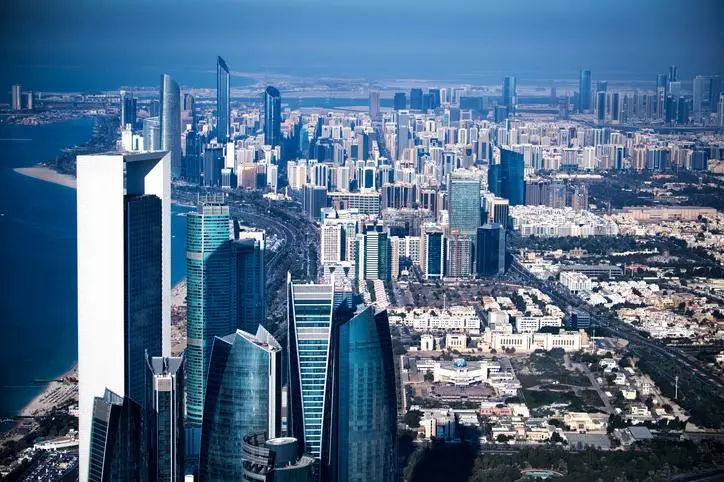
While Saudi and Iraqi markets are somewhat easing, there are signs that Abu Dhabi and Dubai markets are picking up.
Dubai's real estate contracting has staged a smart recovery. Citibank believe the revival could partly be due to 'refugee capital' from buyers facing geo-political risk and currency depreciation in their domestic markets, e.g. India, Iran, Pakistan and Egypt.
"While this lends some support to the market we believe development activity is centred on specific buildings rather than large-scale projects. Abu Dhabi has awarded some mega-projects but its pipeline lacks growth," says Citibank.
Dubai's contracting levels are rising although from very weak levels.
"We see this as an indicator of the economic recovery, and follows strong external and consumption activity," notes Monica Malik, analyst at EFG-Hermes.
FLAT YEAR
For all the stimuli trickling into the regional economies, project awards could be flat for the year, compared to 2011. Citibank estimates another USD30 billion worth of projects will need to be awarded in the fourth quarter to match last year's value of projects awarded.
Overall, there are nearly USD1.9 trillion worth of projects under way in the Gulf alone, according to Citibank estimates.
Saudi Arabia has close to USD773-billion under way, up 21% from last year, while UAE has USD544 billion in progress, although it is down 7% from last year.
Qatar, which is preparing for the FIFA World Cup in 2022 has more than USD200-billion worth of projects under construction, which is up merely 2% from last year.
However, Qatar's building and construction is gearing up for growth. The sector has grown at 6.1% in the first quarter and 10% in the second quarter.
Bahrain, which is rocked by political unrest, pushed through a number of projects and currently has USD67-billion under way, up 22% from last year. Oman also has USD114 billion under wayr, rising 13% year-o-year, while Kuwait has USD186 under construction, up 10% from last year.
Meanwhile, Iran has seen its projects contract 4% year on year but still has USD289-billion worth of projects.
Iraq, which recently surpassed Iran's oil production capacity, is also close to matching its construction pipeline with USD283-billion under way, although it is down 9% from last year.
Finally, close to USD1.5-trillion worth of projects have been cancelled or put on hold in the region, with just over half, or USD757-billion, located in the UAE.
© alifarabia.com 2012