When you feel prosperous, start building cities. And so it is for Nigeria.
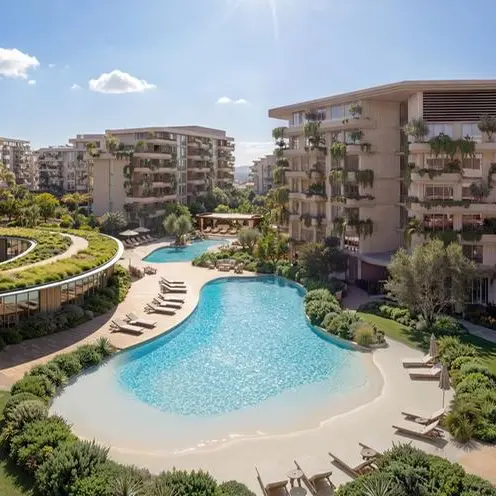
Expected to overtake South Africa as the continent's largest economy in a few years, Nigeria recently launched Eko Atlantic City, a Dubai-style offshore five-million-square-kilometer leisure, tourism and residential destination for the country's well-heeled.
"When completed, the Atlantic City will not only benefit the promoters of this project, but it will be an important addition to our nation's strive to promote tourism and good living," said president Goodluck Jonathan at the project launch.
"The project is a great example of partnership, for it brings private individuals and companies who have the knowledge and requisite expertise to transform land lost to erosion into a delightful Ocean City."
A 'Lagos Wall' is also being built to keep the offshore city safe from the Atlantic Ocean, and is no doubt set to emerge as a landmark African destination within a few years.
Even former US president Bill Clinton turned up at the event, underlining Nigeria's rising clout in global political circles.
President Jonathan also announced the federal government's plan to build a Centenary City in Abuja and a number of other cities in the near future.
"In the next three years, three similar cities will spring up and Nigerians will be able to choose where they wish to live," he said at the event.
The country is also in talks with the World Bank to help secure a USD 300-million credit to get the Nigeria Mortgage Refinancing Corporation off the ground.
Rising population and growing economy
Nigeria has good reason to build new cities. It is one of the world's most populous nations, with 165 million people, and rising affluence is making greater demands on better housing and amenities for its citizens.
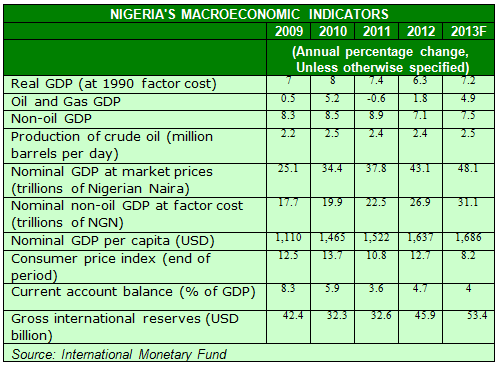
Its economy is also set to grow at an impressive pace at 7.2% this year after a more subdued 6.3% growth in 2012, according to the International Monetary Fund.
"The fiscal policy stance was tightened in 2012 and fiscal buffers are being rebuilt," the fund said in a report on the country on March 28. "The non-oil primary deficit of the consolidated government is estimated to have narrowed from about 36% of non-oil GDP in 2011 to 30.5% in 2012, mainly due to expenditure restraint."
While Standard Chartered Bank is expecting a more cautious 6.6% growth in 2013, it believes structural reforms in the power and agriculture sectors and more sustained oil production should lift the country's economic prospects in the medium-term.
Standard Chartered analyst Razia Khan believes the government has a narrow window of opportunity to bring in greater structural reforms as the next elections are due in 2015, giving president Jonathan the leeway to implement sensitive reforms, especially regarding fuel subsidies.
Another key area is the long-delayed Petroleum Industry Bill which could pass this year. Senators debated the issue in March but the process underlined the strong disagreements among politicians from the 36 Nigerian states.
The senators have now passed on the bill to five committees focused on oil, gas, upstream, downstream and judiciary, after which the public will be asked for comments.
The bill is a key document for the future well-being of the country, as oil production makes up 80% of the government's revenue.
The PIB is focused on improving fiscal terms with foreign oil companies, transform the state-owned Nigerian National Petroleum Corporation into a commercially-run entity and deregulate the downstream sector.
"International oil companies have complained that the revised fiscal terms are too harsh and will discourage further investment," wrote Standard Chartered's Khan in a note to clients. "While many see eventual passage of the PIB as a positive, potentially reducing regulatory uncertainty and reversing a trend of declining investment in Nigeria's oil sector, the legislation misses an important opportunity to improve transparency, granting the finance ministry greater oversight over oil earnings."
More reforms needed
Oil-sector reform is just one aspect of the Nigerian economy that is in need of dire reforms.
Nigeria is ranked 131st in the World Bank's Doing Business ranking out of 185 countries, suggesting it has a long way to go before it can be considered an investment magnet beyond the oil sector.
Significantly, it is ranked 182nd in registering property, 178th in getting electricity and 155th in paying taxes, which tells the story of how poorly run Nigeria is, despite its oil riches.
In addition, corruption is rife in the country, while a number of structural reforms across the country are needed if Lagos is to emerge as a global economic player.
"Directors concurred that wide-ranging reforms are key to make growth more inclusive," said the IMF. "They agreed on the importance of supporting sectors with high employment potential, not through protectionist measures or tax incentives but rather with initiatives to improve governance, the investment climate and competitiveness."
alifarabia.com 2013