As Dubai tries to rebuild its image, the traditional tourism capital of the Gulf faces new threats from a serious competitor. Manik Mehta reports from the International Tourism Bourse in Berlin, and asks, is Oman the next "it" destination?
FOR the Arab tourism trade, participating in the International Tourism Bourse (ITB) in Berlin, touted as the "greatest tourism show on earth", has become something of an annual ritual. Indeed, a large turnout by Gulf exhibitors at the March event showed that the region is still keen to make its mark in a post-recession tourism market.
This year, however, things were a little different. That post recession landscape is far from a picture postcard scene, with Dubai, still the region's biggest tourism draw, trying to regain some of its former glory after a property crash, debt standstill, and reams of negative publicity. It is going to be a tough pitch, especially as other, less celebrated destinations, wait in the wings.
Thanks to a staple of hyped media reports, Dubai's malaise became widely publicised in many of its traditional Western markets, including Germany, from where the emirate sources a sizeable portion of its European tourism traffic. The ITB, though, was considered an effective platform to "put the picture in proper perspective", according to a representative of Dubai's Department of Tourism and Commerce Marketing (DTCM), which was present at the show with more than 100 partners and exhibitors.
"Tours of Dubai have never been as attractive and affordable as now. Attractive offers from hotels and airlines make a vacation in the world metropolitan city a unique experience," claimed a representative of the DTCM's Frankfurt office. In 2009, 283,319 German travellers visited Dubai, staying in hotels and apartments. This was a 3.17 per cent increase over the previous year. On a global basis, Dubai clocked in 2009 a total of 7,583,079 hotel guests, a 1 per cent increase over the previous year.
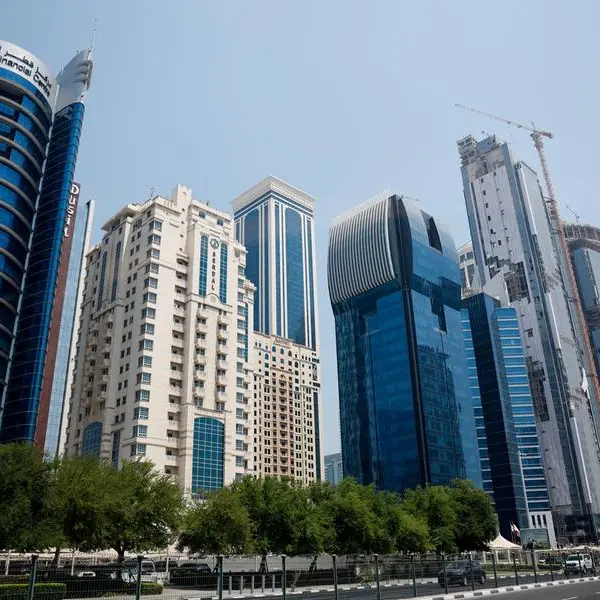
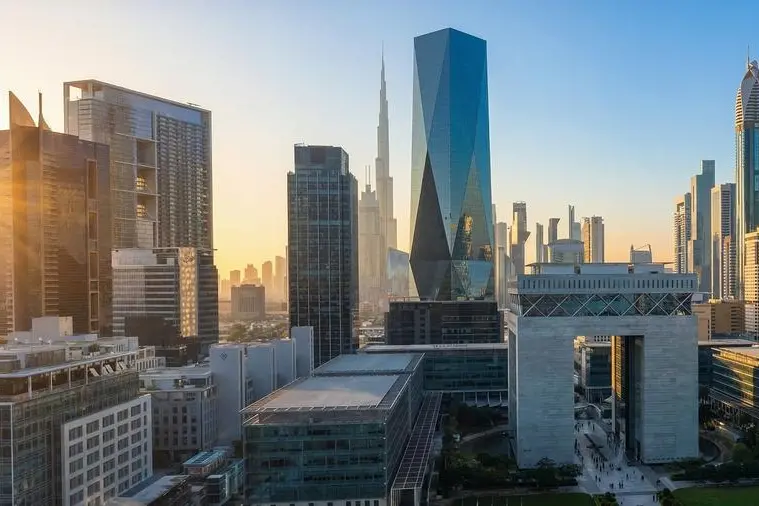
Besides unveiling its "kids-go-free" programme, a special family-friendly promotion which is supported by 80 partner hotels and will run parallel to the Dubai Summer Surprise from May 14 to September 30, 2010, Dubai highlighted its new modern wonder, the Burj Khalifa, the world's tallest building with its "At-the-top" viewing deck, recently re-opened after an unspecified fault shut it down, as one of the outstanding attractions.
Apparently trying to dispel any doubts about its financial health, Dubai emphasised that international hotels were expanding and adding new room capacity. New properties such as the Kempinski Hotel Emerald Palace, the Zabeel Saray Royal Residence, the Movenpick Oceana Hotel & Spa, the Royal Amwaj Resort & Spa at the Palm Jumeirah Island, Rotana Rose Rayhaan and the Dusit Princess City Center Hotel in the city would create an additional 18,000 rooms and apartments.
Dubai's new cruise terminal is expected to provide a strong impetus to cruise tourism, the latest weapon in its tourism arsenal. Khalid Bin Sulayem, DTCM's director general, has been describing cruise tourism as a growth driver for Dubai's overall tourism. A total of 87 cruise ships called on Dubai in 2009, bringing 261,000 passengers. With the upgraded infrastructure and the new cruise terminal, Dubai hopes to achieve the target of 325,000 cruise passengers this year.
Alpha Tours, a Dubai based destination management company, was confident of the economic rebound in its markets in Europe. "The DTCM responded fast to the crisis by launching a number of campaigns aimed at promoting tourism. It organised familiarity tours for travel agents," said Samir Hamadeh, the sales and marketing director of Alpha Tours. Meanwhile, Dubai was looking at other regions such as China and Australasia, Hamadeh said.
Asked whether Dubai felt threatened by Oman, which was generating considerable interest amongst foreign tourists because of its culture, history and well-protected natural environment, Hamadeh said that the comparison between the two was not appropriate. "Oman will never be a competition threat for Dubai because it does not have adequate hotels like Dubai. People interested in culture and heritage visit Oman," he said.
While both Dubai and Oman stress that they do not compete with each other because they are "as different as apples are from oranges", both destinations want a larger share of the tourism pie - and that means, invariably, competing against each other given their geographical proximity.
Because of the growing interest amongst Western tourists in Oman's culture, history and pristine natural landscape - some tour operators were privately saying that a certain fatigue had set in amongst tourists over the wild growth of Dubai's concrete jungle. Capitalising on that, the Omani government is establishing new tourism promotion offices in several European countries such as Belgium, Netherlands and Scandinavia. Other countries where Oman plans to open offices are Italy, Russia, China, Japan and India. Oman already maintains offices in France, Germany and the UK.
"We are not competing against any destination. Unlike other destinations, which have prestige projects, shopping malls and other attractions, Oman offers a rich cultural and historic heritage. Our strength is nature. Our policy has been to sustain our natural sites and protect our environment. Oman is not targeting mass tourism; it targets a middle and upper-class tourism segment. Our strength lies in our culture, nature and safety of the destination," said Haitham M Al Ghasani, the director of tourism in Oman's Tourism Ministry, in an interview with Gulf Business at the Berlin show. He added that the expansion of Oman Air's network of direct flights to Frankfurt, London, Paris and Bangkok and several cities in India would attract greater traffic to Oman.
The global economic crisis did not have much of an impact on Oman's tourism sector because most tourists visit the sultanate from September to February. "Many European tourists had booked their seats for Oman much before the crisis. Also, the other countries of the Gulf Cooperation Council (GCC) provided good traffic. This cushioned us. Our co-exhibitors here tell me that business was better this year than in 2009," Al Ghasani said.
Meanwhile, Oman has changed its tourism promotion strategy, albeit only slightly. "We have learnt from the economic crisis that it is unwise to put all your eggs in one basket. We are no longer relying on Europe alone. We are looking at other regions as well," he maintained.
Musallah Al Habsi, business development executive with Gulf Ventures of Al Azaiba, Oman, explained that Dubai is a "different" product. "Oman, which attracts a lot of leisure tourism in the middle and upper-end category, is the best kept secret, while Dubai's excessive visibility has created some tiredness amongst tourists for Dubai," Al Habsi said.
Unlike the uncontrolled construction boom in Dubai, Oman had cautiously opened its tourism sector. A favourite pitch of Oman's tourism planners is that except for snow, the sultanate offers everything - souks, artworks, over 500 forts and garrisons, medieval desert cities, unique landscape, beaches, reef diving, golf courses, and more.
But Oman is also spending billions of dollars on new tourist projects under its "Vision 2020". With tourism's share in the sultanate's GDP rising three-fold in the last decade, the sultanate wants to fully tap the tourism potential. Some of its high-profile projects include the "Blue City", an imposing new complex being built 100 kilometres west of Muscat, comprising 20 hotels and beach resorts, over 5,500 apartments and holiday villas, a 27-hole golf course, shopping malls and a cruise-ship harbour. The project will cost a whopping $20 billion; its first phase should be completed by 2012.
Another mega project, not far from Muscat, is "The Wave", an artificial lagoon with yacht harbour, holiday apartments, town houses and beach villas, three luxury beach resorts. "Yiti Marina", to be completed by 2013, will include three luxury beach resorts, shopping mall, 18-hole golf course and yacht harbour.
So, while Oman can use existing charms to capture the well-heeled, nature loving culture tourists, it has its eyes on another prize the mainstream European holidaymakers. Dubai and the wider UAE might be pre-eminent for a few years to come, but there's real competition being built along the shores of the Gulf's east coast.
© Gulf Business 2010