Arabian Industrial Development Company (Nama) has launched a long-term expansion plan to double its current production of caustic soda and epoxy resin. The expansion plan highlights the significant role of the private sector in boosting Saudi Arabia's non-oil exports. "Export demand for our major products - caustic soda and epoxy - has remained high and increasing.
We have embarked on a longterm strategy to increase our production and reengineer our global marketing approach in order to sustain that momentum of growth," said Mr. Abdulmohsen H. Al Otaibi, General Manager of Nama, a wholly-owned private holding company founded in 1992 to invest in industrial projects, particularly petrochemicals.
Nama is the umbrella company under which two petrochemical subsidiary firms operate - the Arabian Alkali Company (Soda) and Jubail Chemical Industries Company (Jana).
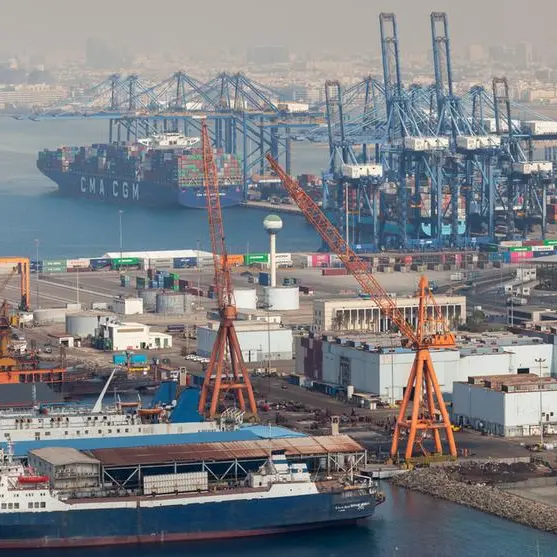
Both are based in Jubail Industrial City. Soda and Jana are export-oriented companies, supplying to the Gulf and Middle East.
Soda is the Kingdom's pioneer producer of caustic soda, an important indispensable inorganic chemical which is extensively used in various applications by industries around the world. Caustic soda is used in paper and pulp, soap and detergents, oil exploration and water treatment. Soda, which started commercial production in 1997, operates a state-of-the-art plant that is equipped with the most advanced and modern technology. The Soda plant has annual production capacity of 50,000 metric tons of caustic soda that are produced in prills (pearl) and solid (fused). Soda has already completed the initial expansion of its plant to hike production capacity from 50,000 t/y to 60,000 t/y.
By the end of 2005, Soda will double its production to 120,000 t/y, making it the biggest producer in the region, according to Engineer Fawsi Al Zamil, General Manager of the company. Most of the caustic soda produced by Soda is exported to Middle East, Africa, Far East and the United States. "With the expansion program, Soda would be able to meet demand for our caustic soda in other countries and expand as well our current market," Engineer Al Zamil said.
Saudi Arabia has at present total caustic soda production of 120,000 t/y. This includes Soda's output of 60,000 t/y and another 60,000 t/y equally shared by two other local companies. Jana, established in 1999 and went into commercial production in 2001, produces epoxy resin with annual rated production of 20,000 metric tons. Jana has also completed the first phase of increasing its production from 20,000 t/y to 25,000 t/y.
Jana is the only producer of epoxy resin in the entire Middle East and turning out 21 grades, a position that augurs well for expansion, according to Mr. Al Otaibi.The board of directors of Nama has approved the implementation of strategic development plans to attain the goal of increasing the company's current production by 100 percent.
"Above all, the board of directors of Nama increased the holding company's capital from SR 250 million to SR 650 million.
The increase in capitalization was aimed at supporting the current expansion and meet the fund requirements in evaluating new projects," Mr. Al Otaibi said.
He told SAUDI COMMERCE that two other strategic thrusts have been given the green light by the board of directors. These are, first, the establishment of a new company that will produce raw materials for Soda and Jana and, second, the strengthening of marketing alliance with Huntsman of USA in selling Jana's own epoxy resin brand - Razeen - in the Middle East, Central Asia and all African countries. This marketing shift will further make stronger the position of Jana in the international market, which is already supplying foreign buyers of its Araldite brand of epoxy resin, also licensed by Huntsman.
According to Mr. Al Otaibi, Soda has stayed on top of the market because of its high quality production, excellent plant performance that could deliver on the spot demand, and forward- looking management. "The marketing of caustic soda works in a very competitive atmosphere because it has a very mature market. Although competition is strong in the world market, including GCC, our caustic soda products have retained the advantages because of our good track record in quality production," Mr. Al Otaibi stressed.
As for the epoxy market, demand for Jana's Razeen brand is expected to increase further because Saudi Arabia is the only producer of epoxy in the Middle East, according to Mr. Al Otaibi. "Epoxy has wide and versatile applications in industries due to its excellent adhesive property, thus its increasing demand as adhesive, surface coating, liners in food and beverage production, and as insulation has been steadily increasing. Nama has retained the leadership in the region's epoxy market."
PRIME FEEDSTOCK
Nama's board of directors has approved the establishment of another company, called Hassad that will produce the prime feed stock for Soda and Jana, a milestone that will further guarantee the holding company's competitive lead in the global market. Hassad will not only supply the raw material requirements of the two sister companies, but will sell the excess production in the world market.
Hassad will be producing chlorine (about 50,000 tons per year), liquid caustic soda (45,000 t/y), HCL, calcium chloride, and about 30,000 m/t of epichlorohydrin (ECH). The liquid caustic soda to be produced by Hassad will be utilized as raw material by Soda in producing caustic soda prills and caustic soda solid, while the epichlorohydrin will be used by Jana in the production of epoxy.
The establishment of Hassad, which is a backward integration project, will immensely boost the productivity of the Nama Group and enable it to meet the ever increasing demands for its products - caustic soda and epoxy, Mr. Al Otaibi stressed. The engineering, procurement and construction package (EPC) for Hassad is expected to be released soon. The new plant, to be located near the Jana plant in Jubail Industrial City, is expected to be completed by the middle of 2007. TPL of India has been engaged to provide the technical support to the project. Soda and Jana have already achieved modest production increases, according to Mr. Al Otaibi, who took over the management of Nama only March 2004 after 20 years of service at the Saudi Basic Industries Corporation (SABIC).
Nama's performance up to the third quarter of 2004 has shown positive results compared with the same period last year. The group consolidated sales from January to September 2004 amounted to SR 166 million, compared to SR 115 million during the same period last year.
Nama, the holding company has now a capital of SR 650 million. The capital of Soda is 111 million (with Nama's share being 75 percent), that of Jana SR 300 million (Nama's share is 51 percent), and Harsad SR 250 million (Nama 70 percent).
New Sister Company Planned
According to Mr. Al Otaibi, a fourth company is under development. This new company will be gas-based, relying on the production of abundant supply of gas as fuel and feedstock to be made available to burgeoning industries to be set up in Jubail Industrial City.He said that parallel to the overall expansion of production, the strengthening of human resources and employment of more citizens are also major concerns.
Optimism on the growth of Nama was expressed by its Chairman of the board, Mr. Saud A. Algosaibi, who said that "the company will continue to closely supervise and protect its investment in the affiliate companies and its investment in other companies."
Nama has investments in two companies - National Chemical Industries Corporation (NCIC) and Arabian Industrial Fibers Company (Ibn Rushd). Nama invested in NCIC SR 6.375 million equivalent to 9.11 percent of the present equity of the company. NCIC was established in 1993 with a paid up capital of SR 35.625 million to implement sulphur derivative project with total annual capacity of 18,000 t/y.
Nama has shared 1.87 percent of Ibn Rushd paid up capital of SR 3,550 million, or about SR 66.3 million.
© Saudi Commerce and Economic Review 2004