Energy subsidies are a bad idea, says the International Monetary Fund.
Yet, Middle East governments are the biggest spenders on energy subsidies, which is draining resources but still not helping the region's poorest people.
The Middle East and North African governments bear the burden of USD 236.7 billion in energy subsidies, or 50% of the staggering USD 480.6 billion bill footed by governments across the world, according to the IMF data.
The MENA subsidy bill is about 8.5% of regional GDP or 22% of government revenues.
But the fund says that subsidies "aggravate fiscal imbalances, crowd-out priority public spending, and depress private investment, including in the energy sector."
"Subsidies also distort resource allocation by encouraging excessive energy consumption, artificially promoting capital-intensive industries, reducing incentives for investment in renewable energy, and accelerating the depletion of natural resources," the IMF said in a recent report.
"Most subsidy benefits are captured by higher-income households, reinforcing inequality. Even future generations are affected through the damaging effects of increased energy consumption on global warming."
The IMF figures are slightly below the International Energy Agency's estimates of USD 523 billion borne by governments across the world.
"Subsidies were most prevalent in the Middle East, amounting to 34% of the global total," said the IEA in a report published earlier in the year.
"Oil products attracted the largest subsidies, totaling USD 285 billion (or 54% of the total), followed by fossil-fuel subsidies reflected in the under-pricing of electricity at USD 131 billion. Natural gas subsidies were also significant, reaching $104 billion."
Throwing its weight around
IMF is using its considerable influence to force regional governments to cut subsidies and linking subsidy reforms to loans and aids.
On April 1, the Egyptian government announced it is cutting subsidies on cooking gas and will start charging 60% more for gas cylinders. The announcement comes days before IMF officials arrive in Cairo to resume talks on a stalled USD 4.8 billion loan package.
Food and fuel subsidies account for 8% of Egypt's GDP and is three times the spending on education and seven times on health expenditures.
"Fiscal reforms are a key pillar under the program," the IMF, noting that the Egyptian authorities plan to reduce wasteful expenditures, especially by reforming energy subsidies and better targeting them to vulnerable groups.
But raising prices on food and fuel can be a costly political move. Egypt's ruling Muslim Brotherhood has been reluctant to cut subsidies at a time when it has already upset large swathes of the population with its political reforms and changes.
While cutting subsidies is admittedly difficult in oil-importing, cash-poor states, it may be more acceptable in oil-exporting countries.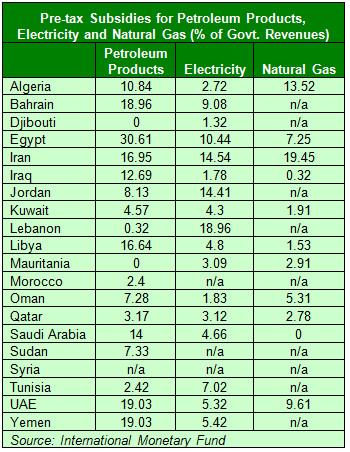
Lessons from Tehran
In 2010, Iran emerged as the first major oil-exporting country in the region to implement subsidy reform and rollout a plan to raise domestic prices to 90% of international prices within five years. At USD 82 billion, Iran's subsidies were the highest of any country, according to the IEA, and the new program may help cut that bill.
While Iran's strategy initially led to a sharp rise in prices, including that of electricity and water, the government matched that by depositing cash transfers in bank accounts for households, which were to be financed by the revenue from price increases.
"The subsidy reform was also motivated by the authorities' broader structural reform agenda to foster growth and job creation more than to address fiscal concerns," said the IMF. "Unlike other countries, Iran's reform was driven by a need to put its valuable hydrocarbon resources to more productive use rather than a need to reduce the direct burden of subsidies on the fiscal accounts."
While much of Tehran's good work was swept away by crippling economic sanctions by Western governments in the following years, it is instructive for countries like Saudi Arabia.
According to the IEA, Saudi government incurs an annual subsidy bill of USD 61 billion, the second-highest subsidy in the world after Iran.
Energy subsidies in the world's largest oil exporter shows the scale of the problem, as its citizens feel they are entitled to lower fuel prices than the rest of the world.
But there are political considerations at play here. The Saudi Arabia government is keen to appease its citizens and not escalate social tensions.
This is also true for many Gulf states including the UAE, Kuwait, Oman and Bahrain where citizens pay some of the lowest prices for gasoline anywhere in the world.
Increasing domestic oil demand
But the government largesse has come at a price. Regional government's consumption of oil is rising, leaving less for exports.
"Saudi Arabia's oil demand saw a solid increase of 9% year-on-year in January, as a result of increasing requirements for transportation fuels, while mild weather implied less direct crude burning," noted OPEC in its March report.
Most analysts believe Middle East oil consumption is expected to rise exponentially over the next few decades as populations rise, economies expand, and subsidies continue to give people less incentives to conserve energy.
The IMF believes subsidy reform is a great way to focus the government on more meaningful ways to help the most vulnerable in society and spend more on other key utilities such as healthcare and education
"Energy subsidies create distortions that are harmful to the economy. They can discourage investment in the energy sector and in more labor-intensive industries, and create incentives for waste and smuggling," the IMF said.
In late March, Saudi authorities caught smugglers looking to transport 3,260 metric tons of refined petroleum products out of the country, and anecdotal evidence suggests it is not the first attempt to smuggle the world's cheapest gasoline to other parts of the world to fetch a much higher price.
Still, it may be difficult for many Middle East regimes to eliminate subsidies unless they can find viable alternatives. That's why both the UAE and Saudi Arabia consider solar and other alternative energies as cornerstones of their new energy strategies.
Until and unless Middle East states can find real energy alternatives, subsidized oil and natural gas is unlikely to go away anytime soon especially in Gulf states.
© alifarabia.com 2013