PHOTO
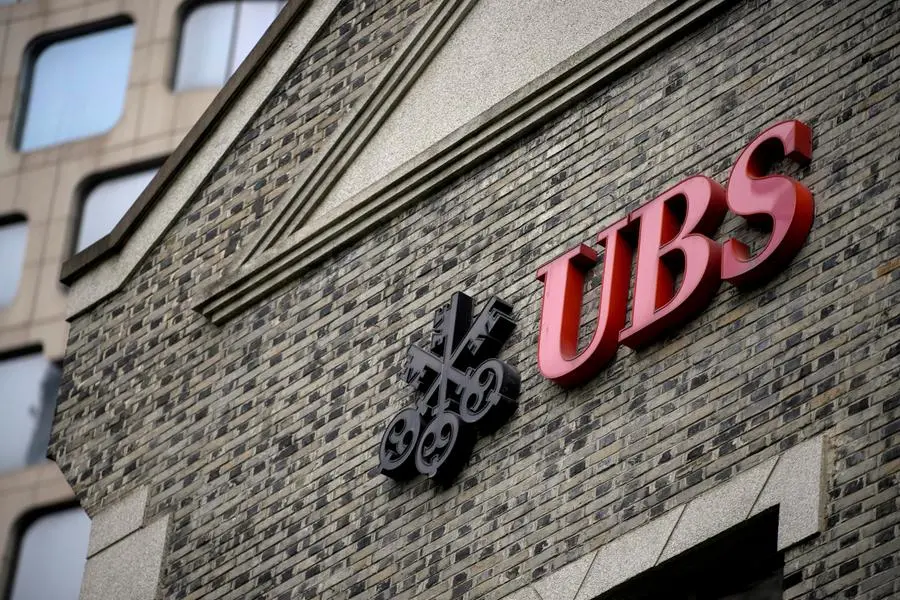
ZURICH - Switzerland is expected to flesh out stricter capital rules for UBS this month, a major step in determining the future of the banking giant that may even influence whether it chooses to remain based in the country.
Ever since the 2023 collapse of Credit Suisse and its acquisition by UBS in a government-backed takeover, Switzerland has pledged to tighten rules for its only remaining global bank, which UBS says could make it carry $22 billion in extra capital.
In a draft law expected in April, the government is very likely to stick to its chief demand, deemed excessive by UBS, that the bank must fully back its foreign units with Common Equity Tier 1 (CET1) core capital, according to lawmakers and bankers.
The government insists the overhaul is necessary for financial stability, pointing to the fact UBS has a balance sheet about twice the size of the Swiss economy.
Parliament will be the final arbiter of the new capital rules and may water them down.
On measures under immediate government control, however, which determine what assets count as core capital, the government is expected to offer concessions to the bank, lawmakers from across the political spectrum said.
Without them, UBS will face a greater risk of becoming a takeover target and may need to revive contingency plans that include possibly moving its headquarters abroad, two people familiar with the matter told Reuters. UBS declined to comment.
"With an additional capital layer, UBS cannot remain as attractive as other banks," said David Benamou, chief investment officer of Axiom Alternative Investments, noting how the debate about UBS capital caused its shares to underperform rivals.
Still, the bank's departure is seen as unlikely.
"Swissness will be an even greater asset in the future in this increasingly geopolitically risky world," said Hans Gersbach, economics professor at ETH Zurich.
STABILITY VS. COMPETITIVENESS
As UBS pushes back against the government's capital proposals, a group of lawmakers has suggested a concession, which would allow UBS to count less expensive Additional Tier 1 capital towards its required buffer.
The government will also issue so-called ordinance measures set to enter force in 2027 on whether UBS can still count software and deferred tax assets toward its core capital.
The ruling Federal Council previously suggested UBS should fully deduct these assets, which the bank has said would eliminate around $11 billion of its current capital.
Lawmakers, cantons and business groups have called for aligning the rules with other financial centres.
This could mean allowing UBS to write down software over three years, in line with European Union rules, lawmakers told Reuters. Rules on deferred tax assets could also be adapted to international standards, though the exact form of any relief UBS may receive is unclear.
"It's hard to imagine the ordinance won't be amended," said Roman Studer, CEO of the Swiss Banking Association.
UBS shares may come under pressure if the government enacts its original ordinance proposal without a phase-in period, Vontobel analyst Andreas Venditti said in a March note to investors.
Erich Ettlin, a Centre Party lawmaker, who chairs the parliamentary committee that will start debating the UBS rules in early May, said he hoped the ordinance would include concessions.
"Otherwise, we would have to correct that retroactively through legislative action."
(Reporting by Ariane Luthi and Oliver Hirt Editing by Dave Graham and Tomasz Janowski)