Dubai's luxury real estate prices recorded the second biggest jump after Jakarta, according to UK-based real estate consultant Knight Frank.
Prices of luxury villas in the emirate grew by nearly 20% from September 2011 to September 2012, and nearly 3% over the past quarter.
Knight Frank notes that cities such as Dubai are increasingly considered investment hubs for high net-worth individuals in their wider regions, which are turning them into investment magnets.
"In the wake of the Arab Spring, Dubai has been seen as a relative safe haven for MENA buyers."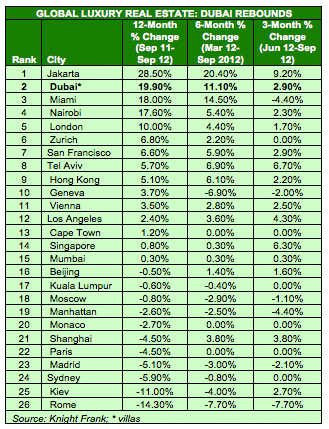
The news comes at a time when the emirate's real estate sector has rebounded, although market observers are calling for restraint and worry the emirate's ambitious private developers do not launch into another debt-fuelled building spree.
For now, the emirate is benefiting from a return of economic confidence. The Dubai economy is expected to post a 4.5% growth in real GDP this year, with tourism, retail and transportation leading the way.
Jones Lang La Salle echoes Knight Frank's findings.
"The overall residential market has recorded another positive quarter, with the villa market continuing to outperform the apartment sector in Q3," noted the respected real estate consultancy.
"Prime residential buildings in well established locations continue to see improved performance, but secondary locations are still suffering from rental and pricing declines as tenants relocate to new high quality projects."
Quoting REIDIN residential sale indices, JLL notes that the overall residential market has seen average prices rise by 14% year-on-year to August 2012.
"The residential market appears to be on a clear recovery path with both sale indices and rental indices improving," wrote JLL analysts in a Q3 note on the emirate's real estate sector. "However, major improvements remain more noticeable in the primary locations while lower quality buildings in secondary and less completed locations continue to suffer as tenants upgrade to better quality projects."
Other related sectors are also enjoying a boost and helping the market.
Fitch Ratings believes that Dubai's prime retail and hospitality been vigorous in 2012 and expects the sector to do well in 2013.
"However, despite some stabilisation, challenges remain for the office and residential sectors," said Fitch in a note. "Although offices and residential prices and demand are stabilising in prime locations in Dubai, widespread recovery in these sector is still challenged over the medium term."
Clearly, Dubai has benefited from being the preferred investment home for 'refugee capital'.
Analysts have suggested that expatriates from troubled neighbouring countries such as Iran, Afghanistan, Pakistan, Jordan, Lebanon Syria and the CIS states are helping fuel the surge in Dubai real estate.
SUPPLY KEEPS COMING
Supply remains a key issue, which will continue to keep overall residential prices in check, especially at the lower end of the market.
JLL expects 50,000 new residential units to come on line between now and 2014, although the delays could reduce that figure.
The consultant expects much of the residential stock outside the central Dubai area, with supply coming from the following locations over the next two years:
Jumeirah Village (approximately 6,300 units); Dubailand (6,200 units); Dubai Sports City (6,000 units); Dubai Silicon Oasis (4,200 units) and Al Furjan (4,000 units).
LONG WAY TO GO
While the rebound is heartening, there is still a long way to go before recovery can be confirmed. The residential real estate sector has fallen 60% from its 2008 peak and many real estate companies are still not fully back on their feet.
"Overall, most property investment and development companies in Dubai (and the emerging markets in general), have had a very bumpy ride since mid-2008," notes Fitch.
"However, companies operating in prime retail and hospitality have been able to weather the challenging market conditions better than companies focussed on the office and residential sectors."
Much of it depends on the real estate company's ability to refinance debt and maintain performance amid oversupply.
"The successful refinancing of maturing debt by real estate companies in 2011 and 2012 has helped remove the negative bias in the outlook. Dubai's ability to sustain the positive momentum and building up confidence in the real-estate is key to maintaining the sector's stability."
Time will not necessarily heal the market though. Barclays Capital says Dubai Inc. companies such as Nakheel and Dubai World will continue to face challenges beyond 2014.
"These entities received significant government support, which helped the creditors and the local economy. We would expect a second restructuring on more commercial terms and without government support to bolster the sovereign's credit outlook by reducing the government's contingent liabilities further," wrote Alia Moubayed, analyst at BarCap.
© alifarabia.com 2012