A combination of oil production disruptions and runaway spending could deplete Libya's formidable financial reserves in less than five years, analysts warn.
Oil production, Libya's economic lifeblood, has been slashed, averaging 220,000 barrels per day in the first quarter of the year compared with nearly 1.25 million bpd at the end of 2013, according to the International Energy Agency.
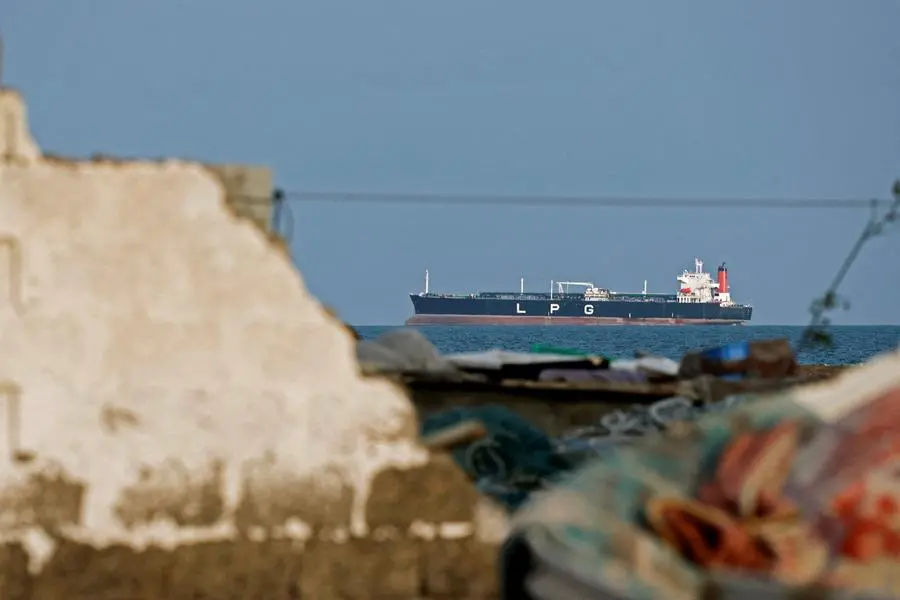
The dramatic drop in crude output is due to closure of eastern oil terminals amid a stalemate between rebel groups that control the country's east and the central government in Tripoli. The terminals collectively account for roughly 700,000 bpd of the country's export capacity.
The disruption has cost the country USD 130 million a day, according to government officials.
After a nearly 10-month standoff, an agreement has been reached between, but oil has not flowed to full capacity yet. As a first step it was announced on 6 April that Zueitina and Hariga ports, with combined capacity of 180,000 bpd.
Trading and shipping sources told Reuters Zueitina port will load its first tanker of crude on May 1-3 since reopening after being closed for nearly 10 months.
"Regaining central government control of the larger ports at Ras Lanuf and Es Sider, with a combined capacity of around 500,000 bpd, looks to be a more challenging negotiating process and it could be at least four weeks before exports from those terminals resume," the International Energy Agency said.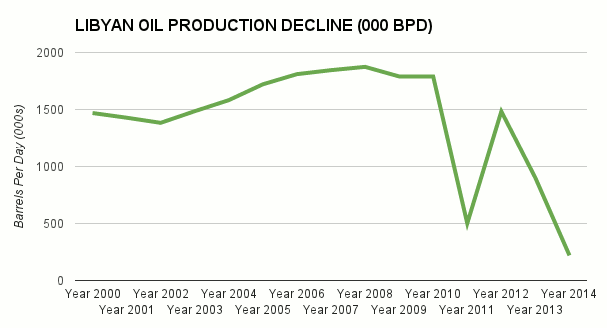
ECONOMY CONTRACTS
Libya had been lauded for a remarkable recovery after a civil war that ended with the assassination of long-time dictator Muammar Gaddafi in 2011. Since then, the interim government brought oil production from virtually zero at the height of the war to around 1.5 million bpd for much of 2012 - near its pre-civil war levels.
But the political situation deteriorated considerably last year with the government unable to control armed groups. Federalists in the east established a government for Cyrenaica and started blocking oil exports.
The country's economic fortune has traced the ebbs and flows of domestic crude oil production. GDP fell 62.1% in 2011, but soared by 104.5% in 2012 as oil output recovered. But 2013 has seen a 9.4% reversal and 2014 may see a further 7.8% decline, according to the International Monetary Fund estimates.
Government revenues could fall by 45% from the 2013 level, leading to a fiscal deficit in excess of 30% of GDP, the Fund said.
"Current spending, which grew from 40% of GDP in 2012 to 60% in 2013, is a major contributor to the deterioration of the fiscal outlook."
Due to the revenue crunch, the country must cut its budget by a 33%, according to parliament. The initial budget envisioned LYD 68.6 billion spending, but some parliamentarians have proposed a more modest LYD 44 billion outlay.
FINANCIAL RESERVES WEARING OUT
Unlike other North African states such as Tunisia and Egypt, Libya has ample financial reserves of more than USD 100 billion apart from USD 60 billion in the Libyan Investment Authority with investments in stocks, bonds and real estate across the world.
"At the end of 2013, combined international reserves at the Central Bank and the Libyan Investment Authority (LIA) were estimated at 180% of GDP," the IMF said. "The drawdown of reserves is expected to accelerate from 1% of GDP in 2013 to 30% of GDP in 2014."
Reserves in months of imports stood at around 41.1 months in 2011, but are expected to be 27.3 months this year. By 2015 the figure could decline to 19.7.
"The combination of hydrocarbon output disruptions and runaway spending could deplete Libya's financial reserves in less than five years," the IMF warned.
Prolonged oil production disruptions could also degrade Libya's infrastructure. Continued turmoil will further weaken the state and its institutions, and exacerbate shortages of basic services, particularly law and order.
"Trust in government could erode further in the context of political and sectarian polarization as well as weakening state institutions, to create a vicious circle of declining legitimacy and effectiveness," the IMF noted.
RETURN TO CHAOS
The hope and enthusiasm with which Libyans participated in 2012 elections has since given way to a generalised sense of insecurity and increased disenchantment with the political process, which has remained in a stalemate since July 2012, said the European Commission in a memo in late March.
"Central authorities are challenged by numerous competing power bases. Boycotts, intimidation and extortion have become recurrent means of exerting influence and pursuing agendas," the European Commission said. "The transition calendar foreseen... proved too ambitious and general elections, based on a new constitution, are now unlikely to happen before end 2014."
Much of Libya's woes are tied to its political instability and the drafting of a new constitution could pave the way for some form of stability. If the country can ramp up its oil production, it can fund infrastructure projects, healthcare, education and tap into its latent tourism potential.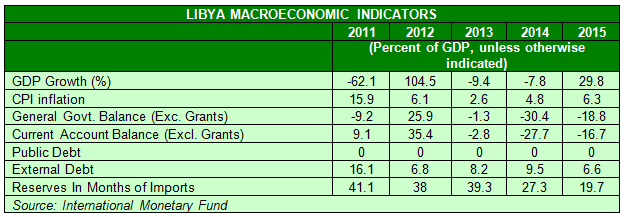
The feature was produced by alifarabia.com exclusively for zawya.com.
© Zawya 2014