Securing a spot on the bt100, Lecico known as a sanitary ware export powerhouse abroad is looking to build its image, and operations, a little closer to home
The name Lecico may not conjure up images of quality in Egypt, but it is a different story in foreign markets, where far from Egypt's shores the company's name has become synonymous with quality at a competitive price.
This local reputation may be a result of Lecico's strong focus on exports: The company exports 55% of its total production every year, earning it a position as one of Egypt's largest exporters (bt100X number 14) and one of the biggest sanitary ware suppliers to European markets including the United Kingdom, Ireland and France.
Although the Egyptian customer is not quite convinced that Lecico produces premium, high-quality products in Egypt the company is regarded as a mass-market producer that primarily targets less wealthy consumers the company has certainly grown since it arrived in Egypt in 1975.
Manufacturing a range of sanitary products including sinks, bathtubs, toilets, showers and customized ceramic tiles, Lecico moved its operations to Egypt during the Open Door policy of the 1970s, fleeing civil war in Lebanon where it had been officially founded in 1959. In 1975, Lecico set up shop on the outskirts of Alexandria in an area known as Khorshid, which remains the company's corporate headquarters to this day.
"When Sadat began to open up the economy, we thought after so many years of socialism, there would be an economic boom," says Taher Gargour, chief of business development at Lecico. "Given Egypt's high population Lebanon has fewer people than Mohandiseen it was an exciting opportunity [] We were the first people to build sanitary ware here."
The Lecico Group now includes the original parent company and a number of subsidiaries in Egypt. Lecico Egypt ultimately became the company's largest entity, now overseeing the group's subsidiaries, including what was initially the parent company in Lebanon. Lecico also maintains distribution and marketing subsidiaries in the United Kingdom and France, as well as a financial investment company and a trading and marketing company in Egypt. Added to this, Lecico established International Ceramics in 2004, a joint stock company of which it holds 99.9%. Lecico also entered into a partnership with Sanitec, one of Europe's largest sanitary ware manufacturers, with the goal of using it as an outsourcing location for Sanitec's production, as well as to benefit from technology transfer. In 2006, Lecico acquired Sarreguemines Sanitaire, a well-established French sanitary ware producer, for 1.5 million (LE 12 million) and quadrupled its market share in France to 8% almost overnight.
Maintaining a customer portfolio both at home and in several countries across Europe and the Middle East, Lecico has not only overcome the challenge of raising the quality of its products to gain entry to new markets, but the company has done it to such a degree that it has been recognized in the UK as a premium producer and is considered 'the manufacturer to watch' in several other countries.
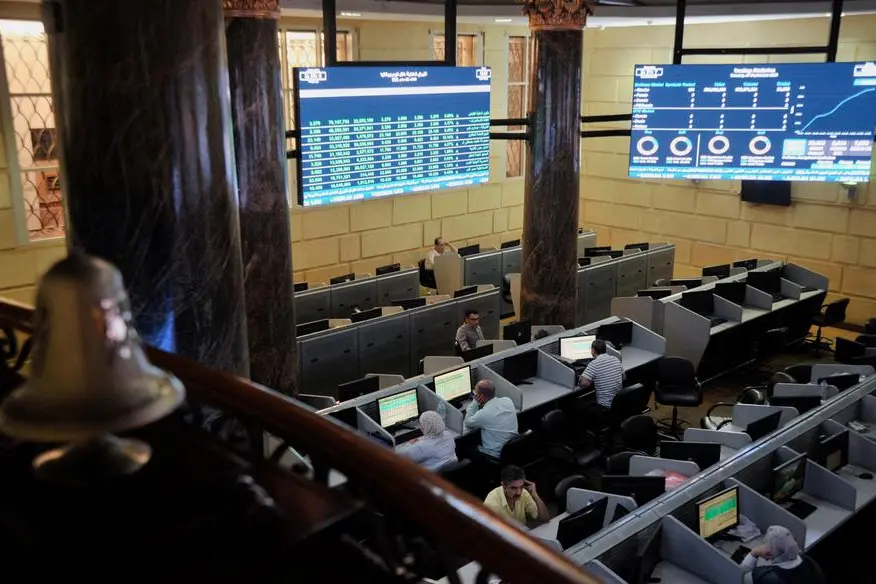
Now traded on both the CASE and the London Stock Exchange (LSE) through its Global Depository Receipts (GDRs), Lecico has landed itself a spot on this year's bt100 list at number 39.
Following two consecutive years of falls in net profit: 2005 saw net profits decline 61% to LE 88.8 million and in 2006 it fell a further 11% to LE 79.2 million, the company's fortune has turned around. Revenue for 2007 jumped 37.52% to LE 989 million up from LE 719.5 million in 2006. Net profits also rose a healthy 35% to LE 106 million in 2007 on the back of growing exports; the company now exports 3.64 million sanitary pieces (see pg 196 for more information).
With a new 200,000 square-meter facility at Borg El-Arab, the company's production capacity has also substantially increased. The new plant is expected to begin operations in 2010 and is set to produce 3.8 million square meters of tiles per year. At the end of 2007, Lecico was producing close to seven million pieces across its three factories in Borg El-Arab and Khorshid.
"It is my great pleasure to report a strong performance in 2007," said Gilbert Gargour, Lecico Egypt chairman and CEO in the latest earnings release. "It has been particularly satisfying to see the work invested over the past few years in growing capacity and market footprint finally translate into profitability, especially given the cost pressures during the year," he continued. "This is only the beginning of these returns, with Lecico only making its first small sales in a number of new markets and with a number of new customers. Our capacity expansion is also still in mid-rollout, although most of the investment is now behind us."
Recognizing the potential of its new capacity, and exploiting the unique cost advantage of its operations in Egypt, Lecico continues to improve its hold on foreign export markets, and is making efforts to both expand its market share and improve its image at home.
Gargour is certainly optimistic about Lecico's future: "Overall, I am confident that we will deliver satisfactory numbers in 2008 despite continuing to face a challenging business environment," he says.
The Export Strategy
Lecico recognized early on the opportunity it had to export to lucrative European markets. Enjoying an advantage from both geographic location proximity giving the company an edge over cheaper competitors like India and China and the low cost of labor in Egypt, Lecico set its sights abroad.
"When in the late 90s the Egyptian pound adjusted to a more fair value, suddenly this cost advantage became really dramatic," says Taher Gargour. "If you look at our production volume of sanitary ware, it more than doubled from 2000 to 2001, and that is almost all as a result of the export market. [It] is because we have an unbeatable competitive advantage by being here in Egypt. We have among the lowest production costs in the world."
These advantages give Lecico the ability to market high-quality products at low cost. European production, which has historically been of a high quality, is dropping off due to high costs of labor and energy, according to Gargour. Yet in emerging markets such as India and China, the quality of sanitary ware goods in general is regarded as being lower, leaving a gap for companies like Lecico that can produce cheaply and at high volume, while at the same time not having to worry about high transport costs.
Gargour says, Chinese producers pay just as much to ship sanitary ware products as it costs them to manufacture, giving Egypt a huge advantage for exports to the European market. In comparison, from Egypt it costs as little as 1 (LE 8.5) to ship a toilet to Europe, whereas for Chinese producers it can cost up to 6 (LE 51) and the manufacturing cost is as high as $8 (LE 44) per piece.
"Almost nobody can compete with us on landed costs today," says Gargour, referring to Egypt's position in exporting to American and European markets. Landed costs refers to purchasing price, freight, insurance and other costs incurred up to the destination port, and can sometimes include the customs duties and other taxes levied on the shipment.
Penetrating foreign markets also requires attaining a certain level of quality that, in Lecico's case, took years of extensive training coupled with painful trial and error to achieve. "Learning to consistently manufacture a product that conforms to both the function and the physical standard of a [specific] market was difficult for our factories," Gargour says, "and this is something we started doing in the 80s but only began to be good at in the 90s."
Making the move from the Egyptian market where quality standards are lower to European markets with far more rigorous standards was not an easy experience for Lecico. It came at a price, but one the company decided it could afford. At present, at least 80% of Lecico's exports go to Europe, where the UK is the company's largest export market, with products there distributed and marketed by the company's British subsidiary, Lecico (UK) Ltd.
"When we began exporting to Europe, we had no idea what European quality meant for [our] products," Gargour says. "There are no quality standards in Egypt or Lebanon, but in Europe everything is tightly defined."
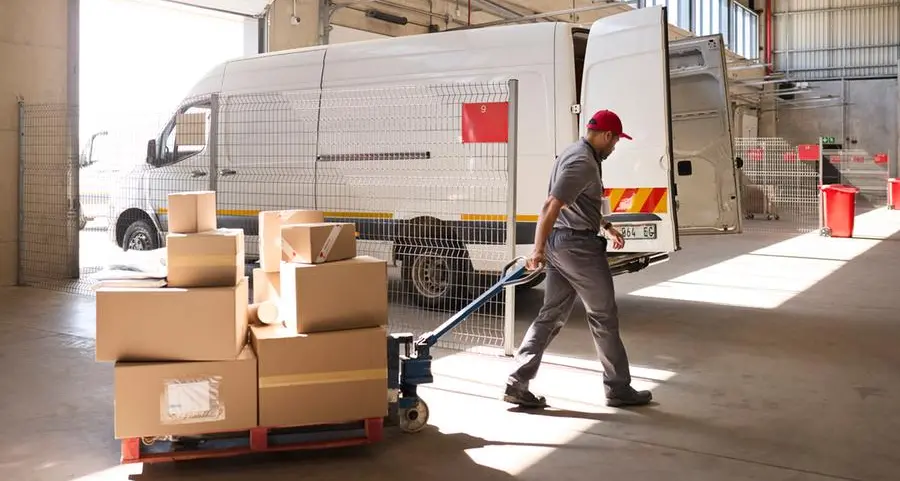
When Lecico began entering foreign markets in the 1980s, it would have to produce at least 10 pieces to get even one that achieved European standards, with some even discarded in Europe upon arrival. Because the manufacturing process in the industry depends so much upon manual labor, there was a high margin of error involved. Manufacturing products like toilets, bathtubs and sinks requires extensive handling, meaning the products can be easily ruined if even slightly dented, or pressed too hard during the molding or spraying stages.
"If you're dealing with a product that goes through heating, you can get physical imperfections, spots and marks, and these are [not accepted] in Europe. So learning how to consistently produce so that you're not throwing away [was crucial]," explains Gargour.
It is hard to imagine a business succeeding when nine out of 10 products it manufactures are thrown away. But, when Lecico began exporting in the 1980s, its buyers had fewer options. "At that point, outsourcing was very new. In the 80s it wasn't as developed as it is today, so we had a much easier learning curve," Gargour says. "They [the clients] didn't have many choices back then, so we had a grace period. Today if you start from zero, [clients] won't have patience for this."
Lecico's cost advantages and the "grace period" played a huge role in the company's success. "If we were in Europe and we had to scrap 17% of our production [now]," Gargour says, "we would be dead."
With each new market came a new set of regulations, leading to more trial and error. Now though, Lecico has reached a point where it has the capacity and the financial means to produce 20 models to get one right if the market is important enough. Gargour says that with operations in several countries and with the prospect of future profits, Lecico can afford a high wastage rate in the market-entry phase by making use of the cost advantage they have. "We can eat the loss in that one market by feeding on other markets to learn how to do it," he says. "And that is the strength of Egypt."
Image at Home, Abroad and in the Factory
Lecico's implementation of stringent quality standards relied not only on honing a precise manufacturing technique, but also on building a Lecico image one that would convey commitment to quality and secure new markets for the manufacturer.
"The best way to do this is to bring the foreign customers to our factory," says Gargour. "Once we bring them here they are almost always convinced to become one of our customers." Being able to display a quality product (at a competitive price), an experienced workforce and management team, up-to-date manufacturing facilities and modern production lines does wonders for Lecico's image, and its business.
"The quality is apparent and the pivotal moment is when they realize they are seeing the same brand they buy in Europe coming out of our factory line," Gargour says. "They end up paying three or four more times the price for it [if they buy in Europe]."
In 2007, Lecico had at least a 20% market share in the UK and 8% in France. According to Lecico, one of every five toilets sold in England today comes from a Lecico factory.
"Now when we export to the UK for instance, we can ask for more and be more aggressive about our pricing," Gargour says. "It's because they know us."
Image branding at home, by the management's own admission, has not been so successful. "Europe has been our focus and demanded most of our attention until the late 90s," Gargour says, "and as a result our marketing image in Egypt suffered."
While Lecico is still a market leader in Egypt, with 38% of the sanitary ware segment, it has yet to grab a piece of the luxury end of the market, which not only provides higher profit margins, but would also form part of a larger strategy to defend the segment of the market the company already has.
"The minute Ideal Standard [a sanitary ware producer that caters to more wealthy customers] wants your market, they can build a factory and take it because of the image they have," Gargour says. "We have to build up our image more, because right now, with our portfolio, we are more European than we are Middle Eastern."
Lecico has planned accordingly and is now advertising on billboards and distributing a new catalogue in Egypt -- its first in 10 years. The company is also opening a luxury retail store in Nasr City to be completed in the next couple of years. "The quality is already there, but people want to have the design available at a point of sale they can access," says Gargour.
Lecico also has an innovative strategy to ensure that a high level of quality is maintained: building a successful image for its workers. In the 1990s, Lecico began to officially inform its workers of the company's foreign operations, its financial results and its efforts to attract new buyers. That way, employees know where the products are going, what kind of impact it has and why it is so important for standards to be maintained.
The company also embarked on a more practical incentive system for workers, rewarding particularly outstanding employees with both recognition and financial bonuses. "Quality means efficiency too, so you judge [the workers] on efficiency, quality and adherence to production plans because wasted product is a huge part of this business," Gargour says.
Consistent re-training is a reality in every department and, in addition to the consistent audits, comprehensive analyses of errors are carried out to avoid potential mistakes in the future. A combination of both on-the-job and year-round training has improved the Lecico workers' skills and, as a result, quality has gone up and waste has gone down. The rate of wastage decreased from 20% in 2006 to 17% in 2007. With the production of at least 50 to 100 new models each year, Gargour claims, Lecico's low rate of waste is impressive.
Future Markets
Already operating in Egypt, Lebanon, Algeria, Saudi Arabia, Greece, France, the UK and Germany either through direct production and sales, or the manufacture of goods under different brand names Lecico is still looking for fresh opportunities to expand.
"We would love to buy [more] brands in Europe like we did in France, where we purchased a very large brand [Sarreguemines Sanitaire]," Gargour says, adding that the purchase of premium brands circumvents the need to compete in terms of image with local European producers. "What we're looking for are premium brands with a market share in Europe."
Lecico is also looking to expand its operations and increase market share in the Middle East. "In the Middle East we see markets with big populations and big economies, and we are definitely interested in buying both brands and factories," he says. Traditionally, the regional market was serviced by production facilities in Lebanon, which were forced to shut down in 2006 during the war, and remain under the constant threat of political instability.
This has not stopped Lecico from looking toward nations in conflict as potential markets, however. At the moment, the company is considering re-entering the Iraqi market. With its large population, natural resources, and an economy that has been stagnant for many years, Gargour sees great opportunities: "When [the economy] opens, it will open dramatically," he says. Lecico already made an attempt to enter Iraq immediately after the occupation, but the effort was unsustainable due to the level of conflict.
Lecico has made inroads into several other countries in the region, maintaining sales operations in the United Arab Emirates, Jordan and Syria. It also recently established marketing subsidiaries in Saudi Arabia and Algeria, nations Lecico identifies as growth markets.
As Gargour puts it, the strategy for entering a new market is rather simple; it just needs to be big enough. In fact, the bigger the market, the better: "The strength of Lecico as a factory is to run large [production lines] and produce hundreds of thousands of pieces," he says.
Europe and the Middle East are not the company's only focus. Lecico is already the largest sanitary ware exporter to South Africa and is exploring expansion into several markets in West Africa. The company sells to almost all the Common Market for Eastern and Southern Africa member states, including both Sudan and Libya.
"We're quite big in Libya because it is next door to Egypt; we are the biggest brand there now," says Gargour. "But you can only strategically focus on so many markets while maintaining a core focus on Germany, Greece, Saudi Arabia, Algeria and expanding and improving in France and the UK."
Lecico believes that given their assets and competitive edge, the only thing that could ultimately prove an obstacle to success is a limit on their capacity. "Essentially, the [only] limit on what we can do in the medium term is our own ability to handle growth, corporate depth and capacity expansion," says Gargour. Even with the new production facility at Borg El-Arab, Lecico faces the challenge of both supplementing and maintain this growth.
"We have been on full capacity every year except 2005. We are expecting in the second half of this year, with the 40% increase in capacity we have just finished in the new factory, that we can go after new markets and explore new opportunities," says Gargour. Yet while Lecico realizes the importance of its international operations, it now understands the potential of the domestic market, and the necessity of a strong presence at home, even if this means holding back on some opportunities abroad. "We haven't really taken part in the boom in the Gulf because we don't have the capacity to go there. But Egypt is strategic," concludes Gargour.
By Nadine El Sayed
© Business Today Egypt 2008