Iran is at a crossroad.
The country has been battered by a string of sanctions from Western countries that have eroded business confidence in the country and weakened its fiscal position. Uncertainty about the outcome of dialogue between the Islamic regime and Western powers has also left the country's economy in limbo.
"The near-term outlook remains highly uncertain, with the distribution of risks becoming more balanced but still tilted to the downside," said the International Monetary Fund on the country.
As the country faces constrained prospects for oil revenues and in conducting international trade and financial transactions, the IMF expects the economy to continue to contract in 2013/14, with real GDP estimated to decline by 1¾%.
Much depends on Iran's dialogue with Western powers on its nuclear enrichment program. Talks with the US-led group of countries (that include United Nations Security Council members France, United Kingdom, Russia and China, apart from Germany) remain on track after the latest round of talks ended on April 9.
The next meeting will be on May 13, when the sides are expected to start drafting text for a final agreement. Both parties have been targeting a July 20 deadline.
"While we believe agreement is possible in July, it's more likely that the talks will take at least a couple more months to reach conclusion," said Cliff Kupchan director of Middle East at Eurasia Group.
"Our call remains that there's a 60% chance of a final deal by the end of August. It is less likely but conceivable that, if progress continues to be made, the sides could agree to extend talks to the limit of January 20, 2015."
DIPLOMATIC HURDLES
Iran's foreign minister Mohammad Javad Zarif recently said there is agreement "on 50-60% of the nuclear deal."
But key obstacles remain. These include the extent of constraints on Iran's enrichment program, the future of Arak, the planned heavy-water reaction, and resolution of "possible military dimensions" of Iran's program.
"In addition, negotiation of the sequencing of steps the sides will take after an agreement will be tough - Iran will want sanctions relief up front, the West will want roll back of the program up front," Kupchan noted.
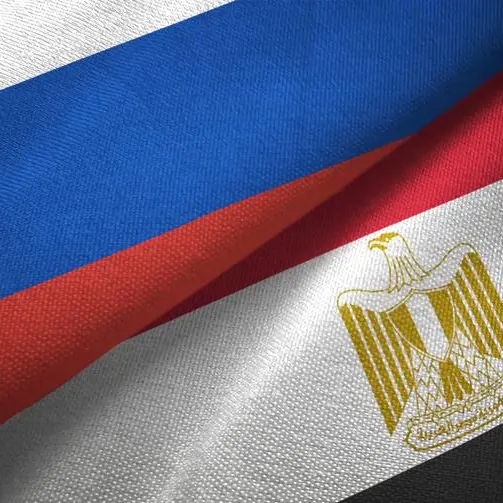
Iran is working on a deal worth USD 20 billion with Russia for oil in exchange for goods, which has irked Washington and its allies, especially at a time when Moscow is at odds with other nations due to its interference in Ukraine.
Analysts believe the oil-for-goods deal between Russia and Iran will be scrapped. "Russia could not sell, because of sanctions, the Iranian oil it would allegedly buy. And Russian entities would be severely sanctioned if Putin played this gambit; we think it's unlikely," Kupchan said.
OIL EXPORT SURGE
Meanwhile, Iranian oil exports are at a year-high - above the quota allotted
under an agreement signed by Iran and P5+1, which stipulates that Iran's oil exports are to be held at an average of one million barrels per day until July 20.
Iranian crude exports stood at 1.65 million barrels per day in February and the International Energy Agency expects March to be revised upwards, too, although initial estimates show exports stood at 1.05 million bpd in March. Key customers, China, India and South Korea saw a surge in Iranian crude in February.
The United States has played down the controversy, noting that Iran would average out the barrels by July.
Of course, the upturn in exports comes after at least two years of crippling sanctions. Oil output remains near a 20-year low, oil export proceeds have declined by more than half (by about 15% of GDP), and the rial has lost about 80% of its value in the parallel market.
The IMF estimates oil and natural gas exports to have fallen from USD 118.2 billion in 2011/12 to USD 62.9 billion in 2012/13 and is expected to decline further to USD 56.3 billion this fiscal year.
The country will need billions to revamp its dilapidated oil industry infrastructure. In a bid to attract foreign investors, the government is looking to revise its terms of agreements for oil contracts.
UK Global Data notes that the country has already attracted interest from oil companies such as BP, Eni, Total, Gazprom, CNPC and Petronas (note the absence of American firms).
"This new model will offer a share of output based on oil prices and associated risk, instead of cash repayment," said Will Scargill, GlobalData's upstream fiscal analyst. "While Iran would retain ownership of reserves, this should allow companies to book production entitlement as reserves in financial reports. This would be similar to the Production Sharing Agreements (PSAs) offered in several countries in the region."
SUBSIDIES SHOCK
While the return of Iran's oil exports to full capacity or even Tehran's ability to attract oil majors will depend on any deal over its nuclear program, domestic factors are also holding back the Iranian economy.
Jafar Mojarrad, IMF's executive director for Iran, told the fund that the country's subsidy reform was an economic "shock" that "was compounded by weak macroeconomic management and inadequate policy response."
The targeted subsidy reform was launched in 2010 and triggered a huge shift in a decades-old subsidy system that was very costly and inefficient. The program replaced subsidies with targeted cash transfers to households, and assistance to enterprises and the government to adjust to the cost of high-energy bills.
"After initial success in the first phase of the reform, shortcomings in implementation and mounting economic difficulties, including large depreciation of the nominal exchange rate, led to the postponement of the second phase in mid-2012," Mojarrad said.
The new government under president Hassan Rouhani remains committed to pursuing the subsidy reform, which has been lauded by the IMF.
"Plans to increase domestic energy prices gradually are prudent but should be underpinned by an automatic price adjustment mechanism to ensure full implementation, by consistent macroeconomic policies, and by reforms to foster the adoption of new technologies and tighter budget constraints, particularly in energy-intensive sectors," the IMF noted.
HUGE POTENTIAL
Much of the work remains unfinished. Apart from fighting stagflation, Iran also needs to develop its non-oil sector and create a business environment that fosters job creation. Unemployment in the country stands at 10.3%, although youth unemployment is a 24.3%.
The IMF believes non-oil GDP growth needs to be at 6% per annum to bring unemployment down. Last year, non-oil GDP contracted 1.4%.
Despite the challenges, international companies are mindful of the latent prospects of the country. Iran hasn't even scratched the surface of its natural gas reserves - the second largest in the world.
It also has a promising mining and metals sector, textile, automotive and food sectors that require significant investment. As many as 40 industries are represented on the Tehran Stock Exchange.
The next few months are crucial for Iran's political standing in the world and its economy. A deal could help Tehran return to global trade, attract investment and create jobs and prosperity for Iranians.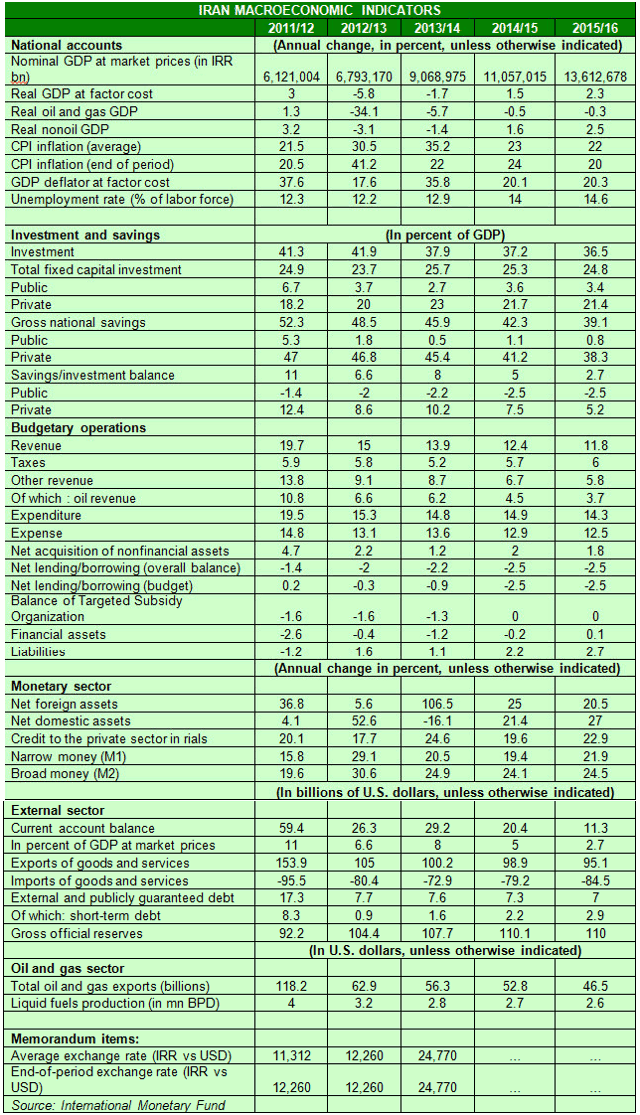
The feature was produced by alifarabia.com exclusively for zawya.com.
© Zawya 2014