Basking in the building boom, building systems supplier BPB Placogips looks to open Egypt's first plasterboard plant
It's a good time to be in construction. The sector is booming, with some 250,000 housing units going up each year. The non-residential segment is just as strong, with as least a dozen new hotels, hospitals and universities in the works. If you think the builders are smiling, the makers of building systems and materials are even happier.
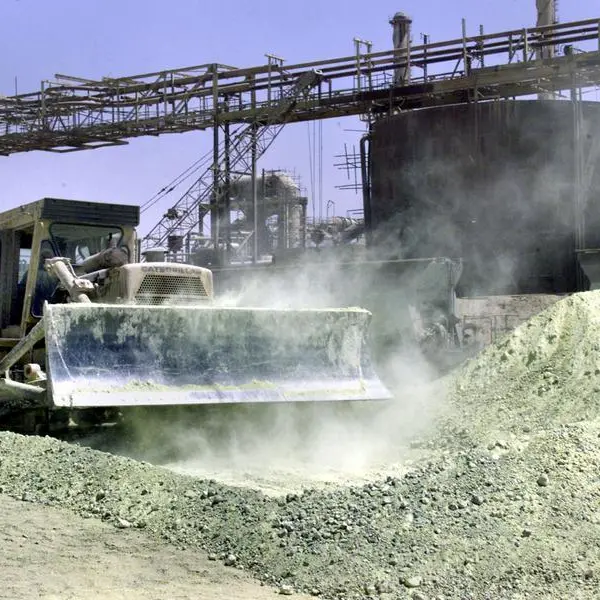
Headquartered in the Cairo suburb of Maadi, BPB Placogips operates three gypsum quarries and three plants across the country. Today, it is the nation's largest supplier of plasterboards and gypsum-based building materials, with four lightweight building systems products.
"Our products are manufactured from the world's purest quarries [which are found] in the Sinai," boasts Paolo Gugole, managing director of BPB Placogips.
The mineral gypsum, scientifically known as hydrated calcium sulfate, is used building components including interior decorations, cornices, ceiling tiles, finishing paint coats and even sanitary ware. "There's no single house in Egypt without gypsum," says Gugole.
It is also a key ingredient in cement and building panels called plasterboard or drywall. Although Egypt is a major source of gypsum, there is not a single factory in the country producing locally manufactured plasterboard. That's a gap that BPB Placogips wants to fill.
Gugole's company is the Egyptian arm of the British Plaster Board (BPB) Group, a world leader in the supply of gypsum products, with operations in 56 countries and more than 90 manufacturing plans. BPB Placogips is a 50/50 joint venture between BPB Group and Orascom Construction Industries (OCI, bt100 number 2). The company was formed in 2001 to acquire a 90% stake in state-owned Egyptian Gypsum Company for approximately LE 90 million.
"We produce a full range of products: Traditional plasters, which are mainly used for interior decorations and cornice; construction plasters, which are finishing coats applied to walls and ceilings; and industrial plasters, which [we] supply to other industries including sanitary ware, medicine [mainly casts], ceramics, and agriculture," Gugole explains. All three segments are locally manufactured with an export surplus of 15-20% shipped to some 17 countries in Eastern Europe and the Middle East and North Africa region.
BPB Placogips' total revenues topped LE 150 million in 2006 and should hit LE 160 million by the end of this year, a growth rate of 6.67%, accounting for more than 50% of sales in the segment.
"We don't manufacture plasterboards here in Egypt. We have to import [raw materials] from our sister companies in Europe," says Gugole, adding that no plasterboard is currently manufactured in the country.
"As manufacturers, we need big investments to produce plasterboards here in Egypt," Gugole explains. "Nonetheless, it's not easy to import the material because of high import-duty costs."
Plastering the Gap
That is set to change: In December 2005, France's Saint-Gobain Group fully acquired BPB Group for $6.68 billion. Shortly after, BPB Placogips took the first steps toward creating Egypt's first plasterboard plant.
"This plant will enable us to locally manufacture plasterboards and will not only supply Egypt, but also the MENA region," Gugole says. Construction on the plant is due to begin some time this year.
Saint-Gobain is the world's leading construction and industrial materials company with an annual turnover of around 40 billion (LE 299.15 billion). It produces and distributes construction-based products such as construction material (gypsum included), glass, ceramics, iron, plastics, and cast. Saint-Gobain supplied the glass for the Louvre Pyramids in Paris, provides glass for 50% of all cars in Europe, manufactures 30 billion bottles, flasks and jars per year, and manufactures crystals used in airport security detectors and medical diagnosis.
"BPB Group now belongs to Saint-Gobain, and with its support, BPB Placogips will introduce new gypsum-related products to the Egyptian market that will [mainly] serve the petrochemicals industry and dentistry (dental implants)," says Gugole.
Egypt's gypsum industry, estimated to be worth some LE 250 million, supplies to what Gugole calls a growing and promising market.
"Traditional plasters are mature on the market and are heavily used in the construction sector. However, construction plasters, industrial plasters, and plasterboards are still in their emerging young stages."
Plasterboards are almost exclusively used as wall and ceiling panels in commercial buildings, while cement is generally used for partition walls in residential dwellings. "Our target is to increase the use of plasterboards in both residential and non-residential sectors," Gugole says.
Gypsum, he claims, has several advantages over cement: "Plasterboards provide easy solutions for partitions which are clean, safe, simple, easy to install and less time consuming to build. With plasterboards, you can also have a very high performance in insulation including fire protection, soundproofing, and moisture-resistance. Some solutions are even impossible with concrete."
For example, renovations can be done easily without disturbing the building structure.
"Plasterboards are becoming an emerging trend now in Egypt. It's a big advantage that some residences and offices are built without walls, enabling families to design their own apartments and choose dimensions of rooms according to number of children," Gugole says, adding that plasterboards are now widely used in hotels, commercial centers, hospitals, and some offices.
"And applied as our system, they are very strong and don't [easily] collapse."
BPB Placogips provided plasterboards for the International Congress Center in Sharm El-Sheikh, the venue for the May 2006 World Economic Forum on the Middle East. It has also supplied the second phase of Cairo International Airport Project (Terminal 1), El-Rehab City, Four Seasons Hotel Alexandria at San Stefano, Novotel Hotel Sixth of October and the British University in Cairo, as well as a number of hospitals.
As residential real estate and tourist compound markets continue to flourish, the future looks bright for the gypsum producer. Once the new plasterboard factory comes online, BPB Placogips will have a solid foundation to build on.
By Sherine El-Madany
© Business Today Egypt 2007