Gulf markets may look like they are overheating, but they still lag behind global markets over a five-year period.
The S&P GCC index has grown 52% since 2009, but it's still below the 81% growth posted by S&P Global Index and 80% improvement in S&P Emerging Markets Index during the period.
Dubai and Abu Dhabi markets were the star performers last year, but the wider Gulf markets grew by a more moderate 23% in 2013.
"We believe that stocks are unlikely to repeat 2013's returns, with the bull market no longer continuing purely on the back of share multiple expansion," said Manama-based Securities & Investment Corporation (SICO) in a recent report.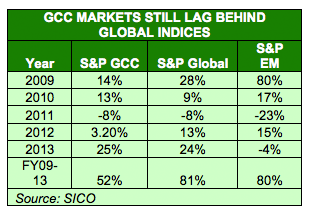
"However, there are some important themes playing out in the market, such as the impact of the Saudization drive, strength in Dubai property and impact from the Expo 2020 award, MSCI's upgrade of Qatar and UAE to emerging markets status, and the possible DFM and Abu Dhabi indices merger."
UAE and Qatar were reclassified as part of 'Emerging Market' index. With the change set to take effect from June 2014, Qatar is expected to have a 0.45% weighting while UAE will be accorded a weightage of 0.4%.
"The landmark event is expected to spur other regional markets to liberalize access to foreign investors and carry out reforms to boost market regulatory infrastructure," according to M.R. Raghu, head of research at Kuwait Finance Centre (Markaz).
MACROECONOMIC OUTLOOK
Growth in the Gulf markets is underpinned by strong economic growth. Apart from Bahrain, the five other Gulf states have enjoyed strong growth over the past few years with current account and budget surpluses.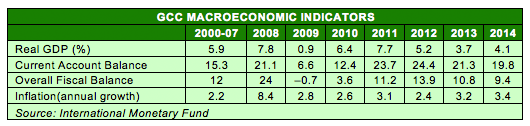
While oil prices are widely expected to weaken this year, Brent crude prices continue to trade in triple digits. Gulf states are expected to produce 17.5 million barrels per day this year, compared to 17.2 million bpd last year.
Gulf economies grew by 3.7% last year and are anticipated to post a 4.1% gain this year, according to the International Monetary Fund. Non-oil GDP will lead with a strong 5.3% growth (2013: 5%), with oil sector also enjoying moderate growth of 1.5% (2013: 0.4%)
Qatar is forecast to lead growth with a 5% jump, while Saudi Arabia (4.4%) and the UAE (3.9%) will also post robust performance on the back of strong capital investments.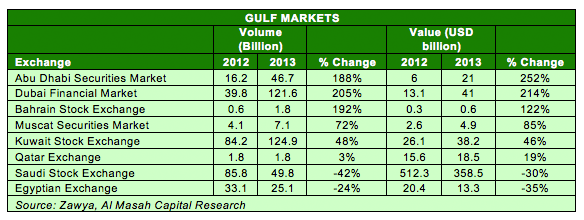
Corporate profits also climbed 9% year-on-year last year compared to 2% in 2012, as heavy spending trickled into the private sector.
Amid this favorable backdrop, the Gulf markets are expected to continue attracting funds. Rotation might be the order of the day, as investors cast their eyes over the less heated Qatari and Saudi markets, and let UAE markets cool down after a breathless run last year.
UAE and Qatari stock markets have risen impressively this year. Both UAE markets - Dubai and Abu Dhabi - are up 23% and 14% year-to-date on very high turnover (3x times 2013), largely led by retail participation. Qatar's index has also rallied 12% on higher turnover and foreign institutional investment buying.
"As the momentum shows no signs of abating in these two markets, we advise investors to not just rely on a rise in multiples to drive stock returns, but also focus on earnings growth," SICO said. "With a greater emphasis on earnings, we prefer stocks having the most room for earnings growth and can surprise on the upside."
THE MSCI EFFECT
Analysts expect large cap stocks to benefit the most from the MSCI upgrade, but the effect would cast a much more significant impact on regional markets.
"Companies are relaxing foreign ownership limits and undertake measures to increase capital, free float and liquidity to qualify for inclusion in the MSCI EM index," said SICO. "Upgrade may also encourage private companies to go public through IPOs."
Despite an impressive run by equity markets, regional corporations preferred to raise initial public offerings outside the region. Gulf markets saw 10 IPOs raise USD 1.6 billion last year, compared to nine IPOs, which raised almost an identical amount in 2012.
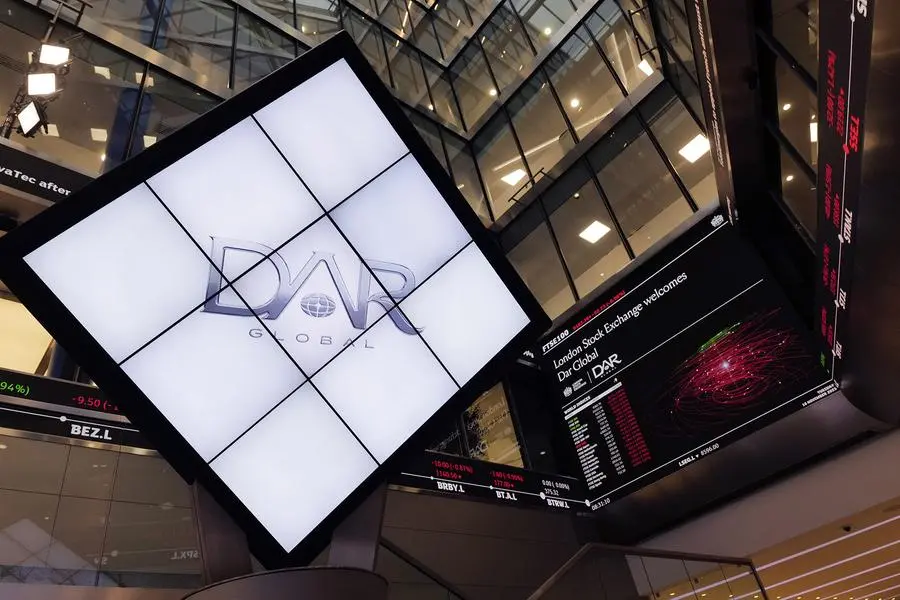
UAE developer Damac Real Estate Development Ltd, Al Noor Hospitals Group and Action Hotel Plc. raised the largest capital of USD 740.7 million on the London Stock Exchange last year.
"Given improving global economic activity and sentiments, good quality businesses are preparing for IPO over next three to twelve months, indicating that the IPO pipeline is likely to be strong in 2014," according to an Al Masah Capital report.
VALUATIONS
Stock valuations turned expensive in 2013. The Tadawul All Share Index, Saudi Arabia's benchmark index, closed at a price-to-earnings ratio (P/E) of 17.3x during the year versus 14.1x in 2012.
"Stocks in Bahrain were the cheapest, trading at earnings of 8.1x. Compared to 2012, valuations rose in.... Dubai, Qatar, Kuwait, Saudi Arabia and Abu Dhabi, while all other markets experienced a decline," Al Masah analysts said.
However, SICO analysts believe the GCC markets do not look "very expensive at less than 14x price-to-earning ratios and an expected earnings growth of 14."
Indeed, regional companies in the financial services, real estate and petrochemicals sector remain in the sweet spot and offer up a number of opportunities.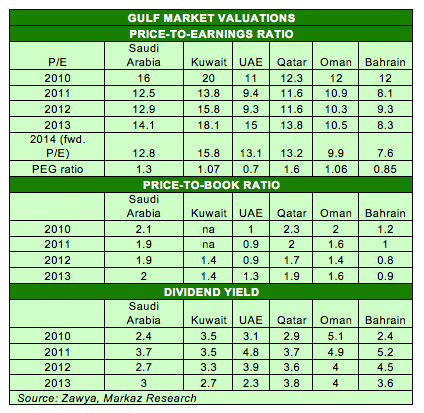
While the markets of Oman and Bahrain appear to be the most attractive on price-to-earning ratio basis, the UAE markets looks extremely promising on price/earnings to growth ratio, according to Markaz's MR Raghu. "On a P/B basis [price-to-book ratio], UAE and Bahrain are better placed than the others. The dividend yield has generally been very favorable across most of the GCC nations."
The feature was produced by alifarabia.com exclusively for zawya.com.
Zawya 2014