Gulf markets may be surging, but new listings remain a distant dream for regional stock exchanges.
Luxury real estate developer Damac Properties' decision to list its global depositary receipt on the London Stock Exchange is good for the country's real estate sector, but does little for regional stock exchanges.
Damac is the third sizeable UAE company after NMC Healthcare and Al Noor Hospital to have sought a London listing, instead of regional bourses.
Zawya.com data shows that only two initial public offerings came to the Middle East North Africa markets raising a paltry USD150.70 million in the third quarter of 2013. The MENA stock exchanges saw more activity in the second quarter, with nine IPOs raising USD485.70 million.
Slim pickings it may be, but the regional stock markets have enjoyed a better year than 2012. Seventeen companies raised USD 2.28 billion on the regional stock markets to date, compared to USD 1.55 billion raised by 10 companies during the same period last year, Zawya.com data shows.
Tunis Stock Exchange attracted the most number of companies this year at four, but the Saudi Stock Exchange attracted the most investments with four companies raising USD 1.27 billion.
But investors are hopeful that the IPO trickle will turn into a steady flow in the next year.
A Deloitte survey of 30 equity market investors last month noted that more than 70% of respondents expect the volume of IPOs in the GCC region to increase in the next 12 months.
NEW FACTORS
There are certainly grounds for hopes of new listings on the regional stock markets.
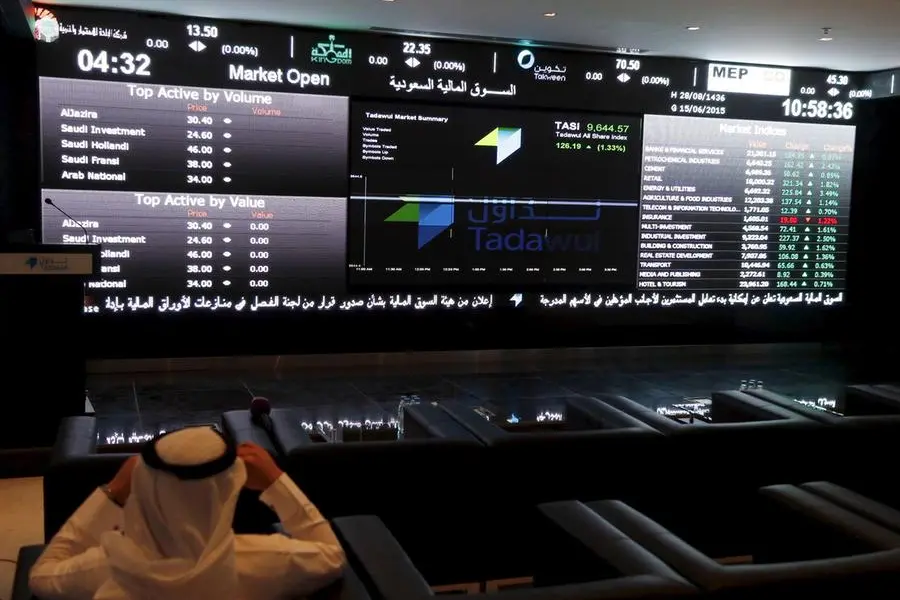
Gulf markets have been on a tear since the start of the year, with Dubai Financial Market rising 70.3% by the end of October - arguably one of the best-performing markets in the world.
Other markets such as Abu Dhabi (up 46% by October-end), Kuwait Stock Exchange (30.9%) and Saudi Tadawul Index (17.1%) have all beaten global and emerging market benchmarks this year.
Of course, a major fillip was the decision by Morgan Stanley Capital International (MSCI) to upgrade the UAE and Qatar exchanges to emerging market status, effective from May 2014.
"Increases in trading volumes are driven in large part by foreign investors seeking a safe haven from socio-political turmoil in the wider Middle East region, which is positively affecting real estate and stock values in GCC countries, especially the UAE," Deloitte said.
And despite the breathless growth, the markets remain fairly attractive.
"GCC equity markets had a good start to 2013 largely due to an uptick in earnings across key cyclical sectors such as banking and real estate," said Global Investment House.
"Despite the recent surge, GCC markets continue to remain fairly attractive. In terms of one-year forward PE, the six GCC markets trade in the range of 9.4x-11.3x.
"This is fairly below the three- and five-year historic average of 13.5x and 13.4x, respectively, for the region as a whole. Valuation is also lower compared to similar frontier markets and key emerging markets. Within GCC, we are in favor of Saudi Arabia given its current compelling valuations coupled with a robust earnings outlook for 2013."
Only 33% of the investors surveyed by Deloitte said the Gulf markets were overvalued, while the rest believe that the market was either fairly valued (38%) or undervalued (29%).
EXPANDING INVESTOR POOL
But the markets need fresh blood.
Dominated by large financial services, telecom and real estate companies, regional exchanges need to expand the investor pool by welcoming smaller, niche companies and give the indices depth.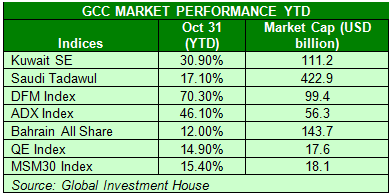
That's where companies like Just Falafel come in. The fast food falafel chain is mulling a listing on the Dubai exchange and could present a viable investment option for investors looking to diversify from the blue-chip companies.
Over the past decade many regional and UAE companies have sought the IPO route, only to retreat as the investment options have not been appealing enough for owners to relinquish control.
"The most significant challenge experienced by respondents in relation to the IPO process is the mismatch of valuation expectation, which has led to aborted processes and continues to have a dampening effect on issuers' desire to list," Deloitte noted.
Companies also complained in the survey that regulators were not open to innovative structures for IPOs that would enable valuations to be more comparable to those achieved in more developed markets.
A number of companies were also unable to cope with the reporting structures, disclosure and transparency requirements, and were often overwhelmed by the cost of the process involved.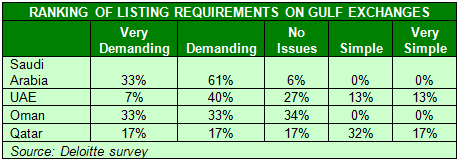
MARKET CHALLENGES
"The latter two challenges lead to unrealistic timetables being pursued by issuers, while a lack of investors' understanding (especially regional investors) of the equity story and lack of liquidity were also issues which respondents have experienced with the regional IPO process," said the management consultancy.
Respondents also noted that Saudi IPO processes took the longest with around a quarter of the companies experiencing regulatory processes exceeding two years.
The UAE and Oman regulators took the shortest time periods, with 79% agreeing that they were able to list on the IPO within 12 months.
In addition, 94% of the respondents believed Saudi Capital Market Authority's listing requirements were either "demanding" or "very demanding," while 47% believed the same for UAE regulators as well.
"Overall the lack of established market practice, due to insufficient IPOs across these equity markets, presented issuers and sponsors with a high level of uncertainty and the challenge of understanding and interpreting the listing rules and regulations," said Deloitte.
With the number family-owned enterprises operating in the UAE and the wider MENA markets, there is little doubt there is pent-up demand to list on the regional exchanges.
But despite the record surge in markets, the regulators have still not been unable to create an environment that will allow many of the company owners to secure a suitable exit.
© alifarabia.com 2013