The Gulf's retail market is set to become a USD 221 billion industry by 2015, growing remarkable at 7.9% each year for the next three years, according to Markaz, Kuwait Finance Centre.
"Higher per capita income and younger demographic profile of the nationals has a positive implication for the demand of high value luxury goods and electronics goods while the working expatriate population supports the surging demand for consumer goods," noted Markaz.
Regional governments and the private sector have also been investing heavily in improving infrastructure to attract tourists to their countries.
"In [the] last few years, a number of grand malls and shopping complexes have opened across the GCC. With such positive developments and encouraging trends, the GCC retail industry is set to grow further in the near future."
Real estate consultant CB Richard Ellis placed Dubai as the fifth "hottest" retail market in the world, and the second best retail market in the world after London.
Meanwhile, AT Kearney has four Gulf states among the top 20 countries in its annual 2013 Global Retail Development Index. The UAE (5th), Kuwait (9th), Saudi Arabia (16th) and Oman (17th) are eagerly sought after by global retailers.
Dubai's gross leasable area is expected to rise 14% by 2018, while Abu Dhabi is even higher at 48% during the same period.
"Demand continues to grow in Dubai, even as it is fully saturated with global brands. European concepts are fully represented now and no longer represent a way for malls to stand out," noted AT Kearney in its report.
The Cheesecake factory, IHOP, Hollister and Abercrombie & Fitch are some of the major American retailers to enter the Dubai market last year.
"Retailers are updating and repackaging their existing offerings. Chalhoub Group, a leading luxury retailer, opened the largest shoe store in the world in Dubai, featuring leading brands such as Gucci, Prada and Louis Vuitton."
Abu Dhabi is also expected to benefit from the launch of the Louvre and Guggenheim museums, and attract well-heeled buyers as well.
RISING SAUDI INCOME LEVELS
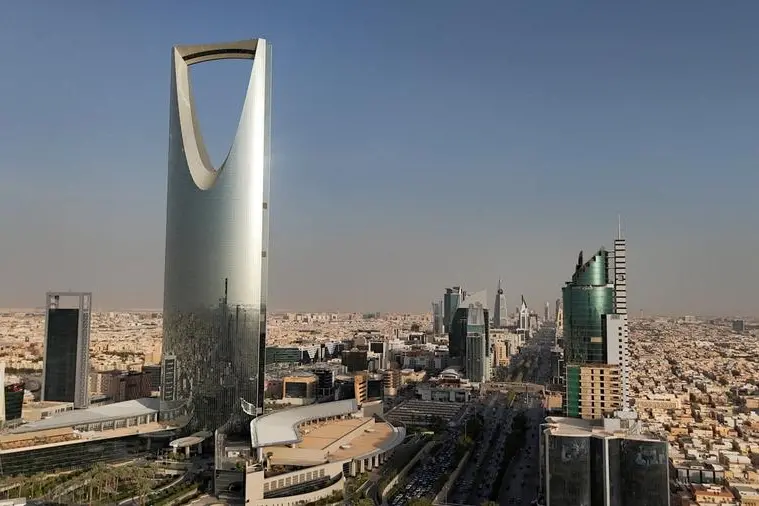
But the region's largest retail market is Saudi Arabia and NBK Capital believes the country is just getting started.
"With 30% of the population of 29.2 million (as of 2012) below the age of 15 years, the consumer base seems to hold significant potential," said NBK Capital in a report.
"Furthermore, as the younger population transitions into the work force, overall disposable income in the country could grow enormously. Therefore, we expect demand for consumer goods to outpace the growth in the general population."
The bank believes as many as 1.7 million Saudis are expected to enter the working age over the next five years, which would add to the momentum.
In addition, the Saudization drive means a rise in disposable income and strengthening of purchasing power.
"This is also leading to a migration from lower income categories to higher income categories, thus expanding the consumer base in higher spending brackets," NBK Capital said. "Therefore, an overall rise in purchasing power could lead to a gradual increase in demand for consumer goods."
The Saudi consumer electronics retailer eXtra's USD 105 million IPO, suggests the confidence retailer have in the market. While Al Marai and Fawa Abdulaziz Al Hokair Co. and Al Othaim Markets Co. are all in major expansion drive in a bid to meet the country's rising domestic demand.
"Retail sales are expected to increase by 11% in 2013," AT Kearney estimated.
"Retail sales per capita and disposable income remains lower than some of the neighboring locations, so there is plenty of room for growth. Furthermore, Saudi Arabia is visited by more than 12 million religious tourists per year, driving the need for tailored offering catering to an important, diverse consumer group."
TOP 10 PROJECTS
The region's largest retail project is Aldar Properties' USD 12.8 billion Yas Mall, according to Zawya Projects Monitor.
"The project is part of Phase 1 of Yas Island Development and will cover an area of 235,000 square meters that includes a 14-screen, 7,500 square meters cinema and a 6,000 square meters family entertainment center," the project's profile note. "It will also include four floors with 450 stalls and kiosks, a 16,000-square-meter hypermarket (Geant Hypermarket), and 10,000 covered car parking spaces."
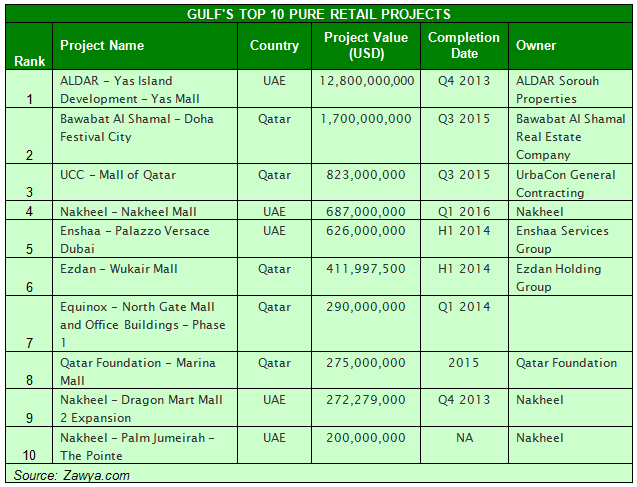
The first phase of the USD 1.7 billion Doha Festival City is complete with two more undetermined phases still to go - making it the Gulf region's second largest pure retail project.
UrbaCon General Contracting's USD 823 million is the Gulf region's third largest retail project, spanning 1.5 million square meters of space, and is expected to feature 400 stores. Upon completion, the project is expected to serve 20 million customers, according to company estimates.
"Comparing country risk and market potential, the Middle East features several of the most attractive markets in the Index," notes AT Kearney. "Consumers across the region are becoming more sophisticated, demanding differentiated product and retail formats."
And with the demographics trends suggesting rising populations with middle-incomes, the region's retail revolutions seems to be just getting started.
Related:
TOP 3 PROJECT PROFILES
Yas Mall
Doha Festival City
Mall of Qatar
© alifarabia.com 2013