The recent spate of violence and an impending clash between prime minister Nour Al Maliki's forces and Sunni rebels in Fallujah and wider Anbar provinces have threatened further instability in an-already violence-wracked country.
The so-called Islamic State of Iraq and Syria group has captured the main cities of Fallujah and Ramadi, as the Al Qaida associated groups demonstrate their prowess in Iraq. The move also sets back advances made by American forces a few years ago when they had famously rid the city of Fallujah from terrorists amid much violence and bloodshed.
While Iraqi forces have retaken parts of Ramadi, positions are hardening around Fallujah as Iraqi troops amass to begin an offensive to retake the city.
American and Iranian governments have offered to help Iraq fight the rebel groups. While the White House has ruled out sending troops to Iraq, it plans to provide Baghdad additional military hardware, including dozens of Hellfire missiles and low-tech surveillance drones, in an effort to contain the unrest.
Iraq is already reeling from one of the worst years of civilian deaths, with 7,818 people killed last year -- the highest level since 2008.
"Syria's civil war has deepened Iraq's sectarian fault lines, with Maliki's government widely seen as siding with Assad's Alawite regime and Iraq's Sunni opposition leaders with the Syrian rebels," noted Barclays Capital in a report.
The fall of Fallujah could have a domino effect that could strengthen the rebel group's hands.
"Mosul, the major city of northern Iraq and a longtime hotbed of AQI activity, could be next to fall. If it does, AQI would gain effective control of the Sunni Triangle, an area north and west of Baghdad the size of New England," wrote Max Boot, Jeane J. Kirkpatrick senior fellow for National Security Studies at the Council for Foreign Relations.
RISK OF AN 'AL QAEDA STATE'
"AQI's control would stretch beyond the Sunni Triangle because its offshoot, the Islamic State of Iraq and Syria, dominates a significant portion of Syrian territory across the border. This creates the potential for a new nightmare: an Al Qaeda state incorporating northern Syria and western Iraq."
The origins of the crisis run deep, as prime minister Nouri al-Maliki has been pursuing a divide-and-conquer strategy to neutralize any credible Sunni Arab leadership.
"Federal security forces have disproportionately deployed in Baghdad's Sunni neighborhoods as well as Sunni-populated governorates (Anbar, Salah al-Din, Ninewa, Kirkuk and Diyala)," said the International Crisis Group. "Al-Iraqiya, the political movement to which Sunni Arabs most readily related, slowly came apart due to internal rivalries even as Maliki resorted to both legal and extrajudicial means to consolidate power."
In a scathing report last year, the ICG noted that Sunnis in those provinces felt "belittled, demonized" as they geared up for an armed struggle. AQI has taken advantage of the power vacuum and fuelled further dissent.
"In this respect, the absence of a unified Sunni leadership - to which Baghdad's policies contributed and which Maliki might have perceived as an asset - has turned out to be a serious liability," ICG noted.
"In a showdown that is acquiring increasing sectarian undertones, the movement's proponents look westward to Syria as the arena in which the fight against the Iraqi government and its Shiite allies will play out and eastward toward Iran as the source of all their ills."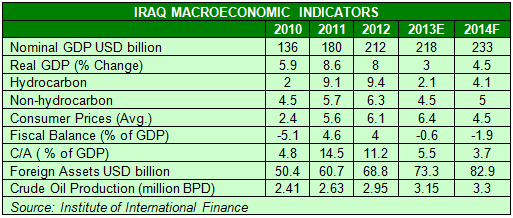
ECONOMIC IMPACT
While Iraq's energy infrastructure has so far been spared from disaster and damage, Barclays Capital warns that risks are rising.
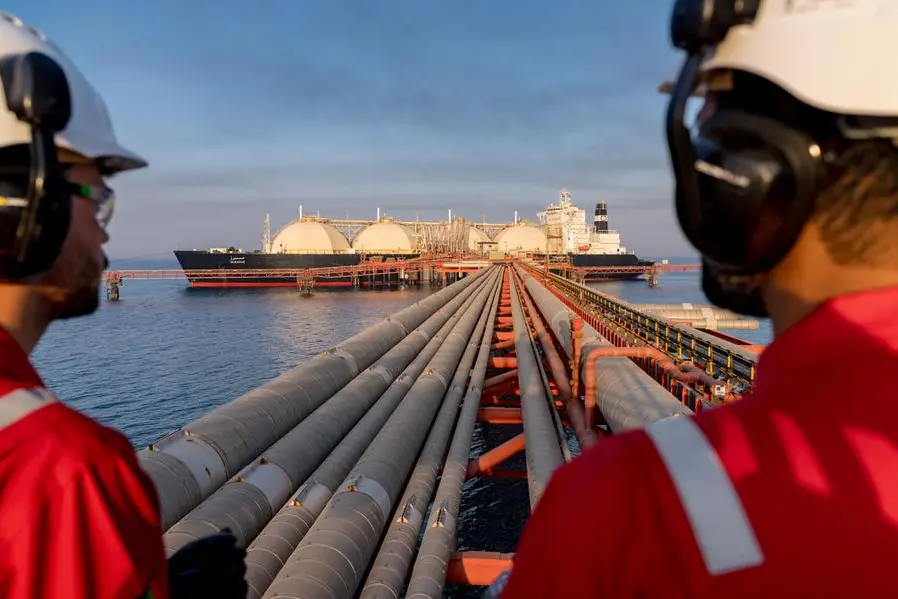
The 60,000-barrel per day Kirkuk-Ceyhan pipeline has been a favorite target of insurgents due to its proximity to the Anbar province, and there is reason to believe that the pipeline may bear the brunt of the rebel groups' scorn.
Last December, gunmen killed 18 pipeline workers in the Diyala province.
"Iraq's southern energy infrastructure has not been attacked to date, but there were multiple bombings in and around the Basra area in H2 13," Barclays said. "Thus, the south of the country is not beyond the geographic reach of extremist groups seeking to foment civil unrest and put pressure on the Maliki government."
The disruptions come just as the Kurdistan Regional Government struck a deal with the Turkish government to sell as much as 2 million barrels from the port of Ceyhan this month.
In January 2012, KRG had stopped its exports via the Baghdad-controlled Kirkuk-Ceyhan pipeline because of disputes over payments to contractors and revenues from past oil sales.
As a result, Baghdad has been receiving only less than half of the 175,000 bpd otherwise due from the KRG. Since then, Erbil has trucked close to 65,000 bpd to Turkey, for export through the Mediterranean port of Mersin, according to reports.
Iraqi crude oil production has only slowly recovered to 3.15 million bpd by November after dipping below 3 million barrels per day earlier in the year.
With oil prices dipping, and Iraq struggling to raise production and access crude markets in a timely fashion, the country is expected to see growth decelerate to 3% in 2013.
The Institute of International Finance expects Iraqi oil output to rise marginally between 100,000 to 200,000 bpd annually in the next few years, much lower increases than 300,000 bpd in 2011 and 2012.
"The pace of increase in oil output hinges on political consensus and investment in the oil fields. It is also likely that further deterioration in security and political conditions will impede major infrastructure projects, including those to boost energy output," the IIF said.
"Beyond the near term, Iraq's macroeconomic outlook will continue to be driven by the state of internal security and by developments in the oil sector and the ability to implement structural reforms."
© alifarabia.com 2014