PHOTO
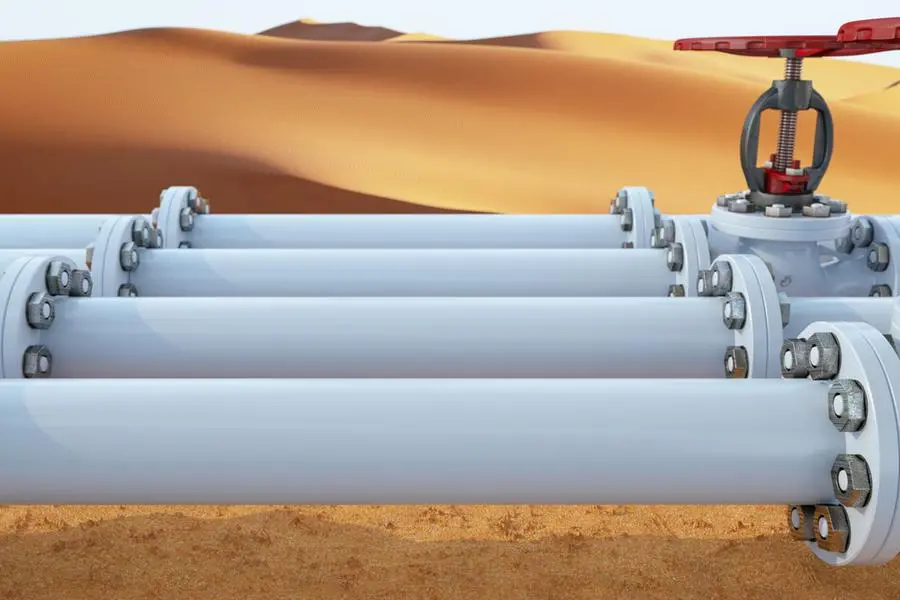
The SUMED pipeline confirmed its position as a vital alternative route for exporting Gulf crude oil amid disruptions to maritime navigation through the Strait of Hormuz, the Egyptian cabinet cited Asharq Business.
The pipeline extends across Egypt from Ain Sokhna on the Gulf of Suez to Sidi Kerir on the Mediterranean coast, with a capacity of nearly 2.5 million barrels per day.
It is usually used to transport crude oil via the Red Sea to the Mediterranean for onward shipment to Europe, bypassing the Suez Canal in certain cases.
In the event of a disruption at Hormuz, the pipeline could serve as part of a broader logistical chain, with oil reaching the Red Sea through Saudi Arabia’s East-West pipeline or other sea routes, before being transferred through SUMED to the Mediterranean, facilitating continued supplies.
Minister of Petroleum and Mineral Resources Karim Badawi earlier highlighted that Egypt has the potential to transport Saudi crude loaded at Yanbu port across the Red Sea to the Mediterranean via the SUMED pipeline and its associated terminals.
Hence, the closure of the Strait of Hormuz would not pose a threat to the country’s energy supplies, Badawi noted.
© 2026 All Rights Reserved Arab Finance For Information Technology Provided by SyndiGate Media Inc. (Syndigate.info).