At a time when Egypt needs friends that persevere in its hour of crisis, the United States has chosen to spurn the country and continues to pursue an inconsistent foreign policy.
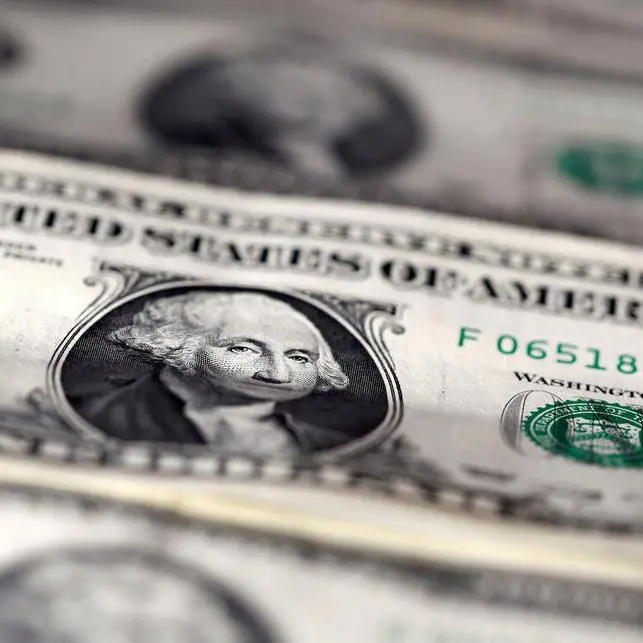
Earlier this week, the White House said it will hold the delivery of certain large-scale military systems and cash assistance of USD 260 million to the government "pending credible progress toward an inclusive, democratically elected civilian government through free and fair elections," the US State Department said in a statement.
But the United States will work with the interim Egyptian government to continue to provide support that directly benefits the Egyptian people in areas like health, education, and private sector development, the government said.
"We will continue assistance to help secure Egypt's borders, counter terrorism and proliferation, and ensure security in the Sinai. We will continue to provide parts for US-origin military equipment as well as military training and education."
Not surprisingly, the Egyptian government has railed at the decision.
"The government expressed the strangeness of the decision which was issued at such a vital time during which Egypt is facing a war against terrorism," the Egyptian cabinet said in a statement.
The Egyptian government is not the only one perplexed by the decision - analysts have been slightly confounded by the US move.
"Having failed to suspend aid right after the coup, despite threatening to do exactly that, the administration was left with little choice but to define its least worst option," wrote Tamara Cofman, analyst at The Brookings Institution.
"With this partial suspension, it hopes to make clear that there is some price (largely symbolic and perhaps temporary) for ignoring US preferences. The administration hopes to show they won't be overly influenced on Egypt policy by Gulf and Israeli lobbying for total aid resumption."
Salman Shaikh, another analyst with The Brookings Institution, called the suspension of aid a "mistake".
Ratings agency Fitch also noted that the US government's decision to suspend part of its military aid to Egypt "has limited overall impact on the country's external finances, and is therefore not significant for its credit profile".
GULF TO THE RESCUE
Even John Kerry, the secretary of state, has admitted the aid suspension is largely symbolic.
All it has done is probably push Egypt's military rulers further into the arms of Gulf states and inserted more uncertainty in an already volatile situation.
But even as the US aid dries up, Gulf aid has been flowing freely.
The USD 14 billion support from three Gulf countries is gradually stabilizing Egypt's macro outlook, securing its external financing needs for at least six months, and supporting a 1.5% of GDP fiscal stimulus, said Alia Moubayed, analyst at Barclays Capital.
"However, a potential ban on the MB's [Muslim Brotherhood] activities and crackdown on its leadership, will keep volatility elevated. We believe the target deficit of 10% this fiscal year is optimistic and expect monetary policy to remain accommodative."
The country has already received USD 7 billion of the fund and that has reflected in the strengthening of the Egyptian pound.
The funds have come in handy, as tourism revenues and remittances suffered in the first half of the year. Tourism revenues declined to USD 1.67 billion in the first half of the year, compared USD 2.33 billion during the same period last year.
Remittances also fell just over USD 340 million to reach USD 4.65 billion during the period. As a result, the current account deficit in the quarter widened to USD 1.70 billion from USD 1.54 billion during the same period last year.
However, Egypt's FY 2013/14 external financing needs remain considerable, given external debt obligations exceeding USD 5 billion over the next 12 months, according to Barclays' estimates.
"While the replacement of the USD 2 billion remunerated Qatari deposits with almost interest-free, five-year term deposits from the UAE/Kuwait reduced short-term external debt by an equivalent amount to USD 5 [billion], we estimate that about USD 2.5 [billion] in bonds mainly held by Qatar are still due to be paid on June 2014," Moubayed said, noting that the Gulf states may come to Egypt's rescue again.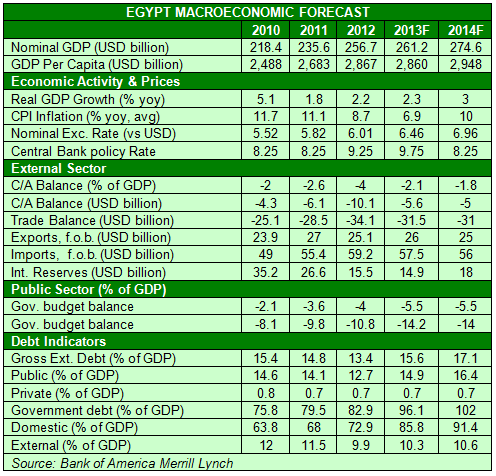
STIMULUS PACKAGE
With the US aid partially suspended and talks with the International Monetary Fund on a possible USD 4.5 billion loan program abandoned for now, the Egyptian interim government has launched as USD 3.2 billion program financed by Gulf funds.
The government is also planning a second stimulus package in 2014, trade minister Dr. Mounir Fakhry Abdel Nour told Thomson Reuters.
Despite the number of security issues and frequent clashes with Muslim Brotherhood, the government is reportedly moving forward with the task of revising the constitution and working on a number of reforms at its own pace.
By choosing to alienate the military rulers with largely ceremonial aid cuts at a critical time, the United States has made itself a less influential player in Egypt.
"None of this, of course, adds up to a policy that will achieve America's stated strategic objectives of stability, much less democracy--this is yet another short-term, interim measure designed to preserve narrow US interests rather than advance broad ones," said Brookings's Cofman.
© alifarabia.com 2013