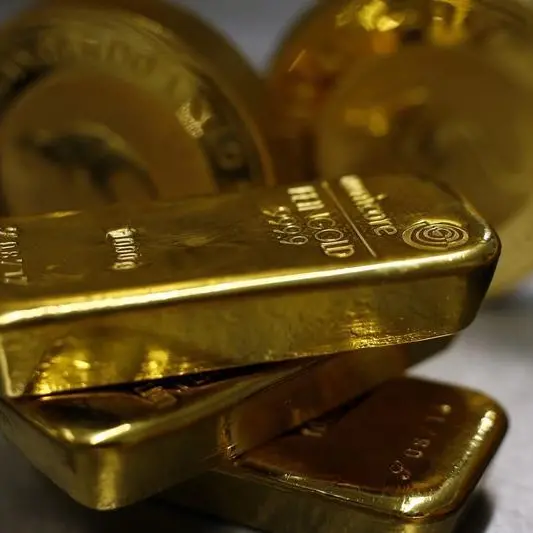
The high volatility of gold prices in the last two years has not weakened consumer spirit in the Dubai gold market. It keeps growing here.
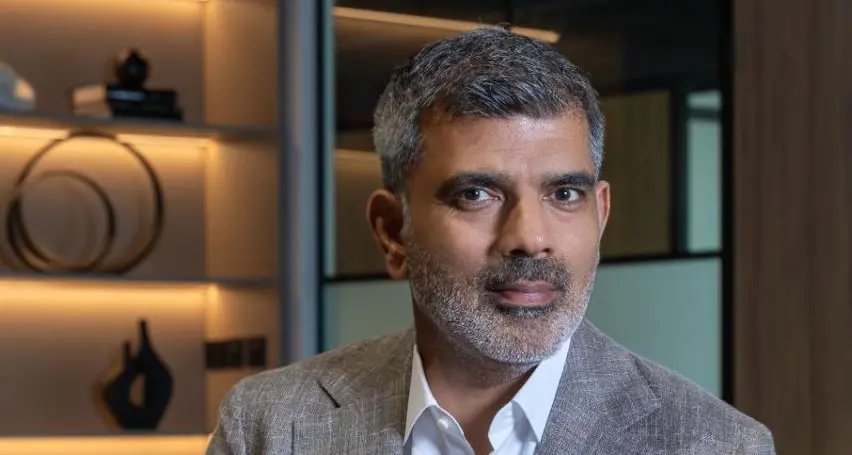
The chief executive of Damas Jewellery and chairman of the Dubai Gold and Jewellery Group (DGJG), Tawhid Abdullah told Gulf News that Diwali gold sales in Dubai this year have been 23 per cent higher than last year's.
"Whatever the direction of price, gold is still viewed by the ordinary man as the best route for savings. This has been proved over years and is not going to change," said Abdullah.
He said annual sales of gold jewellery during the current year would be 13 per cent higher than those of the previous year. According to him, the price band for gold this year is $385 (Dh1413) to $445 (Dh1633) per ounce. " If I am asked to give a price band for the next year, I would prefer to quote $400 (Dh1440) to $450 (Dh1651.5) band," he said.
He offers several reasons for Dubai's growth as a retail hub for gold. Dubai has over the years gained the goodwill for selling genuine gold. Close to 70 per cent of Dubai's tourists visit the Gold Souq.
Dubai has also grown into a key gold jewellery manufacturing centre with 80 tonnes of gold jewellery having been rolled out from the emirate's factories so far this year.
This represents an increment of almost 15 tonnes over last year. In addition, two refineries are already on stream and another two are waiting in the wings to take off next year. The Dubai Metals and Commodities Centre (DMCC) has contributed in no small measure to the image of Dubai as a hub of the gold business whether retail, manufacturing, refining or gold exchange (the latest development). "Which other city has been able to integrate all these activities in a single city" Abdullah said.
Let's just examine how this city has grown over the years into a real hub for gold.
Dubai's Gold Souq represents the development of Dubai's jewellery trade and its evolution. It is not just Dubai's most famous market, but one of the largest retail gold markets in the world, and certainly the largest in the region. The sheer scale of the souq is dazzling to both visitors and residents of Dubai. The old souq started with just a handful of retailers.
It grew substantially in the 1940s and '50s, and in the '70s it witnessed rapid growth on the back of the oil boom which turned the country's economy into a vibrant one.
The souq kept on growing and now accommodates nearly 500 establishments, including over 275 retailers all within a square kilometre. This is why Dubai's gold retail market is regarded as the densest gold retail market in the world. Despite the growth in size, the souq offers a tantalising view with narrow alleys and traditional wooden archways, all set against hundreds of shops displaying tonnes of gold, diamonds and other precious gems.
Customers can buy anything from locally made jewellery to designer pieces, Italian, Indian and Bahraini jewellery, South Sea pearls and exotic gemstones. The souq is an exciting melange of cultures, as shoppers from India, the GCC, CIS and Europe mingle to view one of the finest gold displays in the world.
Sense of security
At any given time, almost 25 tonnes of gold is on display in jewellery shop windows. Perhaps one of the most amazing things is the sense of security in the Gold souq, where theft and burglary are almost unheard of. On an annual basis, Dubai imports 300 tonnes of gold for retail and wholesale trade; much of this is routed through Dubai to other GCC countries, as Dubai has become a regional hub for gold and jewellery trading.
The approximate value of this trade is Dh12 billion annually, most of which takes place in the Gold Souq.
"Dubai is fast becoming one of the most dynamic cities of the 21st century and is currently the most competitively priced gold and jewellery centre in the world. As visitor numbers to Dubai are expected to increase to between 10 and 14 million by 2012, from their current figure of four to five million. DGJG and its members are striving hard to build on early successes to cater to the wide range of nationalities and residents," said K. P. Baiju, DGJG general manager.
Baiju claims that a piece of jewellery bought in Dubai can be up to 50 per cent cheaper than an identical piece purchased in Europe, and an estimated 95 per cent of visitors and tourists to Dubai purchase gold and jewellery. Dubai has the world's highest per capita gold consumption 32 grams as per Gold Field Mineral services study.
The Dubai Gold and Jewellery Group works closely with the Dubai Municipality to ensure the purity and quality of jewellery. The DGJG has set world-class standards in creating product knowledge among its members by its association with international bodies such as the Diamond High Council in Antwerp and the International Gemmological Institute (IGI). DGJG is headed by a managing committee of 14 elected directors.
In addition, there are specialised sub-committees that oversee the members' activities, promotions, operating standards, strategy development and group guidelines.
"Our pro-active approach to market development, and the strategies adopted by the group have put Dubai on the international jewellery map, and secured its position as the world's largest growth market for gold, diamonds and precious gemstones," said Abdullah.
The establishment of DMCC has also helped Dubai showcase itself before international players. DMCC has already attracted major international diamond companies to Dubai, including Rosy Blue, a leading diamond manufacturer and distributor from India; Smolensk Diamonds, a global leader in the manufacture of polished diamonds from Russia; Rapaport, a leading US diamond trader and a primary source of information on events and prices that impact the diamond industry worldwide; and Intergems, an Indian diamond manufacturer and trader.
Gulf News