PHOTO
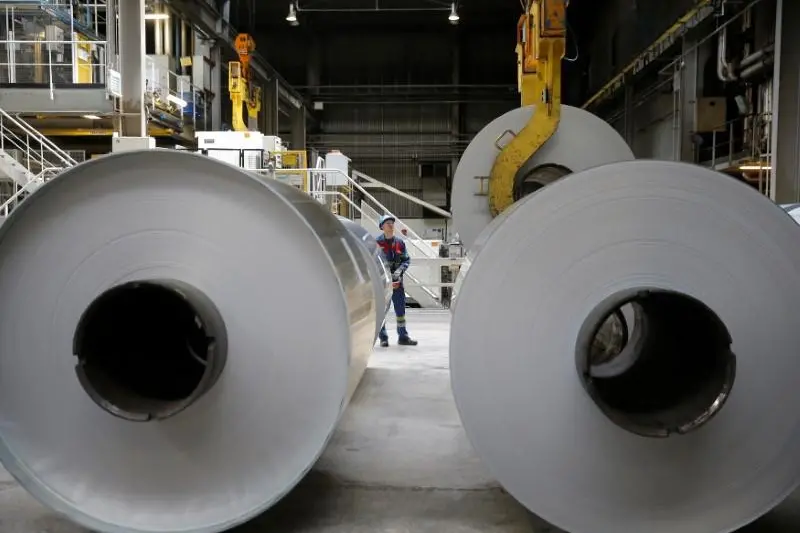
Aluminium prices pulled back on Thursday after rising for three sessions in a row on supply concerns, as the dollar firmed and the market awaited further news from smelters in the war-hit Middle East.
Benchmark three-month aluminium on the London Metal Exchange was down 0.8% at $3,315 a metric ton as of 1030 GMT, having earlier risen as much as 1.7%.
The metal widely used in packaging and transport hit its highest in nearly four years on Wednesday as force majeures from Mideast smelters Qatalum and Aluminium Bahrain heightened supply fears. The Gulf region supplied 8% of the world's aluminium last year.
Analysts at Citi have raised their LME aluminium price target to $3,600 from $3,400 and said prices could climb to $4,000 in a bull-case scenario.
"I think markets are stabilising a little bit," said Thu Lan Nguyen, head of commodity research at Commerzbank, noting that the euro-dollar rate and Brent crude oil were steadying after days of volatility. "So I think that pullback in the aluminium price basically fits into that picture."
The market is currently in "wait and see" mode as events in the Mideast unfold, she added.
LME aluminium inventories fell to 459,125 tons, the lowest since July last year, after 2,000 tons of outflows from Port Klang. There was an order to remove more than 45,000 tons from the Malaysian storage location earlier this week, suggesting traders are looking to cash in on supply shortages.
Global inventories are "still at a relatively comfortable level" but stocks in the U.S. are tight, Nguyen said, noting that import tariffs had pushed up premiums for physical aluminium well before the U.S.-Israeli attacks on Iran.
Copper fell 0.7% to $12,960 a ton as inventories rose to their highest since October 2024.
A stronger dollar, which makes greenback-denominated commodities less affordable for buyers using other currencies, was also weighing on prices.
Zinc fell 0.6% to $3,307, lead lost 0.9% to $1,944, nickel shed 1.0% to $17,310 and tin slid 2.2% to $49,650.
(Reporting by Tom Daly; additional reporting by Lewis Jackson and Dylan Duan; Editing by Subhranshu Sahu and Elaine Hardcastle)