The creation of free zones lies at the heart of the post-oil Gulf. But these developments were planned in boom times and governments must reassess their viability in light of the recession. Sunil Kumar Singh reports.
At first glance, declining government revenues as a result of lower oil prices, a slumping real estate sector and a liquidity-starved economy seem ingredients of a recipe that spells slowdown for the numerous new free zones planned for the Gulf region. Look a little closer, though, and government commitment, falling prices of construction material, and cheap contracting rates are turning the tables in favour of these mega projects.
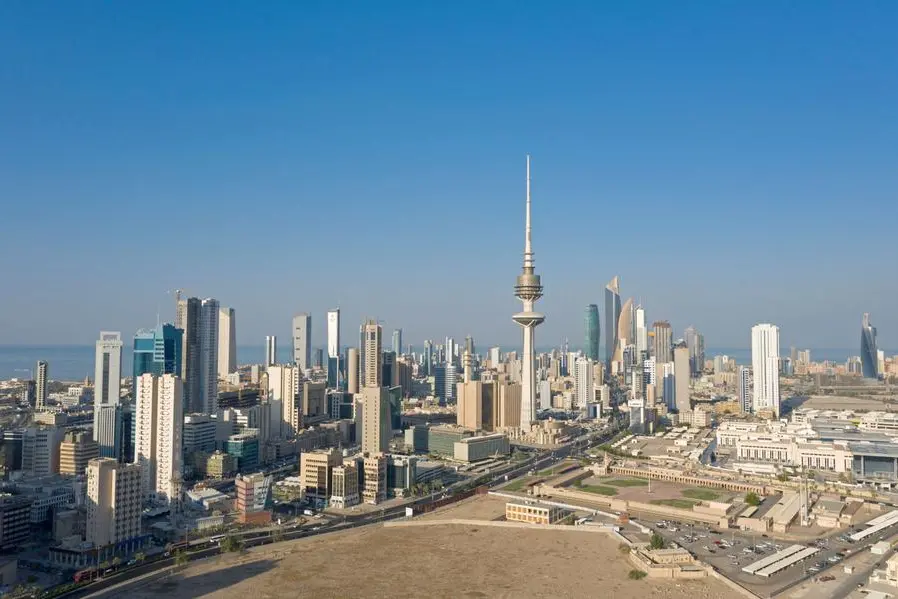
According to McKinsey & Co., the GCC is home to more than 60 functioning free zones, of which about one-third are in the UAE. The country's Jebel Ali Free Zone Area, set up in 1985, is one of the largest economic free zones in the world. Free zones include economic, industrial and integrated cities, such as Dubailand in the UAE, King Abdullah Economic City (KAEC) in Saudi Arabia, and Silk City in Kuwait among others. An even larger number of free zones are in the works. Saudi Arabia and the UAE are the biggest project markets in the GCC. According to Global Investment House, these two markets make up 72.6 per cent of total projects in the region. Nevertheless, how these upcoming free zones will hold up in a worldwide recession depends on the varying realities in individual countries.
The Saudi government, for instance, is expected to continue pumping capital into such huge projects. The Kingdom's 2009 budget, the largest in its history, focuses on increased public spending to stimulate growth and generate jobs amid a global recession. "The government has allocated $60 billion to new projects. Infrastructure spending will be key; therefore, public support for project finance will offer supplementary aid," confirms a report by Standard Chartered bank.
There will be short-term troubles, no doubt, especially for small private developers. "2009 could be a year of delays and deferred projects, mostly for the private sector because of the lack of funding," says a report by Global. But it adds that the long-term outlook of these mega cities and free zones remains largely unchanged. "The major delays could be for the short term because the efforts made by central banks will provide more liquidity in the system and project developers will continue their stopped track."
Other factors that give these integrated hubs a critical advantage over real estate projects outside the free zones are their massive size, the long time span of development, and the involvement of big-ticket developers. These factors afford them flexibility in terms of financing and adjustments in scheduling.
"One of the advantages of developing a large real estate project is the ability to re-prioritise elements of the project in order to speed up certain elements and slow down others to meet actual and expected demand," says Brian Meilleur, president and chief operating officer, Al Wa'ab City, one of the largest privately owned integrated real estate projects under development in Qatar, expected to be completed in 2010.
Long term outlook
Take the case of the multibillion-dollar economic cities launched by Saudi Arabian General Investment Authority (Sagia) - namely KAEC in Rabigh, Jazan Economic City in Jazan, Prince Abdul-Aziz Bin Mousaed Economic City in Hail, and Knowledge Economic City in Medina. "The economic cities being developed across Saudi Arabia are a long-term investment in the future growth of Saudi Arabia," Abdullah M Hameedadin, deputy governor for Economic Cities, Sagia, tells Gulf Business.
"Investors and tenants partnering with Sagia to develop and inhabit the economic cities are not making a decision based upon the current situations, or even the economic outlook for the next couple of years. These are long-term strategic plays based upon the fundamental benefits of operating in Saudi Arabia," he asserts.
But he does highlight that the developers are using this opportunity to reprioritise the projects. "The general phases of developing each city have not changed, and the general plans are on track to achieve the critical mass point in each city. Minor schedule variances compared with what has been set as a baseline will not affect the cities' development overall. [There is] no direct impact on the investments plans," he adds.
Another case in point is the Energy City Qatar, an upcoming cluster of hydrocarbon companies with almost 70 per cent of infrastructure work in the city having been completed. Its management expects the entire infrastructure work to be completed before the end of this year. On the whole, the city is expected to be operational by the end of next year.
"As many as 60 to 70 per cent of the developers are major ones from the local market, as well as the region, who are on schedule and we don't see any cancellations, because they had already arranged financing for their projects last year," says Hesham Al Emadi, chief executive officer Energy City Qatar.
"The current economic crisis might affect the small- and medium-sized developers, in terms of difficulties in raising finances, but they don't represent more than 25 per cent of the entire project. However, we're working with them to find a way to raise finance or develop funds to support their construction costs, and encourage such developers to start construction," he adds. The same is the case with Dubai Sports City (DSC). "Given the wide-ranging offering within the portfolio, DSC is well protected against the changes in the property market. Approximately 80 to 85 per cent of DSC's projects are underway, and the balance will be launched in phases with prudent awareness of the market situation and the international global financial landscape," Malcolm Thorpe, director of marketing, sports business, Dubai Sports City, told Gulf Business.
"An overall advantage, however, is that we are seeing deflation in the costs of both materials and services, which helps to make projects more economic," adds Al Wa'ab City's Meilleur.
Capital support
Government-backed projects and those that aim to help economic diversification of the region are expected to continue unabated, especially as some of them also have the ability to attract investments from overseas. "Economic zones are a means for governments to diversify their economies and attract foreign direct investment. This is a trend that will continue," avers Robert Ziegler, vice president, AT Kearney Middle East.
"The issue to look for is whether there is a matching demand to the planned supply and how much of this demand is speculative versus user-driven. Projects that take this equation into account will stand the test of this crisis and prevail," he says.
Naji Sourati, partner at Bain & Company, agrees: "The global turmoil makes it more important than ever for countries in the region to go the extra mile to attract sustainable investment flows and create jobs. Once this downturn has passed, these zones can be key growth engines in the next wave of regional development."
Although the oil price situation today is markedly different - begging the question of whether the benefits of the high per barrel windfall could run out and leave these projects without finance - market observers say there is little cause for concern. The fact is that the GCC region is sitting on a large current account surplus, thanks to the six-year boom in oil prices; current volatility in crude oil might cause budget deficits, but will do little to shadow government-backed mega projects.
"When these projects were planned, the oil price was not at its peak of $150 a barrel but in much more modest terrain. Therefore, the oil price is not such a strong determinant for these projects," says Ziegler of AT Kearney. "Even the current credit crunch will dissipate and not have a long-term effect on these strategic projects. The megaprojects are generally of strategic nature for the host countries and will be refinanced."
Nicholas Maclean, managing director, CB Richard Ellis MENA, adds: "The liquidity level available last year is not going to be possible now, because the cash flow is going to be less and the price of oil is down. These factors will have an impact on the timing of the projects and they will be delayed, but not cancelled."
In addition, developers are taking recourse to new and alternate modes of financing at a time when banks have restricted credit lending. Sourati of Bain & Co. says: "As traditional methods of financing are becoming more stringent and difficult to secure, the private equity community has shown interest in these projects."
Qatar's Al Wa'ab City, for instance, last year used mezzanine financing as an alternative source to raise capital. "Let's not forget that the governments have capital reserves. The financing modes available are government funding and trade-related funding, such as private equity, institutional equity or any other business related funding that get generated via the business segment," says Puniet Singh, director of operations and projects, Sherwoods Independent Property Consultants, Dubai.
Through the floor
In addition, declining commodity and construction prices are making infrastructure-building of these projects more lucrative now than before. The cost of construction of the KAEC seaport, for instance, has fallen by more than 30 per cent because of the lower prices of construction materials and easier access to a strong workforce, according to Fahd Abdul Mohsen Al Rasheed, board member and chief executive officer, Emaar, The Economic City (Emaar EC), the company developing KAEC.
"Low availability of contractors and high building material cost are a thing of the past. The positive effect of the crisis is that the market is coming back to normal levels of doing business," avers Ziegler of AT Kearney. Dr John Sfakianakis, chief economist, Saudi British Bank (SABB), agrees: "Even if oil prices have come down significantly, what we've seen is the trade-off between lower oil prices and the falling costs of construction. Now is the time to move ahead with a lot of the strategic infrastructure projects."
A substantial slowdown in private sector projects is also forcing contractors back to the negotiating table. "The response from [contractors] is good and there's now also room to negotiate, as prices have gone down by 20 to 25 per cent. Now the situation is better for developers because earlier it was difficult to find the contractors but now it's easier to find them, as well as negotiate the price," says Emadi of Energy City Qatar.
The fact that a number of employees are being laid off is another instance of the wind blowing in the favour for these mega projects. "The rising unemployment rate among expatriate workers will also allow regional corporations to hire labour at a relatively cheaper rate, contributing further to lower operating costs," maintains Syed Basher, research economist, Qatar Central Bank, Doha.
Maclean of CBRE agrees: "With the global downturn, there's a possibility to hire more better quality people. The difficulty for the local developers has been that they've been grossly understaffed."
Another positive for these mega projects has been the global and regional investor interest. In the case of KAEC, engineering consultancy contracts have doubled compared with the 2007 figure, while mega projects and infrastructure contracts have increased by 143 per cent compared with 2007.
Emaar EC has already reported 400 per cent growth in sales during 2008 compared with 2007. The company also achieved strong revenues in 2008, led by the sale of residential and commercial units in KAEC's first phase. "KAEC is progressing well with groundwork and construction underway. We expect our first tenants to move in mid-2009," says Hameedadin of Sagia.
In the case of Jazan Economic City (JEC), the land work for has started and Sagia has signed
SR100 billion ($26.6 billion) of deals with companies from China and Malaysia. In total, 19 Saudi and international companies have signed agreements to establish new investment projects at the JEC, bringing the investment attracted by the JEC to SR115 billion ($30.67 billion).
Defying the downturn
In addition, Sagia has also signed six agreements for the development of Prince Abdul Aziz bin Mousaed Economic City, and has signed agreements with the developer of Knowledge Economic City. "For economic cities, we haven't experienced investors pulling out as a result of recent economic uncertainty. We have no indication that this will happen. The economic cities are well funded, well thought-out and well on track," says Hameedadin.
Another instance of mega free zones defying the slowdown is Bahrain Logistics Zone (BLZ), a government-funded customs-free logistics park, and a part of the Sheikh Khalifa bin Salman Port in Bahrain, which received its first ship last month. So far, BLZ has selected 24 companies, comprising local, regional and international logistics majors, and is in the process of negotiating and signing contracts with them.
"We [have] received overwhelming responses from the local and international market. In the fourth quarter of this year, we expect these companies [will] start the construction of their warehouses, which will take approximately a year to finish. We've experienced no delays in the project, reckons Hamad Fakhro, assistant director general, BLZ.
The same is the case with RAK Free Trade Zone (FTZ), where projects are continuing as planned, according to Oussama El Omari, chief executive officer and Director-General, RAK FTZ Authority. "RAK FTZ developments, such as the Dhs1.84 billion ($500 million) Navigator Business Campus, which will be completed in three phases, are currently on schedule. "Despite the economic crisis, RAK FTZ is enjoying a rise in revenues, with a reported 16 per cent increase from the first quarter of 2009 as compared to the same period 2008. Registered companies have also seen an increase of 4 per cent from the last year." he told Gulf Business.
"Our projects are continuing as planned. We have not changed our development plans for the next five years with estimated budget of Dhs7.3 billion ($1.98 billion)," he adds.
Even though banks have tightened lending, strategic projects will have little difficulty in raising finance. "The current change in bank policies related to credit lending is a temporary situation and a necessary corrective measure. Inflation went through the roof in the past few years. What is happening now is a good time corrective action, which leads to a normal business environment," maintains Omari of RAK FTZ Authority.
"The global recession has had no impact on the $225 million of research investment committed by our partner companies. Everyone realises that setting up a research centre is a long-term investment, and budgets are locked in several years in advance. The downturn is actually something of a positive because it frees up labour and materials needed to establish these facilities," maintains Dr Eulian Roberts, managing director, Qatar Science & Technology Park, a free trade zone for tech companies that was officially inaugurated in March this year in the midst of the downturn.
Work on Dubai Industrial City (DIC), the first dedicated industrial destination in Dubai, expected to be completed by 2015, is also on schedule. In March, the developers announced that the grading work of its 167 million sqare foot phase two development has been completed ahead of schedule. "Work on the remaining segments of our project will also proceed as planned," says Rashed Al Ansari, vice-president, DIC," adding: "We expect to have 30 factories operating in DIC by the end of 2009."
Given that regional government coffers are well supplied, and the cost of inputs significantly lower, the Gulf's planned free zones and cities have reasonable prospects. But the elephant in the room remains the extent and the severity of the recession. No amount of analysis, promises and projects will be able to predict whether consumption, spending and consumer confidence will return in time to make these mega projects profitable as per initial projections.
© Gulf Business 2009