18 November 2012
As businesses prepare their budgets for next year, many of them see a sea of trouble they must navigate through to get to profitability.
Here is a list of possible black swan events (or grey swan events, as some of them are visible on the horizon) that may upset their best-laid plans:
1 U.S. FISCAL CLIFF - PEERING DOWN BELOW
If you think the U.S. fiscal cliff does not matter to your regional business, think again. Global financial markets are already nervous that the White House and Republican-led Congress will be unable to agree on tax reforms, which could end USD 600 billion of tax cuts for the American public.
That would set off a tsunami of events, which would dip the U.S. back into a recession, weaken the global economy and generally have a domino effect on the rest of the world, including oil prices -- the barometer of the health of regional economies.
"Not only is this uncertainty likely to have an impact on the markets, it would seem it's already having an effect on corporate investment decisions," says Andy MacLean, analyst at Raymond James investment boutique.
"Corporate capital expenditures have trailed off over the past few months even as cash positions remain high, balance sheets are in good shape with low debt levels, and profitability (except for the current quarter) has been strong."
While most analysts expect U.S. decision makers to avoid the fiscal cliff, a Black Swan event would be President Barack Obama inability to wrangle a deal from Congress. Expect plenty of pain in the New Year then.
2 EU CRISIS - OLD PROBLEM, NEW INTENSITY
Not exactly a Black Swan, especially that the EU fiscal crisis has been raging for more than 18 months now, but there is a build up of popular resentment building up in places like Greece, Spain and Portugal.
While even protests against German-inflicted austerity are nothing new to citizens of the southern Mediterranean countries, the rise of neo-Nazi party Golden Dawn especially in Greece signals a potentially new threat that could turn ugly. Fast.
Unemployment hit 25.1% in Greece, and the figure stands at 54.2% for those between those in the 15-24 year bracket, and 31.4% for 25-34 age group. Regional countries affected by Arab Spring can testify that is a recipe for disaster.
3 OIL PRICE SHOCK - DOWNSIDE
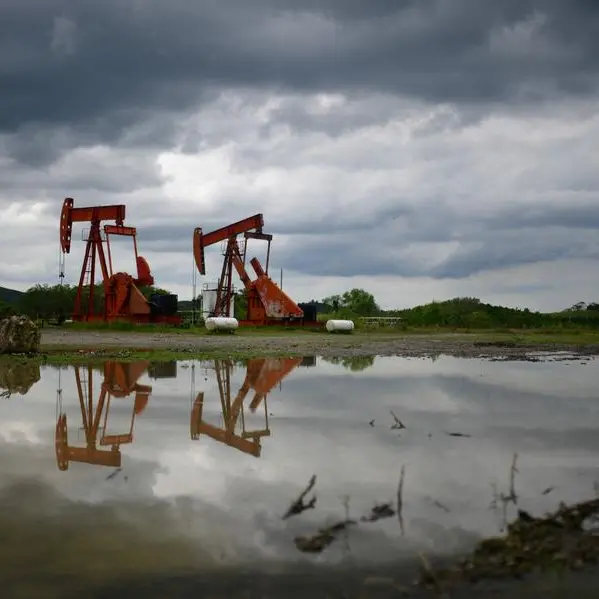
A free fall from the fiscal cliff, and/or EU crisis escalation or softer growth in emerging economies would undoubtedly take its toll on oil commodity prices.
"We would expect oil to remain volatile, but with a clear downward trend to our target of $90 Brent, $80 WTI," says Emad Mostaque, analyst at Religare Capital Markets, citing Mr. Obama's reluctance to attack Iran.
4 OIL PRICE SHOCK - UPSIDE
A number of events could shoot prices up - namely various regional flashpoints blowing up (more of that later). While that could fill the coffers of OPEC countries in the short-term, it could send the global economy into a recession.
"In the short term we expect prices to be relatively range-bound, with the prompt Brent contract trading around its $112 per barrel year-to-date mean as the supply and demand dynamics are fairly balanced," said Sudakshina Unnikrishnan, Barclays Capital.
"In the newly entered post-election period, we do see the potential for a political premium in the shape of geopolitical risks being drilled back into prices and offering upside support, potentially driving prices closer to our Q4 average forecast (USD117 per barrel)."
5 WESTERN WORLD'S MONETARY DRUG PROBLEM
HSBC's almost poetic description of the Western world's monetary drug problem is worth documenting:
"Deep recessions are typically followed by powerful recoveries. Modest recessions are, not surprisingly, typically followed by equally modest recoveries," wrote HSBC's top economists Stephen King, Karen Ward and Madhur Jha in a report.
"This latest economic cycle is, therefore, unique: an incredibly deep recession followed by only a very modest recovery even though virtually all stimulus measures known to man have been used by policymakers to breathe life back into the global economy."
The analysts say stimulus by the U.S. Fed, European Central Bank and Bank of Japan will continue in hopes that it would revive the global economy.
"Yet, even if it does, success is likely to be modest: the arteries and veins that are vital for economic health are all clogged up. The problems confronting the industrialised world no longer reflect only an absence of demand: they now also reflect a loss of supply."
The emerging economy and Middle East economies are not immune as they are caught up in the problems of the developed markets.
"Emerging nations' economic prospects have, in the near-term, dimmed thanks to their vulnerability in the face of a major - Eurozone induced slowdown in world trade."
6 EGYPT - THE NEXT STEPS
Egypt stared down its own fiscal crisis and came back from the brink. But the economy is long way away from recovery.
The Presidential election brought some stability to the political crisis, especially as it was followed by successful efforts to bring the army under control. But the country still has many more hurdles ahead.
"Politically, Egypt must agree on a new constitution and elect a new parliament in the months ahead - developments that may bring renewed volatility and could lead to changes in the direction of policy," HSBC analysts say.
"Economically, addressing Egypt's soaring budget and trade shortfalls is imperative, but will likely prove difficult given the political importance of restoring growth and enhancing social welfare. Any delay in acting, however, could jeopardise IMF support, triggering renewed pressure on rates and the currency and rapidly reversing the recent improvement in the near-term outlook."
7 DUBAI DEBT PERSISTS
Dubai faces debt maturities of USD50-billion between 2014 to 2016, says Standard Chartered Bank in a report.
"Without a material improvement in either Dubai World's or Nakheel's financial profile, this debt could be subject to another round of potential restructuring when it matures," the report stated.
While no alarm bells are ringing given the emirate's successful efforts to manage its debt in the recent debt, it is still something to consider, given the precarious global financial crisis unfolding elsewhere in the world.
This could come to pass if EU banks weaken further and global financial crisis disrupt restructuring and rollover talks.
8 SYRIA BLOWS UP, LEBANON ENSNARED
Could it get worse in Syria?
Short answer: Yes.
With Syrian opposition groups uniting and asking for 'specialised weapons' from EU and Arab League officials, expect a new phase in the civil war.
While Syria burns, Lebanon is also feeling the heat and is already in the midst of an economic meltdown.
"The weak growth outlook is underpinned by the precarious security situation in neighbouring Syria given the political trade and economic links, which affect Lebanon's business sentiment and economic performance," said Moody's Investors Service.
"Moreover, downside risks to growth have increased further following the escalating political unrest domestically, particularly in the aftermath of the recent assassination of Lebanon's internal security chief Wissam al-Hassan."
9 ISRAEL GEARING UP FOR WAR - WHEREVER IT CAN FIND IT
The conflict between Hamas and Israel is escalating, which has already worried global markets.
Israel killed a Hamas military commander in an air strike in early November, as their recent skirmish escalated.
"Today we relayed a clear message to the Hamas organization and other terrorist organizations," Prime Minister Benjamin Netanyahu said in a chilling statement. "And if there is a need, the IDF (Israel Defence Forces) is prepared to broaden the operation. We will continue to do everything in order to protect our citizens."
With Israel threatening to attack Iran if it does not pull back its nuclear programme, the latest escalation shows Tel Aviv is keen for a conflict of some sort.
10 ARAB SPRING - UNFINISHED BUSINESS
Any number of countries could be swept up in Arab Spring fever:
Bahrain - the problems in Manama have not been resolved, they have just been muted.
Bombs blast - unusual in the Gulf states - on November 5 showed the conflict between Shiaa majority and King Hamad's regime is far from over.
Kuwait - Events have taken a turn for the worse in Kuwait, as years of economic lethargy and political deadlock has spilled on to the streets once again.
"Recent popular protests suggest a radicalisation of the political scene in Kuwait," says Fitch Ratings.
"Kuwait's sovereign external balance sheet is the strongest of all Fitch-rated countries and means the country's 'AA' sovereign rating can endure further political instability. However, a serious escalation of public unrest could threaten the rating. Much will depend on how the authorities respond, and whether large-scale violence is avoided."
JORDAN- Tensions have been simmering for almost two years, and many Jordanian cities were swept up in the recent protests against fuel price hike. With escalation of tensions in Syria, Hamas-Israel and Lebanon, the country is hardly immune to unrest.
The latest domestic tension has taken an intense turn with protestors calling for a 'change in regime.'
With political parties in the country also demanding greater reform, and the government's fiscal situation in dire straits, the country remains vulnerable to a full-blown crisis.
VARIOUS
None of the Arab Spring countries - Tunisia, Libya, Egypt and Yemen - have returned to normalcy. There is a good chance that some of these countries may have seen false dawns.
CONCLUSION
Middle East businesses, never in the most stable region at the best of times, have to contend with a series of global external factors that could disrupt their businesses.
While regional business sentiment has improved in the past 12 months, they are hoping for a bumper 2013. It is possible if most of these headwinds are mitigated.
© alifarabia.com 2012
As businesses prepare their budgets for next year, many of them see a sea of trouble they must navigate through to get to profitability.
Here is a list of possible black swan events (or grey swan events, as some of them are visible on the horizon) that may upset their best-laid plans:
1 U.S. FISCAL CLIFF - PEERING DOWN BELOW
If you think the U.S. fiscal cliff does not matter to your regional business, think again. Global financial markets are already nervous that the White House and Republican-led Congress will be unable to agree on tax reforms, which could end USD 600 billion of tax cuts for the American public.
That would set off a tsunami of events, which would dip the U.S. back into a recession, weaken the global economy and generally have a domino effect on the rest of the world, including oil prices -- the barometer of the health of regional economies.
"Not only is this uncertainty likely to have an impact on the markets, it would seem it's already having an effect on corporate investment decisions," says Andy MacLean, analyst at Raymond James investment boutique.
"Corporate capital expenditures have trailed off over the past few months even as cash positions remain high, balance sheets are in good shape with low debt levels, and profitability (except for the current quarter) has been strong."
While most analysts expect U.S. decision makers to avoid the fiscal cliff, a Black Swan event would be President Barack Obama inability to wrangle a deal from Congress. Expect plenty of pain in the New Year then.
2 EU CRISIS - OLD PROBLEM, NEW INTENSITY
Not exactly a Black Swan, especially that the EU fiscal crisis has been raging for more than 18 months now, but there is a build up of popular resentment building up in places like Greece, Spain and Portugal.
While even protests against German-inflicted austerity are nothing new to citizens of the southern Mediterranean countries, the rise of neo-Nazi party Golden Dawn especially in Greece signals a potentially new threat that could turn ugly. Fast.
Unemployment hit 25.1% in Greece, and the figure stands at 54.2% for those between those in the 15-24 year bracket, and 31.4% for 25-34 age group. Regional countries affected by Arab Spring can testify that is a recipe for disaster.
3 OIL PRICE SHOCK - DOWNSIDE
A free fall from the fiscal cliff, and/or EU crisis escalation or softer growth in emerging economies would undoubtedly take its toll on oil commodity prices.
"We would expect oil to remain volatile, but with a clear downward trend to our target of $90 Brent, $80 WTI," says Emad Mostaque, analyst at Religare Capital Markets, citing Mr. Obama's reluctance to attack Iran.
4 OIL PRICE SHOCK - UPSIDE
A number of events could shoot prices up - namely various regional flashpoints blowing up (more of that later). While that could fill the coffers of OPEC countries in the short-term, it could send the global economy into a recession.
"In the short term we expect prices to be relatively range-bound, with the prompt Brent contract trading around its $112 per barrel year-to-date mean as the supply and demand dynamics are fairly balanced," said Sudakshina Unnikrishnan, Barclays Capital.
"In the newly entered post-election period, we do see the potential for a political premium in the shape of geopolitical risks being drilled back into prices and offering upside support, potentially driving prices closer to our Q4 average forecast (USD117 per barrel)."
5 WESTERN WORLD'S MONETARY DRUG PROBLEM
HSBC's almost poetic description of the Western world's monetary drug problem is worth documenting:
"Deep recessions are typically followed by powerful recoveries. Modest recessions are, not surprisingly, typically followed by equally modest recoveries," wrote HSBC's top economists Stephen King, Karen Ward and Madhur Jha in a report.
"This latest economic cycle is, therefore, unique: an incredibly deep recession followed by only a very modest recovery even though virtually all stimulus measures known to man have been used by policymakers to breathe life back into the global economy."
The analysts say stimulus by the U.S. Fed, European Central Bank and Bank of Japan will continue in hopes that it would revive the global economy.
"Yet, even if it does, success is likely to be modest: the arteries and veins that are vital for economic health are all clogged up. The problems confronting the industrialised world no longer reflect only an absence of demand: they now also reflect a loss of supply."
The emerging economy and Middle East economies are not immune as they are caught up in the problems of the developed markets.
"Emerging nations' economic prospects have, in the near-term, dimmed thanks to their vulnerability in the face of a major - Eurozone induced slowdown in world trade."
6 EGYPT - THE NEXT STEPS
Egypt stared down its own fiscal crisis and came back from the brink. But the economy is long way away from recovery.
The Presidential election brought some stability to the political crisis, especially as it was followed by successful efforts to bring the army under control. But the country still has many more hurdles ahead.
"Politically, Egypt must agree on a new constitution and elect a new parliament in the months ahead - developments that may bring renewed volatility and could lead to changes in the direction of policy," HSBC analysts say.
"Economically, addressing Egypt's soaring budget and trade shortfalls is imperative, but will likely prove difficult given the political importance of restoring growth and enhancing social welfare. Any delay in acting, however, could jeopardise IMF support, triggering renewed pressure on rates and the currency and rapidly reversing the recent improvement in the near-term outlook."
7 DUBAI DEBT PERSISTS
Dubai faces debt maturities of USD50-billion between 2014 to 2016, says Standard Chartered Bank in a report.
"Without a material improvement in either Dubai World's or Nakheel's financial profile, this debt could be subject to another round of potential restructuring when it matures," the report stated.
While no alarm bells are ringing given the emirate's successful efforts to manage its debt in the recent debt, it is still something to consider, given the precarious global financial crisis unfolding elsewhere in the world.
This could come to pass if EU banks weaken further and global financial crisis disrupt restructuring and rollover talks.
8 SYRIA BLOWS UP, LEBANON ENSNARED
Could it get worse in Syria?
Short answer: Yes.
With Syrian opposition groups uniting and asking for 'specialised weapons' from EU and Arab League officials, expect a new phase in the civil war.
While Syria burns, Lebanon is also feeling the heat and is already in the midst of an economic meltdown.
"The weak growth outlook is underpinned by the precarious security situation in neighbouring Syria given the political trade and economic links, which affect Lebanon's business sentiment and economic performance," said Moody's Investors Service.
"Moreover, downside risks to growth have increased further following the escalating political unrest domestically, particularly in the aftermath of the recent assassination of Lebanon's internal security chief Wissam al-Hassan."
9 ISRAEL GEARING UP FOR WAR - WHEREVER IT CAN FIND IT
The conflict between Hamas and Israel is escalating, which has already worried global markets.
Israel killed a Hamas military commander in an air strike in early November, as their recent skirmish escalated.
"Today we relayed a clear message to the Hamas organization and other terrorist organizations," Prime Minister Benjamin Netanyahu said in a chilling statement. "And if there is a need, the IDF (Israel Defence Forces) is prepared to broaden the operation. We will continue to do everything in order to protect our citizens."
With Israel threatening to attack Iran if it does not pull back its nuclear programme, the latest escalation shows Tel Aviv is keen for a conflict of some sort.
10 ARAB SPRING - UNFINISHED BUSINESS
Any number of countries could be swept up in Arab Spring fever:
Bahrain - the problems in Manama have not been resolved, they have just been muted.
Bombs blast - unusual in the Gulf states - on November 5 showed the conflict between Shiaa majority and King Hamad's regime is far from over.
Kuwait - Events have taken a turn for the worse in Kuwait, as years of economic lethargy and political deadlock has spilled on to the streets once again.
"Recent popular protests suggest a radicalisation of the political scene in Kuwait," says Fitch Ratings.
"Kuwait's sovereign external balance sheet is the strongest of all Fitch-rated countries and means the country's 'AA' sovereign rating can endure further political instability. However, a serious escalation of public unrest could threaten the rating. Much will depend on how the authorities respond, and whether large-scale violence is avoided."
JORDAN- Tensions have been simmering for almost two years, and many Jordanian cities were swept up in the recent protests against fuel price hike. With escalation of tensions in Syria, Hamas-Israel and Lebanon, the country is hardly immune to unrest.
The latest domestic tension has taken an intense turn with protestors calling for a 'change in regime.'
With political parties in the country also demanding greater reform, and the government's fiscal situation in dire straits, the country remains vulnerable to a full-blown crisis.
VARIOUS
None of the Arab Spring countries - Tunisia, Libya, Egypt and Yemen - have returned to normalcy. There is a good chance that some of these countries may have seen false dawns.
CONCLUSION
Middle East businesses, never in the most stable region at the best of times, have to contend with a series of global external factors that could disrupt their businesses.
While regional business sentiment has improved in the past 12 months, they are hoping for a bumper 2013. It is possible if most of these headwinds are mitigated.
© alifarabia.com 2012