11 October 2012
Bahrain is looking at its GCC counterparts enviably as it battles its own domestic issues, while its neighbours rake in petrodollars and bask in relative stability. It seems like the Kingdom will have to live with internal political strife for some time to come.
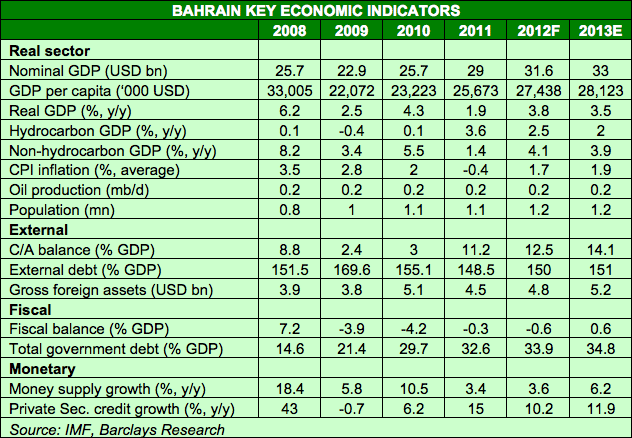
"Bahrain's economic recovery is gradually consolidating but remains exposed to a fragile political landscape. GDP growth fell sharply to 1.9% year-on-year in 2011 from 4.3% year-on-year in 2010, due to social and political unrest as investment (public and private) contracted 27% year-on-year and consumption decelerated sharply," wrote Alia Moubayed, London-based analyst at Barclays Capital.
In this backdrop, Manama, which once positioned itself as the 'freest economy' in the region, is falling behind rivals Dubai, Riyadh and Doha and losing its competitive edge.
Despite these failings, the economy is showing signs of life. The International Monetary Fund expects the Kingdom's growth to reach 2% in 2012 and 2.8% in 2013.
Meanwhile, Bank of America Merrill Lynch noted that Bahrain posted a 2.4% growth in the first half of the year, and expects a near 3% growth in 2013. Barcap is even more bullish, estimating a 3.8% growth this year, and 3.5% in 2013 on the back of high oil prices.
Real estate consultant Cluttons reports that Manama saw 'significant increase in activity' in the third quarter due to incentive programmes and lower rates.
"However, the outlook is not entirely positive as supply of office stock continues to increase," says the consultancy. "The Diplomatic Area has seen a dramatic increase in the amount of available space over the last six months and this trend is set to continue."
More importantly, new demand in the Diplomatic area is poor due to ongoing issues of parking and access, while the Bahrain Financial Harbour will probably see falling falling occupancy rates as a lot of the original five-year leases come to an end and many companies move to the Seef District, says the consultancy.
"Many of the businesses currently located there signed their leases at the height of the market and now need to downgrade their premises."
However, the industrial sector is showing positive signals with rents stabilising and a rise in number of enquiries.
Infrastructure investment in the Salman Industrial City at Hidd, featuring Sheikh Khalifa Bin Salman Port, Bahrain Investment Warf, Bahrain Logistics Zone and Bahrain International Investment Par, has boosted prospects.
The port will cover an area of 1.1 million square metres and will have a total capacity of 2.5 million TEUs (twenty-foot equivalent units) when completed, according to Zawya Projects Monitor.
Bahrain is also examining multiple rail networks to improve its regional and domestic transport infrastructure. A USD4.5-billion Bahrain-Saudi rail network, an USD8-billion domestic metro system and a Qatar-Bahrain dual carriageway and rail network are all being examined which would enhance the country's infrastructure and connect it to some of the key hubs of the region.
Meanwhile, the government is looking to build 30,000 residential units, while the Sitra refinery is being expanded at a cost of USD6-billion, and a new USD1-billion LNG import terminal is being built by BAPCO.
In addition, a Saudi oil pipeline is being expanded by 120,000 barrels per day to 350,000 bpd at a cost of USD350-million.
Aluminium Bahrain (Alba) is starting a USD2.5-billion sixth production line by the end of 2012, and a USD1.2-billion Bahrain Integrated Steel Complex is in execution stage, according to Zawya Projects Monitor.
The government is hoping to stimulate the economy, to make up for the lethargic private sector activity. In this context, high oil prices will suit Bahrain which has a budget breakeven price of USD100 per barrel, according to Deutsche Bank estimates.
Gulf aid of USD10-billion as part of a Marshall Plan - that includes a similar payment to Oman - would also be most welcome by the authorities, although it is unclear how and when these monies will be transferred over ten years. The first instalment from Kuwait is expected to be delivered in April 2013, according to media reports.
"We expect hydrocarbon growth, which registered 3.6% year-on-year in 2011, to slow slightly to 2.5% and 2% year-on-year, respectively, in 2012 and 2013," says BarCap's Mobayed. "We also forecast non-hydrocarbon growth to decelerate only slightly in 2013 as spending moderates and political tensions continue to pose risks to a rapid recovery in private sector activity."
While the economy may well recover, it will remain constricted by the political divide along sectarian lines. That's unfortunate, although Bahrain has always shown great resilience and business acumen even when the odds are stacked against it.
Bahrain is looking at its GCC counterparts enviably as it battles its own domestic issues, while its neighbours rake in petrodollars and bask in relative stability. It seems like the Kingdom will have to live with internal political strife for some time to come.
"Bahrain's economic recovery is gradually consolidating but remains exposed to a fragile political landscape. GDP growth fell sharply to 1.9% year-on-year in 2011 from 4.3% year-on-year in 2010, due to social and political unrest as investment (public and private) contracted 27% year-on-year and consumption decelerated sharply," wrote Alia Moubayed, London-based analyst at Barclays Capital.
While economic growth rebounded after a sharp slowdown in 2011, efforts at national reconciliation made little progress, notes the analyst.
"While we expect the current account surplus to exceed 10% of GDP, capital outflows increased. Oil prices above USD110 per barrel should turn the fiscal deficit into surplus in 2013 and GCC financial support should further help."
But the killing of a Bahraini teenager on September 29 by law enforcement agencies tragically underlines that political discord will continue to keep a lid on business sentiment.
In this backdrop, Manama, which once positioned itself as the 'freest economy' in the region, is falling behind rivals Dubai, Riyadh and Doha and losing its competitive edge.
Despite these failings, the economy is showing signs of life. The International Monetary Fund expects the Kingdom's growth to reach 2% in 2012 and 2.8% in 2013.
Meanwhile, Bank of America Merrill Lynch noted that Bahrain posted a 2.4% growth in the first half of the year, and expects a near 3% growth in 2013. Barcap is even more bullish, estimating a 3.8% growth this year, and 3.5% in 2013 on the back of high oil prices.
Real estate consultant Cluttons reports that Manama saw 'significant increase in activity' in the third quarter due to incentive programmes and lower rates.
"However, the outlook is not entirely positive as supply of office stock continues to increase," says the consultancy. "The Diplomatic Area has seen a dramatic increase in the amount of available space over the last six months and this trend is set to continue."
More importantly, new demand in the Diplomatic area is poor due to ongoing issues of parking and access, while the Bahrain Financial Harbour will probably see falling falling occupancy rates as a lot of the original five-year leases come to an end and many companies move to the Seef District, says the consultancy.
"Many of the businesses currently located there signed their leases at the height of the market and now need to downgrade their premises."
However, the industrial sector is showing positive signals with rents stabilising and a rise in number of enquiries.
Infrastructure investment in the Salman Industrial City at Hidd, featuring Sheikh Khalifa Bin Salman Port, Bahrain Investment Warf, Bahrain Logistics Zone and Bahrain International Investment Par, has boosted prospects.
The port will cover an area of 1.1 million square metres and will have a total capacity of 2.5 million TEUs (twenty-foot equivalent units) when completed, according to Zawya Projects Monitor.
Bahrain is also examining multiple rail networks to improve its regional and domestic transport infrastructure. A USD4.5-billion Bahrain-Saudi rail network, an USD8-billion domestic metro system and a Qatar-Bahrain dual carriageway and rail network are all being examined which would enhance the country's infrastructure and connect it to some of the key hubs of the region.
Meanwhile, the government is looking to build 30,000 residential units, while the Sitra refinery is being expanded at a cost of USD6-billion, and a new USD1-billion LNG import terminal is being built by BAPCO.
In addition, a Saudi oil pipeline is being expanded by 120,000 barrels per day to 350,000 bpd at a cost of USD350-million.
Aluminium Bahrain (Alba) is starting a USD2.5-billion sixth production line by the end of 2012, and a USD1.2-billion Bahrain Integrated Steel Complex is in execution stage, according to Zawya Projects Monitor.
The government is hoping to stimulate the economy, to make up for the lethargic private sector activity. In this context, high oil prices will suit Bahrain which has a budget breakeven price of USD100 per barrel, according to Deutsche Bank estimates.
Gulf aid of USD10-billion as part of a Marshall Plan - that includes a similar payment to Oman - would also be most welcome by the authorities, although it is unclear how and when these monies will be transferred over ten years. The first instalment from Kuwait is expected to be delivered in April 2013, according to media reports.
"We expect hydrocarbon growth, which registered 3.6% year-on-year in 2011, to slow slightly to 2.5% and 2% year-on-year, respectively, in 2012 and 2013," says BarCap's Mobayed. "We also forecast non-hydrocarbon growth to decelerate only slightly in 2013 as spending moderates and political tensions continue to pose risks to a rapid recovery in private sector activity."
While the economy may well recover, it will remain constricted by the political divide along sectarian lines. That's unfortunate, although Bahrain has always shown great resilience and business acumen even when the odds are stacked against it.
© alifarabia.com 2012