More than 80% of the Middle East businesses polled in a survey expect steady or aggressive growth in the next five years, according to a global PriceWaterHouseCoopers (PWC) survey.
"Thirty-nine per cent of those who aim to grow are very confident about their company's prospects over that period. This increases substantially for companies in India, the Middle East, Singapore, South Africa, and South Korea," states PWC in a global survey of family businesses.
The survey combined various Middle East countries to determine their response.
"Given the low levels of confidence in other sectors of the economy, we believe this is a powerful proof of the significant role family businesses can play in creating jobs and stimulating recovery," said PWC.
Here are 6 key findings from the survey:
1 DOMESTIC FOCUS
Middle East family businesses' international sales constitute 15% of their businesses. They expect that international sales to grow by 4% over the next five years, suggesting family businesses will remain largely focused on domestic markets. That's not surprisingly given the USD1.3 trillion worth of projects under way in the region.
In sharp contrast 60% of Singaporean family businesses' sales are international; while only sell 7% of American family businesses are exports.
Most family businesses remain wary of international business with a fifth of respondents citing lack of understanding of foreign business cultures, while fear of competition, lack of familiarity with local regulations and local economic conditions and even exchange rate fluctuations as deterrents to venturing abroad.
"A number also referred to the difficulties of managing a far more complex international supply chain."
2. UNSKILLED YOUNG BLOOD
Most Middle East family businesses don't think that the young generation have the right skills for the jobs.
Middle East family businesses agreed with South Korean, French and Italian businesses that there was a dearth of skilled young people coming to the market.
Meanwhile, family businesses in Hong Kong, India, Taiwan and Switzerland believe the new blood is up to the job.
"According to our survey, the majority of family businesses recognise that skills shortages can be a problem, and address it by bringing in external managers to either supplement or replace family members in key positions."
3 QUESTION OF SUCCESSION
"Mentoring and developing the next generation family members is crucial to the success of the family business," a Middle East respondent told PWC.
Interestingly, less than half of family businesses plan to pass the business' management fully to the next generation. Only 41% of businesses plan to pass the management of the operations to the new generation, while 25% intend to bring in professional management. Only 17% were thinking of selling or floating the company either through a private equity deal, selling to a competitor or initial public offering.
"Family businesses that are considering taking this route have to consider carefully what this would mean in practice, and what they might need to do to configure or restructure their operations to make them an attractive prospect for a commercial buyer or private equity investor."
4 CONFLICT RESOLUTION
Many a family business can cope with macro-economic downturns, but they are much more vulnerable to internal conflict, as such disputes often take on a personal dimension and may involve close relatives.
While 84% of the global respondents say they have put in place measures to resolve conflicts, the reality is that this is the Achilles heels of most family-run businesses.
"We suspect that some family businesses are seriously underestimating the degree of conflict that the next transition point will generate, and would benefit from a greater understanding of the best practice governance measures they might take now to mitigate it," PWC states.
5 GOVERNMENT'S ROLE
Very few family businesses believe their governments are helping them in the current global economic climate. Only 3% of Middle East businesses survey said the government is playing a role in their success.
"Firms in markets like Turkey, Switzerland, Mexico, India, Malta and Singapore generally agree that their government values their sector, but this positive sentiment was outweighed overall by the number of respondents who considered that theirs does not - South Africa, the UK, France, Russia, Italy, Romania, and Greece were the most negative here."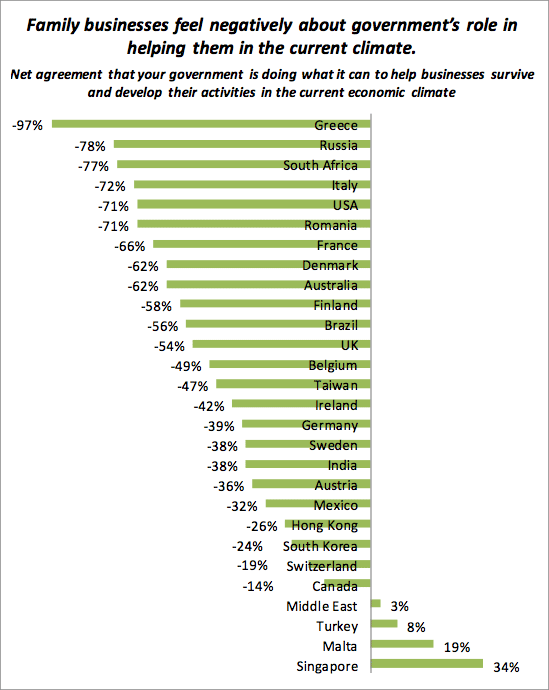
6 GOVERNMENT'S ATTITUDE
Middle East family business may not think the government is helping them in the current climate, but they strongly believe their governments value their businesses.
Thirty-four per cent of Middle East family businesses - the highest in the world - believe the government values their business. Family businesses from Malta, Switzerland, Singapore and Mexico are also largely positive towards government attitudes.
Meanwhile, British, Greek, American and Russian businesses feel most neglected by their respective governments.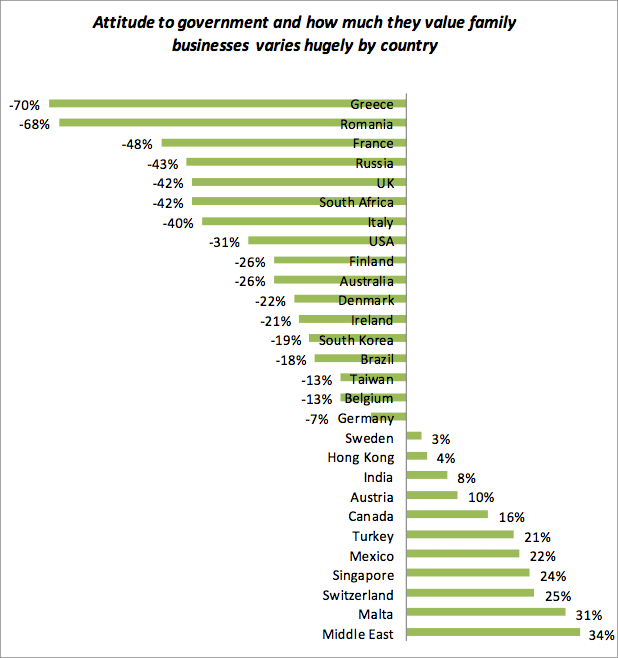
© alifarabia.com 2012