Wednesday, Nov 05, 2008
(Adds details, background, date for Pearl GTL completion.)
By Oliver Klaus
Of Zawya Dow Jones
ABU DHABI (Zawya Dow Jones)--Shell Gas and Power, part of Royal Dutch Shell PLC (RDSB.LN), will complete by the end of 2010 the installation of a floating liquefied natural gas import terminal in Dubai and is studying options of setting up floating LNG export facilities offshore Iraq and Egypt.
The floating regassification unit in Dubai, which will help meet runaway energy demand in the Persian Gulf emirate, "is well under way" and set to be "ready by the end of 2010," Shell Gas and Power executive vice president for the Middle East, North Africa and South Asia, John Mills, said Wednesday on the sidelines of the Adipec 2008 oil and gas exhibition and conference in Abu Dhabi.
The LNG import unit will be owned and operated by Dubai Supply Authority, or Dusup, which will transfer the gas onshore via pipeline and inject it into the local gas grid for domestic consumption, Mills said.
Shell earlier this year was selected by Dusup as an adviser and project manager for the development phase of the floating LNG regassification facility at Dubai's DP World Jebel Ali Terminal.
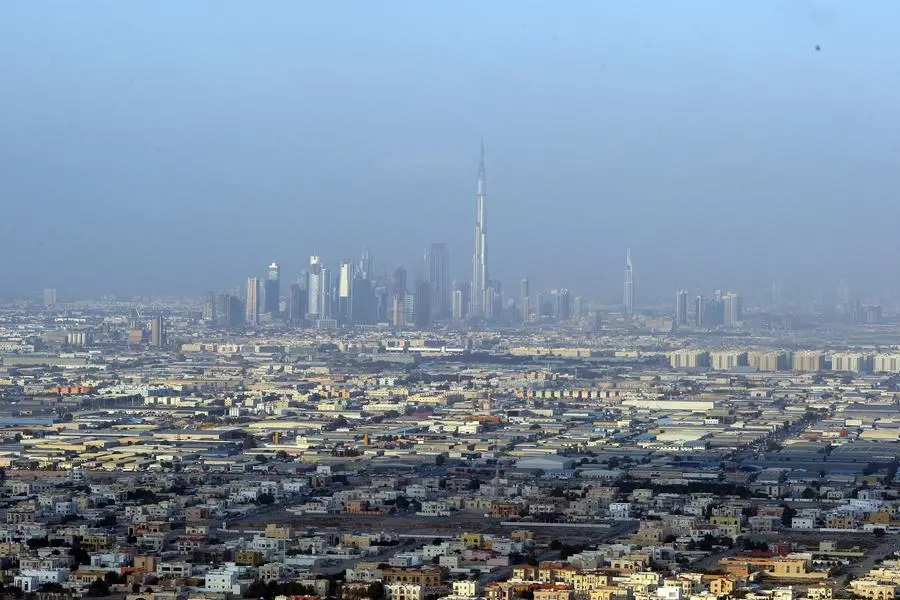
Gas demand in the United Arab Emirate's second-largest emirate has been soaring for several years on the back of an oil price-fired economic boom that has seen billions of dollars being poured into real-estate, tourism and industrial projects, which in turn have driven up demand for power.
Dubai's power stations run on natural gas but, due to gas shortages, have to revert to more expensive and polluting liquid fuels such as diesel at peak times in the summer, when temperatures cross the 50C mark.
The emirate is also working on plans to add thousands of megawatts of power generation capacity to meet projected future needs.
The floating import unit is set to help meet the rising gas demand. Mills didn't say how much LNG would be imported from Qatar, the world's largest LNG exporter and holder of the world's third-largest gas reserves after Russia and Iran.
The LNG will be provided from the Qatargas 4 project in Qatar, which is a joint venture between wholly-owned affiliates of Qatar Petroleum, which owns a 70% stake and Shell with 30%.
LNG is gas cooled down so it becomes liquid and can be transported in special vessels.
A similar project for floating LNG regassification is being studied for a location offshore Pakistan, Mills said.
Shell Gas and Power is also studying the possibility of installing floating LNG units in Iraq and Egypt to liquefy natural gas for export purposes, Mills said.
"We look at some locations here to export gas from," he said, adding that locating the units offshore southern Iraq in the Gulf and offshore Damietta in Egypt in the Mediterranean Sea were being studied.
The model is also being looked at for application offshore Australia, Mills said.
Typically, the capacity for floating LNG export units ranges from 2 million tons a year to more than 6 million tons a year, he added.
The Egypt and Iraq facilities would likely be at the lower production end, while the Australian unit would on the higher side, Mills said.
Like with other capital-intensive projects, actual implementation depends on the economics of such schemes at a time of lower crude oil prices, Mills said, adding, however, that reduced oil prices would also likely lead to lower cost.
Crude prices have slumped more than 50% to around $60 a barrel from record highs of above $147 in July.
Shell's plans for its multibillion dollar gas-to-liquids, or GTL, project in Qatar are on track for completion by the end of 2010, Mills said.
The Qatar Pearl GTL project, the world's largest facility to turn natural gas into transportation fuels, has seen its costs balloon from an original $5 billion estimate to $18 billion. Pearl is forecast to produce up to 140,000 barrels a day of GTL fuels, such as a colorless diesel with fewer particulates that choke the atmosphere, and 120,000 barrels a day of liquefied petroleum gas and other byproducts.
-By Oliver Klaus, Dow Jones Newswires, +9714 364 4961 oliver.klaus@dowjones.com
Copyright (c) 2008 Dow Jones & Company, Inc.
(END) Dow Jones Newswires
05-11-08 1010GMT