PHOTO
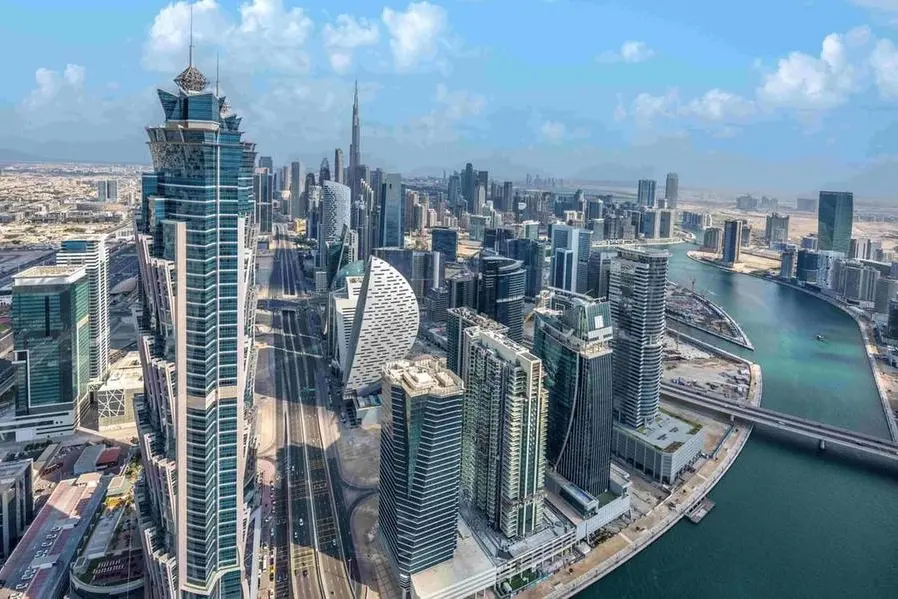
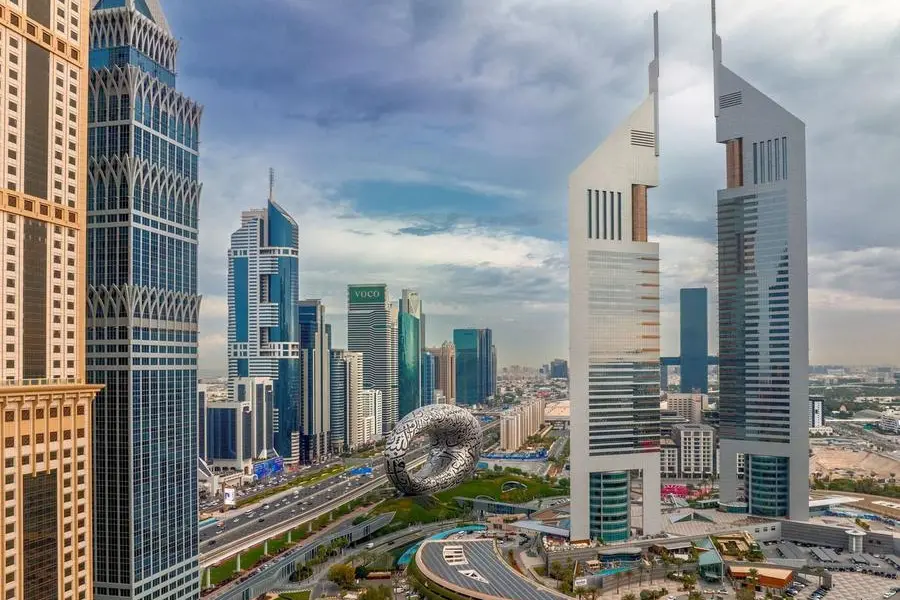
Dubai is beginning to open its real estate market to smaller global investors by allowing properties to be bought and sold in fractional digital shares through blockchain-based platforms.
This model, known as real-estate tokenisation, allows completed homes to be divided into hundreds of units, each representing a share of ownership. Some of those units have been sold for as little as $545, significantly lowering the cost of entry into a market where full apartments and villas often sell for millions of dirhams.
Dubai has already begun testing the model, with several residential units sold through PRYPCO MINT, a tokenised property platform developed in partnership with the Dubai Land Department (DLD).
“Dubai wants to maintain global leadership by making its real estate more accessible to a much larger group of investors,” said Kashif Ansari, co-founder and group CEO of Juwai IQI.
According to Ansari, the model’s success will depend on increasing the supply of fractionalised assets, opening participation to more foreign investors and creating an always-open secondary market where investors can trade their shares.
The push toward fractional ownership comes even as Dubai’s luxury residential market continues to surge. In 2025, 500 homes priced above $10 million changed hands for a combined $9.05 billion, according to Knight Frank. This underscores both the strength of demand at the top end and the opportunity to broaden investor access.
Property advisers say tokenisation could reshape how real estate trades by introducing a secondary market alongside traditional transactions.
“Tokenisation would create a secondary market in parallel to the traditional market where the barrier to entry is significantly reduced, settlement times are instant, there would be greater transparency and lead to real time price discovery,” said Cathal Kenny, director of valuation advisory at CBRE MENA.
Stephen Flanagan, regional partner and head of valuation and advisory at Knight Frank MENA, added: “From a liquidity perspective, blockchain-based platforms can support secondary trading of tokens, offering investors a clearer exit route compared to traditional property transactions, which are typically slower and more capital intensive.”
Fadi Moussalli, executive director of capital markets transactions GCC at JLL, said continuous trading of property interests on digital platforms could significantly enhance liquidity.
“The cumulative effect should be a more efficient market where pricing reflects real-time supply and demand dynamics rather than historical comparables,” he said.
Moussalli pointed out tokenisation could also address long-standing inefficiencies in property markets by creating continuous price discovery rather than relying on periodic transactions that may be months apart.
Hassan Alladin, associate director of strategy and consulting at Cavendish Maxwell, added that tokenisation opens Dubai’s property market to a broader base of participants by allowing investors to purchase fractional interests rather than entire assets.
“From a liquidity perspective, tokenisation significantly lowers barriers to entry,” he emphasised.
Pricing and valuation shifts
Increased transaction volumes and data availability could support more efficient price discovery, particularly for income-producing residential assets, according to Knight Frank’s Flanagan
However, fractional ownership via tokenisation introduces new valuation dynamics, cautioned CBRE MENA’s Kenny.
“We're essentially shifting from an appraisal-based valuation to a market-based valuation,” Kenny said, adding that while this could improve liquidity, it may also increase price volatility.
Higher trading frequency could amplify short-term movements, echoed Cavendish Maxwell’s Alladin.
“From a valuation perspective, fractional ownership introduces new risks, particularly increased volatility and speculative trading, which are less common in traditional real estate markets,” he said. “There is also a risk that retail participation encourages equity-style trading behaviour in what is fundamentally a long-term, income-generating asset and therefore, causing severe price volatility.”
Still, regulated secondary trading platforms could ultimately make property transactions more efficient by reducing holding periods and enabling faster entry and exit, he noted.
While acknowledging that fractional ownership introduces more frequent price discovery and short-term volatility, Moussalli said this does not necessarily undermine real estate’s long-term investment characteristics.
“This increased transparency in pricing should ultimately lead to more accurate valuations that better reflect underlying property fundamentals and market conditions,” he explained.
Ansari said he expects tokenisation to expand overall inflows into Dubai real estate, even if some capital shifts from direct ownership to digital assets.
“At any given level of supply, that will likely mean higher prices,” he said, adding that it remains too early to quantify the full impact.
Expanding investor base
Industry experts say the main impact of tokenisation will be in expanding the investor pool rather than replacing traditional buyers.
Ansari cited China as an example, noting that while only a small share of the population can afford to buy a full overseas property, a far larger segment could afford low-value tokenised shares. “It could increase the pool of potential Chinese investors in Dubai by 15-fold, to about 210 million individuals.”
Flanagan said tokenisation is likely to complement institutional capital rather than compete with it.
“Fractional ownership platforms are primarily opening up access to smaller investors, who would not typically compete with institutions for whole assets,” he said.
Alladin said the model could attract incremental foreign demand over time, particularly from China, Russia, Europe and India.
Moussalli added that the fractional model is likely to attract new investor segments rather than speculative flows.
“The ability to invest small amounts while still gaining exposure to prime Dubai real estate should be particularly appealing to emerging wealth in India and China, where digital payment adoption is already very high,” he said.
Government role
DLD’s involvement has been critical in building confidence around tokenised property in Dubai, according to the experts.
Ansari said platform trust remains the biggest hurdle, but regulatory backing significantly strengthens the case for tokenisation as a credible alternative to direct ownership.
He added that token holders are unlikely to resemble crypto traders.
“I expect most tokenised property investors will behave like long-term yield holders,” he said. “Tokenised real estate is fundamentally different from cryptocurrency because prices are anchored by rents, vacancy rates, and cap rates.”
Flanagan highlighted that the direct involvement of the DLD is critical in establishing global investor confidence. “Regulatory backing ensures that tokenised assets are fully aligned with existing property ownership frameworks and legal protections.”
Kenny said the DLD acts as a “trust anchor” by digitising the actual property title deed, ensuring that digital tokens are legally recognised by Dubai’s courts and removing the risk of “digital-only” assets lacking real-world standing.
“Also, because the DLD controls both the physical land registry and the blockchain pilot, it is impossible for a property to be 'double-sold', Kenny added.
While still at an early stage, advisers say tokenisation could become a meaningful addition to Dubai’s property market as platforms scale and regulation evolves.
(Reporting by SA Kader; Editing by Anoop Menon)
Subscribe to our Projects' PULSE newsletter that brings you trustworthy news, updates and insights on project activities, developments, and partnerships across sectors in the Middle East and Africa.