PHOTO
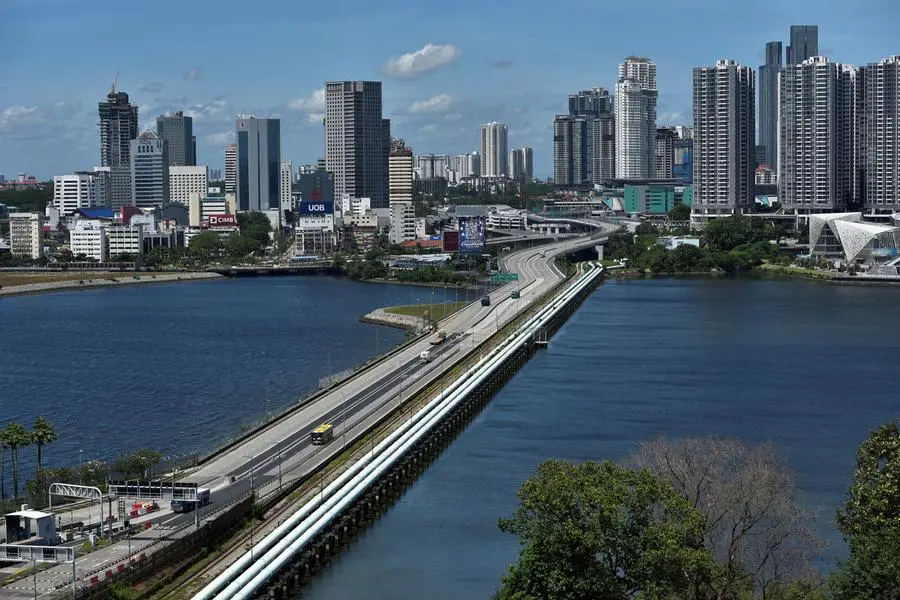
SINGAPORE - Singapore's economy grew by 5.7% in the second quarter from a year earlier, as strong AI-related chip demand offset the impact of the Iran war on some industrial sectors, preliminary government data showed on Tuesday.
The growth was just above the median forecast of 5.5% in a Reuters poll, and slower than the annual pace of 6.3% in the January-March quarter.
"Growth during the quarter was largely driven by output increases in the electronics and precision engineering clusters on account of strong AI-related demand for semiconductors and semiconductor manufacturing equipment respectively," the trade ministry said.
However, it said chemicals and biomedical manufacturing contracted as the war disrupted feedstock supplies.
On a quarter-on-quarter seasonally adjusted basis, GDP grew 1.1% from the first quarter of 2026, according to advance estimates from the trade ministry. DBS senior economist Chua Han Teng said the data showed a resilient economy despite the global energy shock. "We expect the positive trends observed in the second quarter — namely robust trade-related performance, resilient modern services expansion, and sustained tailwinds from domestic construction — to continue in the next few quarters, although the overall GDP cycle is likely to moderate from its blistering pace, partly due to high base effects," he said.
The trade ministry has forecast growth this year at 2% to 4%. The central bank tightened monetary policy in April due to the risk of the Iran war fuelling inflation. The next monetary policy review is due before the end of this month, but the date has not yet been announced.
In April, the central bank raised both its core and headline inflation forecasts for 2026 to a range of 1.5% to 2.5%, from 1.0% to 2.0% previously.
(Reporting by Xinghui Kok and Jun Yuan Yong; Editing by John Mair)