PHOTO
Sri Lanka needs stronger public finances, more private investment and a faster accumulation of foreign reserves to ensure a lasting economic recovery as it looks beyond its $2.9 billion IMF programme, analysts say.
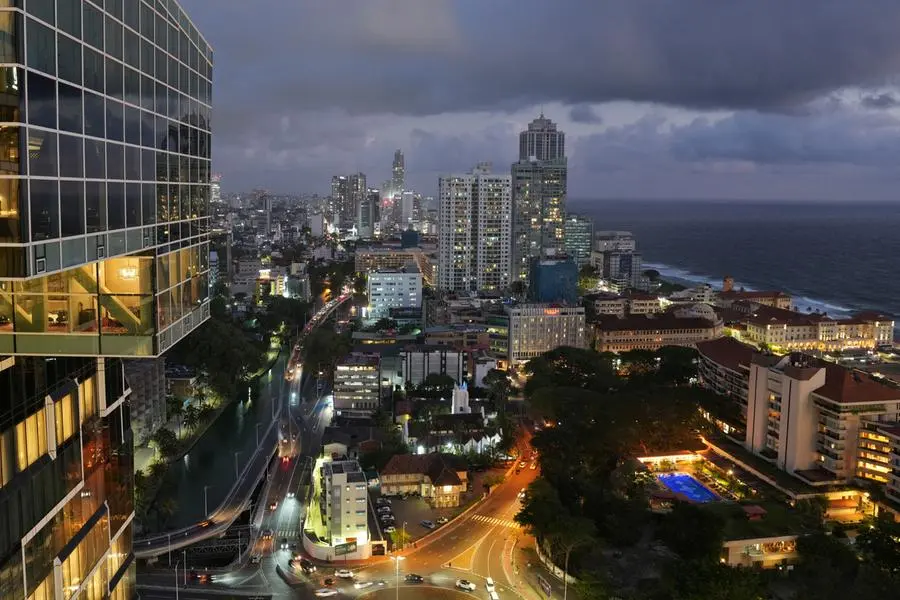
A team from the International Monetary Fund wrapped up a visit to Colombo earlier this week as the island nation rebounds from a 2022 financial crisis that pushed it into default on $22.5 billion of foreign debt.
Sri Lanka, which has two reviews left under its IMF bailout, also regained upper-middle-income status from the World Bank this week and secured $150 million in new financing.
As well as working to bolster its foreign reserves, economists said the country should work to restore transparent energy pricing, widen tax collection and attract more investment.
"Sri Lanka has made significant progress in stabilising its economy, and now it is critical to advance reforms that can unlock private investment, facilitate high-value exports and create jobs," said Gevorg Sargsyan, World Bank Group country manager for Sri Lanka.
NEXT TEST FOR RECOVERY
Analysts said the next test will be whether the economic recovery can withstand new external shocks such as the impact of a 12.5% tariff that will affect about $3 billion of its exports to the U.S. from July.
Higher energy prices linked to the Middle East conflict have put pressure on Sri Lanka's external accounts, forcing fuel rationing and prompting a 100-basis-point policy rate hike in May to ease strain on reserves.
"Now we need to rebuild reserves, which means that effectively $1.2 billion to $1.3 billion of reserves need to be purchased before the end of the year," said Udeeshan Jonas, chief strategist at CAL investment bank, adding that Sri Lanka's economy could still grow by 3% to 3.5% in 2026.
Jonas said returning to a 2.3% primary surplus, lifting tax revenue to 15% of gross domestic product and overhauling loss-making state-owned firms such as SriLankan Airlines was vital.
Stronger performance on such reforms could support any return to international markets before debt repayments restart in 2028, he added.
At the end of this week's visit, IMF mission chief Evan Papageorgiou said the country's priority should be to "stay the course and sustain reform momentum".
"External shocks come and go, but sustaining the reform momentum is what will determine whether Sri Lanka continues on the path forward," Papageorgiou said.
(Reporting by Uditha Jayasinghe; Editing by Helen Popper)