PHOTO
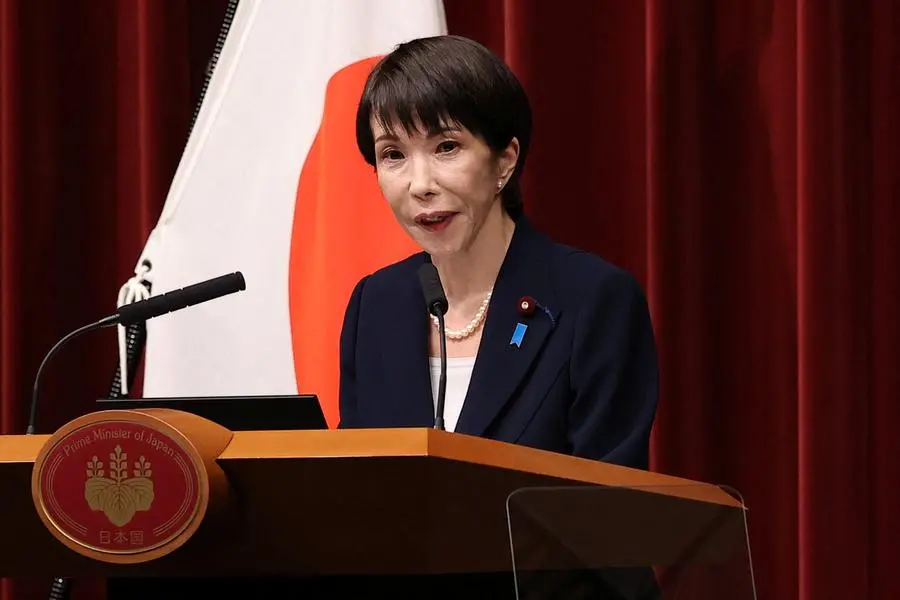
TOKYO - Japan's plan to return to a primary budget surplus for the first time in decades has been pushed back again, as Prime Minister Sanae Takaichi presses ahead with what she calls a "proactive" fiscal policy.
The forecast deficit for the next fiscal year, presented at a meeting of the government's top economic council on Thursday, could be widened even further as it does not account for Takaichi's election promise to suspend an 8% tax on food for two years.
The plan, which Takaichi announced on Monday when calling a snap election in February, spooked bond investors, sending the benchmark 10-year Japanese government bond yield to a 27-year high on Tuesday.
Suspending the food tax would cost about 5 trillion yen ($32 billion) per year.
The primary budget balance, which excludes new bond sales and debt-servicing costs, is a key gauge of the extent to which policy measures can be funded without resorting to debt.
The latest projection shows a primary budget deficit of 800 billion yen ($5 billion) for fiscal 2026 starting April, compared with an earlier forecast of a 3.6 trillion yen surplus — a reversal driven largely by 21.3 trillion yen in stimulus spending under Takaichi that was launched late last year.
The government now expects to achieve a 3.9 trillion yen surplus in fiscal 2027, assuming that Japan's economy will continue to grow at a modest pace.
Except for the asset bubble period between 1986 and 1991, Japan's primary budget balance has been in deficit for most of the postwar era, resulting in a vast debt pile more than twice the size of its economy, the worst among developed economies.
Plans to return to a budget surplus - a goal first introduced in the early 2000s - have been pushed back multiple times.
Takaichi has said she would reverse fiscal austerity and set a new fiscal target extending through several years to allow more flexible spending.
($1 = 158.3500 yen)
(Reporting by Makiko Yamazaki; Editing by Edwina Gibbs)