PHOTO
Multipolarity is often sold as Africa’s opening. More external actors, more offers, more room to manoeuvre. The story is attractive because it promises relief from dependency without confrontation. Yet it confuses choice with power. Power is the capacity to organise options, price alignment, and enforce terms. In a crowded international system, weakness is not cushioned by alternatives. It is exposed by them.
Africa matters more because the world needs what it can withhold or price: Transition minerals, expanding markets, maritime choke points, and digital scale. In practiced hands, that becomes leverage over access, supply chains, votes, and standards. But relevance is not authority. The decisive question is whether African states can convert attention into enforceable outcomes.
Too much commentary begins from the wrong premise. Africa is treated as an arena; others have rediscovered it after neglect. External actors do not fill empty spaces. They enter domestic political struggles and work through existing constraints. Alignments shift less from ideology than from internal pressures: weak revenue systems, elite fragmentation, contested legitimacy, divided coercive authority, and limited regulatory reach. These constraints are activated through concrete tools, contract clauses, security compacts, budget support timing, sanctions exposure, and recognition politics.
This is why multipolarity does not automatically expand African agency. It multiplies patrons willing to transact with fragile states, while fragmenting standards, creditors, and crisis management. The penalty for miscalculation rises. Where institutions are thin and buffers are absent, competition among external powers becomes a mechanism of discipline rather than empowerment.
The historical record is clear. Latecomer states rarely enter international systems on equal terms. Durable autonomy follows internal consolidation, not external accommodation. States that centralise revenue, discipline elites, and professionalise coercion gain room to manoeuvre. Those that do not pay a sovereignty premium through higher capital costs, conditional security, and managed legitimacy.
Setting the tempoAfrica’s experience under multipolarity is therefore uneven. States with coherent revenue systems, credible regulatory authority, and unified control over security can price access, delay commitments, and sequence partnerships. States governed through fragmented coalitions and emergency financing are pushed into reactive alignment, trading long-term discretion for short-term stability.
The Red Sea and Horn corridor has become the sharpest expression of these pressures. It now functions as a single integrated theatre where middle powers set the tempo. Ports, airspace, basing rights, logistics corridors, undersea cables, and recognition politics operate as linked instruments. Infrastructure is no longer merely economic. It is leverage. Recognition is no longer symbolic. It is signalling.
Israel’s recognition of Somaliland exemplifies the shift. Whatever the public rationale, the operational effect was to externalise Somalia’s sovereignty question into corridor competition, compressing diplomatic space and forcing alignment choices beyond the Horn. Recognition becomes a bargaining weapon. Territorial disputes become tools for rearranging access and influence.
In this environment, fragmentation is punished quickly. When ports serve as gateways into external security architectures, and recognition becomes a corridor instrument, states lose the luxury of compartmentalised diplomacy. Trade routes become security alignments. Security partnerships become fiscal lifelines. Digital systems become political commitments. Ambiguity becomes costly.
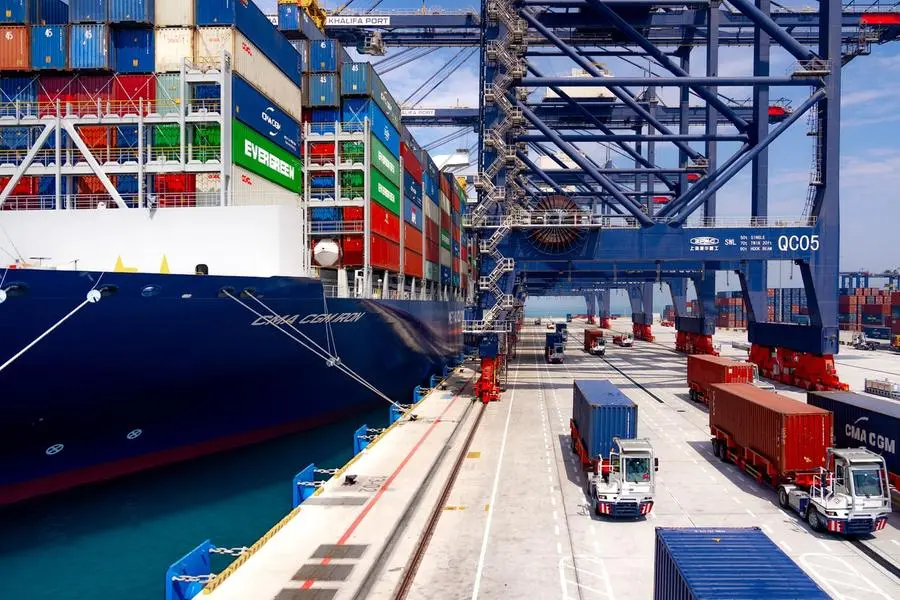
The United Arab Emirates deepens this pattern through a long-term logistics strategy. Port leases, security arrangements, and integrated commercial ecosystems embed local nodes into global networks that can outlast political cycles and reshape incentives on the ground. Infrastructure creates facts that law struggles to reverse, and it can pull local elites away from national bargaining frameworks.
Sudan shows the darker edge. In a multipolar environment, war can be sustained not only by weapons but by finance, ports, markets, and diplomatic cover. Allegations and counter-denials matter less here than the structural lesson: diversified dependency can stabilise violence rather than authority when external actors can plug into conflict economies.
Egypt adds a second constraint by tying Horn positioning to the Nile balance and its rivalry with Ethiopia. Port agreements, naval cooperation, and diplomatic engagement near Djibouti and Somalia function as strategic depth building. For Horn states, this creates a trap. Engagement is read through Nile politics, narrowing neutrality and raising the cost of misalignment.
Saudi Arabia approaches the Horn through regional risk management. Vision 2030 turns Red Sea stability into a Saudi core strategic interest, pulling Riyadh toward predictable de-escalation and making Horn disorder a proximate threat. Financial support, labour access, religious networks, and security coordination become instruments that reward coherence and penalise instability.
Taken together, these dynamics expose what is often missed. Africa is not navigating a loose marketplace of distant patrons. In the Red Sea theatre, it faces a dense ecosystem of middle powers deploying high-leverage tools that blend infrastructure, recognition, security partnerships, finance, and standards. In such conditions, the penalties for fragmentation are immediate and cumulative.
Western unease belongs inside this picture. For decades, Africa’s formal sovereignty coexisted with informal external management through aid, finance, migration controls, and security cooperation. What unsettles Western capitals now is the erosion of that managerial role at the same moment regional and non-Western actors have become more assertive. African demands for policy space in industrial strategy, digital governance, security partnerships, and diplomatic alignment are increasingly framed as drift rather than as normal state behaviour.
The posture of the White House reflects this. Alignment is rewarded, ambiguity is penalised, and institutions are used more openly as levers, from IMF programs and dollar clearing to sanctions designations and security assistance. Europe operates in parallel, particularly through migration compacts and financial conditionality. Agency that exercises outside established channels is recast as a risk.
From a power perspective, this is not surprising. International systems built on asymmetry resist rebalancing. What is new is not African assertiveness, but the narrowing gap between Africa’s structural importance and the West’s ability to dictate terms. The tension is less about Africa choosing the wrong partners than about Africa insisting on choosing at all.
This produces the central paradox. Africa’s leverage is rising, but so is the cost of disunity. Fragmentation is externally rewarded because it lowers bargaining power and simplifies management. In a transactional system, attention becomes an opportunity for coherent states and exposure for fragile ones.
Agency, then, is real but bounded. A choice exists, but it comes with asymmetric penalties. Errors carry higher costs because institutional buffers are limited. Sovereignty is not a posture. It is the cumulative ability to enforce contracts, stabilise revenue, govern security partnerships, control standards and data, and coordinate positions where interests are indivisible, even when doing so cuts against elite incentives and short-term discretion.
Africa’s task is not inclusion in an existing international order. It is authorship under constraint. The international system adjusts when incentives change. Africa’s advantage is that others increasingly need what the continent can withhold, sequence, or price. Converting that necessity into durable autonomy requires disciplined institutions at home, credible alternatives that reduce coercion, and clear red lines on ports, basing, data, and recognition.
Multipolarity makes this possible. It does not make it automatic. The question is no longer whether Africa matters. It is whether African states are willing to do the hard work that power demands.
© Copyright 2026 Nation Media Group. All Rights Reserved. Provided by SyndiGate Media Inc. (Syndigate.info).