PHOTO
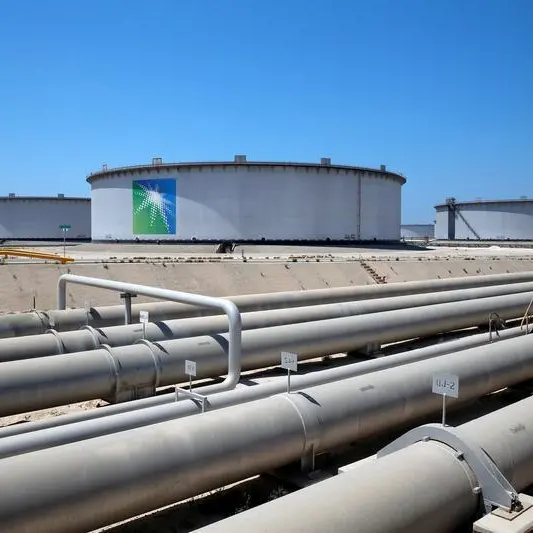
The United States imported an average of 490,000 barrels per day (bpd) of crude oil from the Gulf Cooperation Council (GCC) region - Bahrain, Iraq, Kuwait, Oman, Qatar, Saudi Arabia, and the United Arab Emirates (UAE), the U.S. Energy Information Administration (EIA) said in an analysis issued on Sunday.
This volume made up 8 percent of the 6.2 million bpd of U.S. crude oil imports during the year.
The EIA, which is the statistical and analytical agency within the U.S. Department of Energy, said 88 percent of crude oil imports from the GCC in 2025 were medium sour grades of crude oil (with API gravities between 22 degrees and 38 degrees and with sulphur contents of 0.5 percent or more).
These volumes totaled about 432,000 bpd, representing about 17 percent of all U.S. imports of medium sour crude grades.
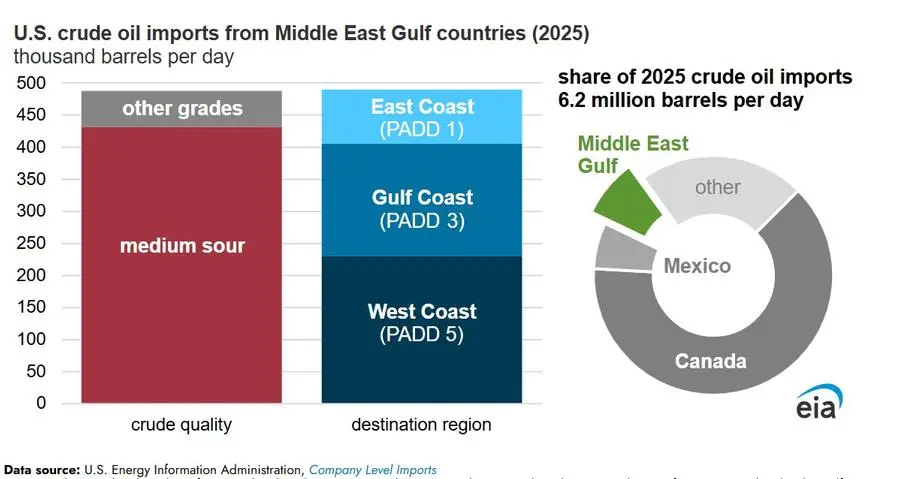
Crude oil from the GCC is processed by refineries on the West Coast and Gulf Coast, with the West Coast (PADD 5) accounting for 47 percent of all imports in 2025. Iraq accounted for more than half of these volumes (139,000 bpd), with the rest coming from Saudi Arabia (62,000 bpd) and the UAE (28,000 bpd).
EIA noted that limited domestic crude oil production and lack of pipeline access makes the West Coast more dependent on seaborne imports to meet refinery demand.
Pricing dynamics shift
The agency also highlighted changes in pricing dynamics for medium sour crude. Medium sour grades typically sell at a discount to light sweet grades as they are relatively harder to refine.
However, amid supply disruptions in the Middle East, medium sour Mars crude oil (a medium sour) is trading at a premium of $1 per barrel relative to Light Louisiana Sweet (LLS), reversing the trend seen in 2025 when the Mars traded at average $2 per barrel discount to LLS.
(Writing by SA Kader; Editing by Anoop Menon)
Subscribe to our Projects' PULSE newsletter that brings you trustworthy news, updates and insights on project activities, developments, and partnerships across sectors in the Middle East and Africa.