PHOTO
Algeria has launched a new international licensing round offering seven hydrocarbon exploration blocks, as it seeks to attract fresh investment into its upstream sector and build on momentum from the previous 2024 bid round.
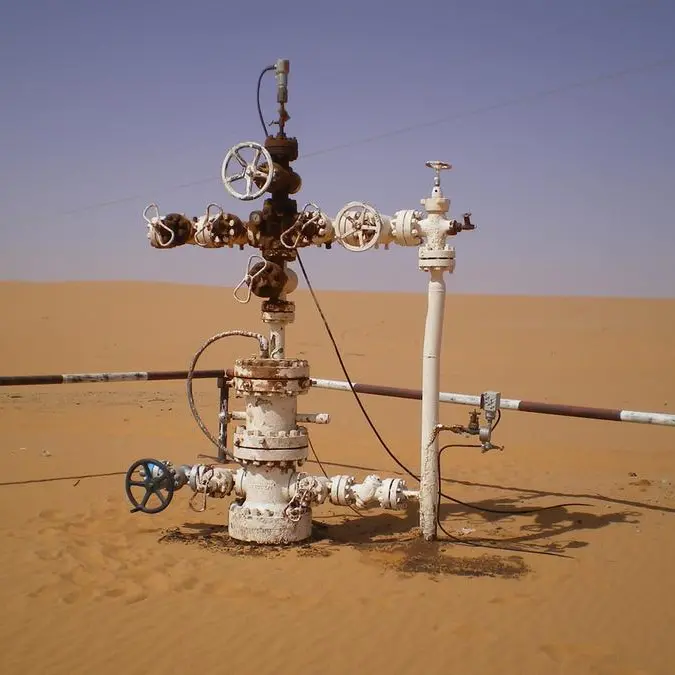
The 2026 round comprises seven onshore blocks: Illizi Centre 1 (Illizi basin), El M'Zaid North (Oued Mya basin), El Borma II (Berkine basin), East Bordj Omar Driss 1 (Illizi basin), El Hadjira III (Oued Mya basin), El Benoud East (Benoud trough basin), and Touggourt South (Amguid Berkin).
Release of tender documents, access to Virtual Data Rooms (VDR) and online technical presentations, clarification sessions will run from 1 June 2026, and end on 31 October 2026, according to report by Algeria Press Service.
EXALT, a partnership between ALNAFT and SLB, has been entrusted with the data licensing under the supervision and guidance of the Bid Round (BR) Committee.
The deadline for bid submissions is set for 26 November 2026 between 8:00 a.m. and 10:30 a.m. (Algeria time), with contract awards to be announced the same day (at 11:00 a.m. Algeria time). Successful bidders are expected to sign contracts with Algeria's national oil company Sonatrach by 31 January 2027.
Bids for the Est Bordj Omar Driss I perimeter shall be evaluated based on technical criteria only, while bids for the Illizi Centre I, El M’Zaid Nord, El Borma II, El Hadjira III, El Benoud Est and Touggourt Sud perimeters shall be evaluated based on both technical and financial criteria.
Contractual frameworks on offer include production sharing and participation agreements, depending on the block. In Participation Contracts, which is the standard royalty and taxation model, Sonatrach will hold a minimum stake of 51 percent with the rest held by the private partner/s.
The participation rate governs upstream financing, contractual rights and obligations, execution of commitments by the parties, tax and royalty payments and how ownership of the facility developed under the contract is shared. The hydrocarbons produced become the property of the contracting parties at the measurement point in proportion to their participation rates.
Importantly, the regulatory framework grants private partners access to transportation infrastructure based on transparent tariffs and equal access. Proximity to existing processing facilities and pipeline infrastructure is expected to lower development costs and accelerate time to production.
In Production Sharing Contracts (PSC), the private investor/contracrtor is entitled to a share of production for cost recovery of cost (cost oil) and remuneration (profit oil). The share of production is received at the delivery point chosen by the private party. The upstream financing is undertaken mainly by the private investor while Sonatrach has the option of participating in the same. The extracted hydrocarbon becomes the property of Sonatrach at the measurement point.
A third model is Risk Services Contract, which is provided for by the Hydrocarbon Law No. 19-13, but is not listed in the 2026 round. Under this model, all technical and financial risks during the exploration period are borne by the private investor/contractor, and all the hydrocarbons remain the property of Sonatrach at the measurement point. Instead of owning a share of the production, the contractor is paid a remuneration fee.
The exploration period is for seven years with two-year extension provision. The production phase is for 30 years minus the time spent on exploration, and with a provision for a 10-year extension. The end of the production phase is followed by abandonment and site restoration phase.
(Writing by Majda Muhsen; Editing by Anoop Menon)
Subscribe to our Projects' PULSE newsletter that brings you trustworthy news, updates and insights on project activities, developments, and partnerships across sectors in the Middle East and Africa.