PHOTO
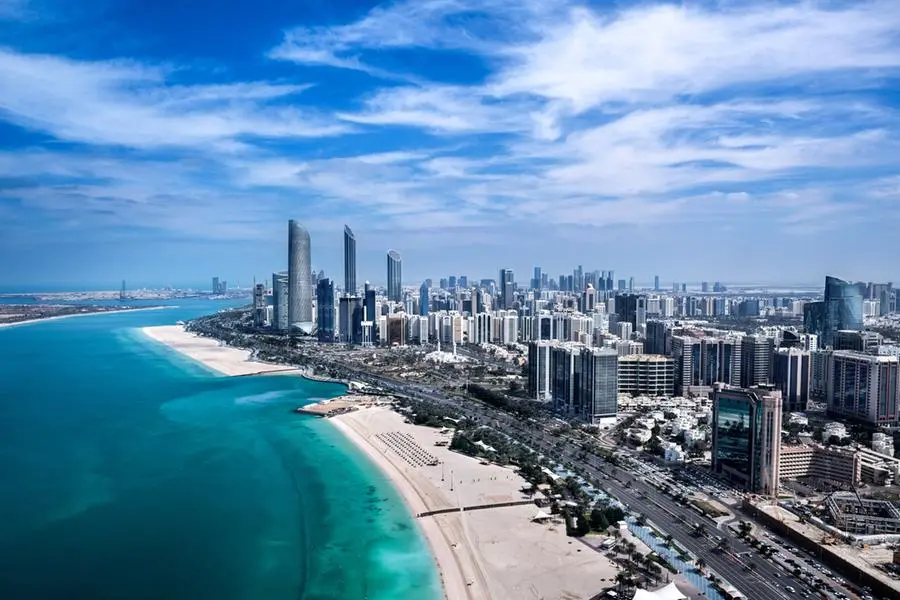
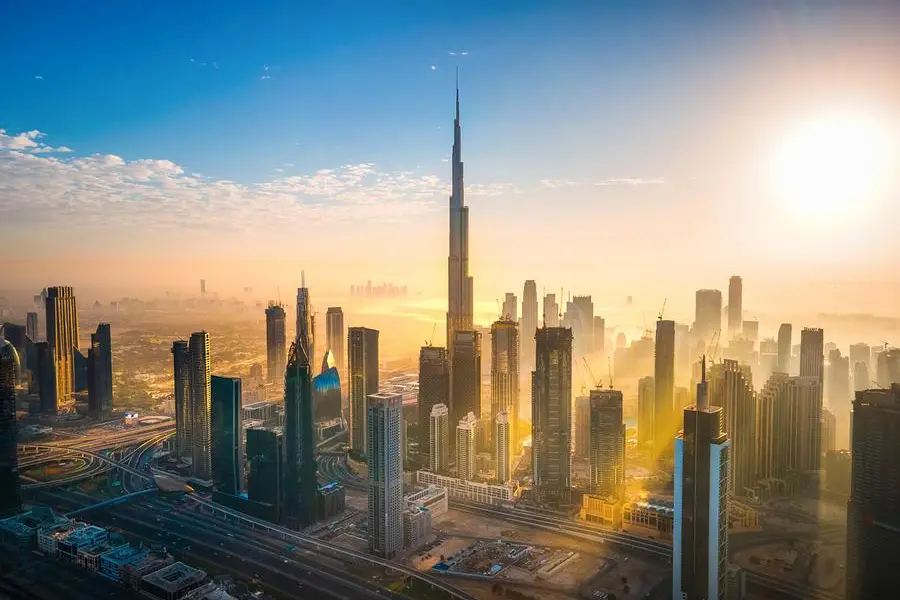
Dubai’s property market has spent the last few years doing what it does best: scaling rapidly, attracting global capital, and turning emerging neighborhoods into investable narratives. In 2026, the story begins to shift.
The next wave looks less like a sprint for square footage and more like a redesign of ownership itself, driven by regulation, tokenisation, Gen Z investor behaviour, and the growing dominance of digital investment platforms.
The momentum remains clear. In the first half of 2025 alone, Dubai recorded real estate transactions exceeding AED 431 billion, up 25 percent year on year. More than 1.3 million real estate transactions were recorded during this period, with investment value reaching AED 326 billion from nearly 95,000 investors, including 59,000 new market entrants. This level of activity matters, as scale tends to attract infrastructure, regulation, and product innovation.
Demand is not driven by capital alone. More and more people are relocating as well. In late August 2025, official population clock figures cited by local outlets show Dubai surpassing the four-million-resident mark, after more than doubling over the past 15 years.
This growth feeds rental demand, supports absorption, and keeps “yield math” relevant across more segments than just the luxury market.
Wealth migration is another tailwind that reshapes market behaviour. Henley’s 2025 report forecasts the UAE as the world’s leading destination for millionaire inflows, projecting 9,800 net incoming millionaires in 2025. These buyers compress time-to-liquidity in prime segments, and they influence what developers build next.
2026 - An interesting year
So where does 2026 get interesting? It’s the divergence year. Credit agencies and market watchers are already mapping the risk. Fitch expects a supply spike in 2026, with about 120,000 units planned for handover, versus 30,000 in 2024 and 90,000 in 2025, and flags the potential for a moderate correction tied to new deliveries.
To me, that does not read like a crash thesis. In fact, it points to a sorting mechanism. Micro-markets that rely on hype are likely to feel pressure, while locations anchored by infrastructure, employment density, and true end-user demand should continue to attract capital.
This is where investor behaviour starts to matter more than market headlines. As the market matures, confidence is increasingly reflected in how investors deploy capital over time. SmartCrowd data from 2025 shows the average ticket size has increased 2.5 times, showing a clear trend toward repetition and familiarity. Around 70 percent of investors hold more than one investment, averaging 3.5 investments per investor per year. The average time from registration to first investment is roughly one week, driven by streamlined verification processes and direct engagement with our Client Relations team. Our approach has always been deliberate: educate first, then invest.
The same intentional behaviour is evident in where investors choose to allocate capital, with area preferences telling a similar story. Our data also revealed that investors initially gravitated toward Jumeirah Village Circle (JVC) and Business Bay in 2025, driven by relative affordability and predictable rental returns. However, as supply visibility increases, JVC can be expected to cool as supply matures. Looking ahead, the 2026 bet is that demand is more likely to rotate rather than simply chase past performance.
Infrastructure and connectivity also play a key part in this rotation. Consider the Dubai Metro Blue Line, a 30 km expansion with 14 stations designed to connect high-growth districts, with a major public narrative around linking underserved areas and supporting planned urban growth. Areas touched by new connectivity often become “early consensus trades” for retail-style investors, especially the app-native crowd that thinks in themes, not addresses.
Tokenisation impact
Tokenisation is also accelerating this shift. The Dubai Land Department (DLD) has launched a real estate tokenisation pilot in collaboration with VARA and Dubai Future Foundation, positioning tokenised property as a formal, institutional path rather than a fringe experiment.
DLD and VARA have also signed an agreement aimed at linking the real estate registry to property tokenisation through an advanced governance system. The implication for 2026 is practical: shorter settlement cycles, clearer transparency on ownership records, and easier distribution of property exposure to smaller-ticket investors.
Gen Z and younger millennials are the quiet drivers behind all of this. When SmartCrowd started back in 2018, the bet we played and believed in is that real estate should not be a “40-plus game.” Today, that belief is visible in the data. Young professionals across the region are building financial discipline much earlier in their lives, shaped by digital investing, diversification culture, and the lessons of volatile asset classes. For many investors, property has become their stabiliser.
By the end of 2026, property ownership in the UAE will look less like a single milestone purchase and more like an ongoing portfolio decision. Platforms will win by making real estate intuitive. Regulation will win by making it safer. Tokenisation will win by making it faster. Investors will win by finally being able to participate on their own terms. Intentionally, early, and repeatedly.
(Adham Moshasha is Chief Growth Officer of SmartCrowd. Any opinions expressed in this article are the author's own)
Subscribe to our Projects' PULSE newsletter that brings you trustworthy news, updates and insights on project activities, developments, and partnerships across sectors in the Middle East and Africa.