PHOTO
The Expo City Dubai Foundation's Global Innovators Programme supports entrepreneurs developing solutions to global challenges, particularly in vulnerable communities across the Global South. Established from Expo 2020 Dubai's $100 million innovation commitment, the programme has supported more than 200 entrepreneurs from over 90 countries since 2016.
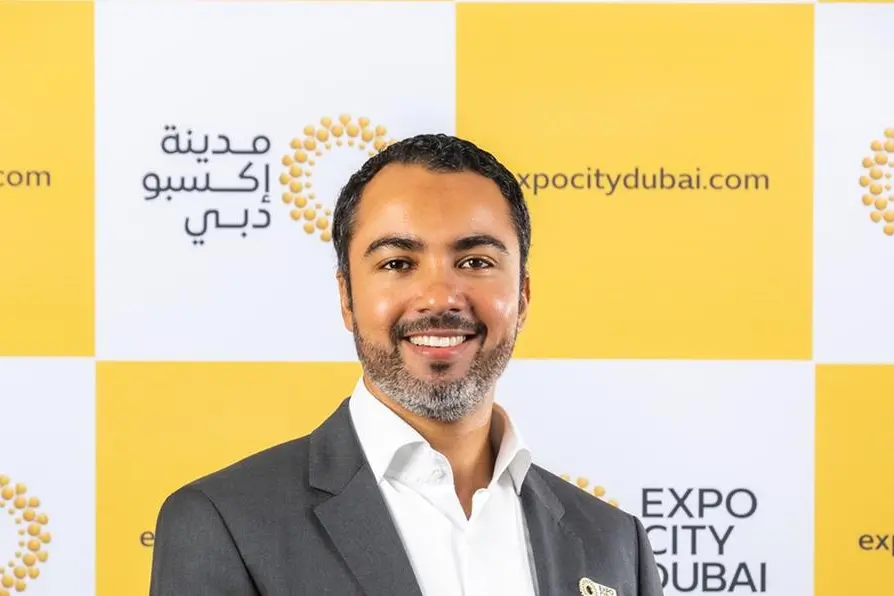
“Each grantee has been provided with up to $100,000 in funding, alongside technical guidance, mentorship support and access to networking opportunities,” said Yousuf Caires, Executive Director, Expo City Dubai Foundation in an interview with Zawya Projects.
The Foundation recently selected seven innovators from Nigeria, Peru, Morocco, India and Egypt as part of its eighth cohort, focusing on solutions to combat extreme heat.
“From heat-resilient construction panels made from previously unrecyclable plastic to long-lasting animal feed made from wheat straw waste, the projects each address a very real problem in vulnerable, and often rural, communities across the region,” said Caires.
“Our rigorous selection process covers multiple stages and is independently governed,” he noted.
The latest cohort drew more than 1,000 applications from 84 countries. These were assessed using an iterative scoring system against three core criteria - innovation, quality of submission and potential in humanitarian and marginalised settings. Additional considerations included geographic diversity, the breadth of solutions across thematic areas, and the representation of enterprises at different stages of maturity. Ten projects progressed to the live virtual pitch event, where an independent evaluation committee – with representatives from Emirates Airline and ENGIE – selected the seven winners.
Caires said: “The grantees were selected on the strength of their scalability, the credibility of their implementation plans and their applicability and potential impact in tackling extreme heat in vulnerable communities – and we look forward to playing a small part in helping them build momentum and grow their impact.
Excerpts from the interview:
Extreme heat is increasingly becoming a major economic and infrastructure challenge globally. Which sectors do you believe face the greatest risks?
Rising temperatures are exacerbating droughts, food insecurity and deteriorating conditions for health, water, shelter and energy for millions of people across the world. The Global South is particularly vulnerable due to its dependence on food production sectors that rely on stable weather patterns, water availability and soil health, such as agriculture and fishing.
The Foundation's mandate has always been to provide an enabling environment for problem-solvers from these regions, and we are delighted to support innovative projects addressing these challenging sectors. For example, Fuselage’s AI-driven drone solution provides crop monitoring and analytics to protect yields, while Visenleer’s ocean-waste-derived cooling shade protects coastal communities and essential services from extreme heat while supporting local fishers.
Several selected projects focus on alternative construction materials and passive cooling solutions. How important are low-carbon materials and passive cooling technologies in achieving regional net-zero and urban resilience targets?
The built environment sector currently generates roughly 40 per cent of global greenhouse gas (GHG) emissions, making low-carbon materials, passive cooling technologies and sustainable building practices foundational to net-zero ambitions.
In the region, reducing embodied carbon (the GHG emissions generated during the lifecycle of building materials) and using passive design to lower cooling loads are key to building urban resilience.
As part of our decarbonisation roadmap at Expo City Dubai, we’ve employed passive cooling such as huge, shaded canopies and reflective pavements to keep the city – and our staff, tenants and soon, residents – cool. We also recognise that the construction industry is vulnerable to heat, with high temperatures contributing to resource scarcity and increasing cooling costs.
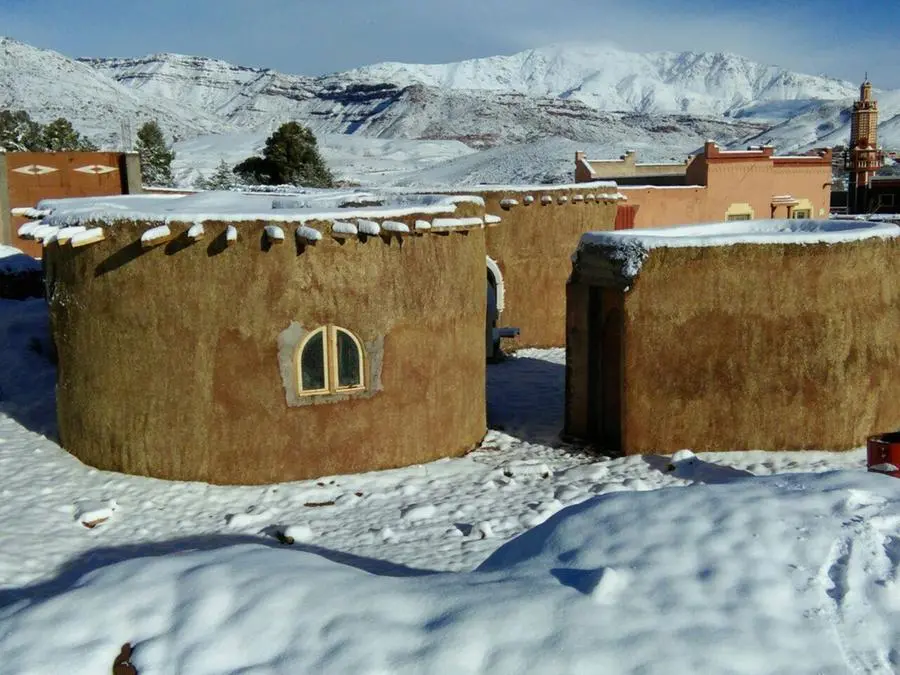
Offering an alternative to traditional, carbon-heavy construction materials, Ecodome Maroc – one of our innovators from Morocco, is championing sustainable bricks made from abundant local materials to offer accessible, affordable and climate-resilient housing solutions to communities in need.
This, like many of the great ideas we support, has the potential to be adapted and replicated in other markets, and we are continuously exploring new solutions that can work both in our environment and communities around the world.
Many climate innovations struggle to scale beyond pilot stage. What are the biggest barriers faced by innovators in the Global South?
Innovators in the Global South are frequently confronted with structural barriers, including limited access to capital, constrained networks and underdeveloped support ecosystems. But we know that, even when faced with a lack of funding and resources, community-centred solutions capable of protecting the most vulnerable populations are often shaped by those who need them most.
With the right support, we are confident that the selected projects can scale and leave a lasting impact on communities who are facing the compounding effects of extreme heat.
How does Expo City Dubai Foundation help bridge the gap between innovation, commercialisation and deployment?
The Foundation’s mission is to build a global network of like-minded organisations dedicated to finding solutions to global challenges. By providing funding, facilitating partnerships and encouraging knowledge exchange, it creates an enabling environment for social enterprises and problem-solvers.
Bridging the gap between innovation, commercialisation and deployment, each selected project is assigned a grant manager to support with milestone setting, progress monitoring and fund allocation, ultimately enabling solutions to get the support they need to reach their full potential.
With regard to Expo City Dubai’s Green Innovation District, what types of companies and technologies is the district aiming to attract?
Launched in October 2025, the Green Innovation District is a joint initiative between Expo City Dubai and the Ministry of Economy and Tourism. The District serves as a collaboration platform where environment-conscious businesses set up, innovate and grow, combining policy, research, education and community to deliver real-world impact.
It was launched in collaboration with four strategic partners, including Palmade – a UAE-based company transforming local date-palm waste into biodegradable cutlery, as well as Nestlé, Intesa Sanpaolo and Majra.
We will also soon launch the Green Licence, a pioneering product from Expo City Dubai and a key enabler of the Green Innovation District, specifically designed for companies with demonstrated ESG credentials who are committed to green, clean tech and circular economy activities.
(Reporting by SA Kader; Editing by Anoop Menon)
Subscribe to our Projects' PULSE newsletter that brings you trustworthy news, updates and insights on project activities, developments, and partnerships across sectors in the Middle East and Africa.