PHOTO
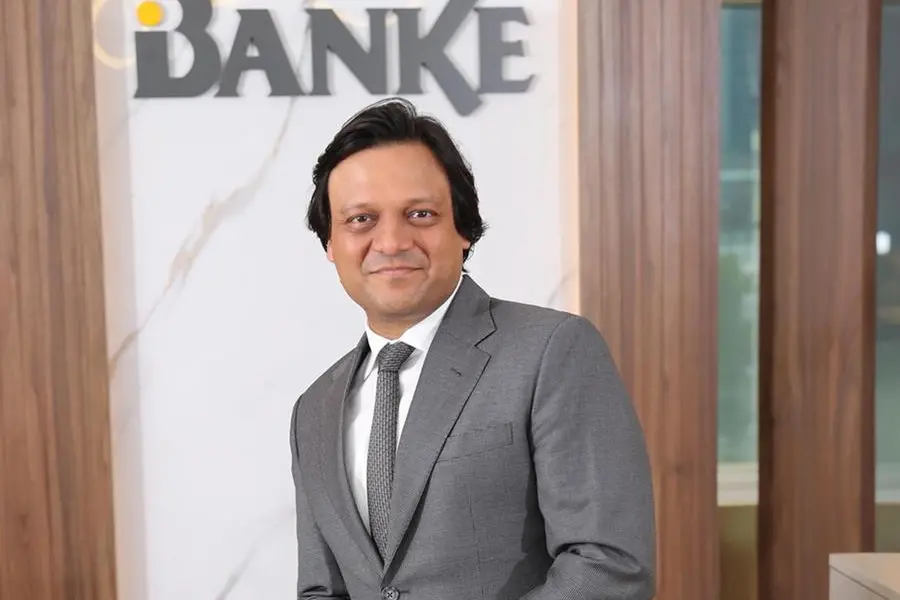
Developers with proven delivery track records and market-relevant product offerings are outperforming in sales velocity, Porush Jhunjhunwala, CEO of Banke International Properties, told Zawya Projects.
Although the off-plan market has become increasingly competitive amid a surge in new launches, demand remains robust for well-positioned projects, with buyers now becoming far more selective given the wide range of options available across the UAE, he said.
Jhunjhunwala advises clients to assess not just the project layout but also the developer’s historical completion timelines.
"Projects delivered within the committed time frame see stronger secondary market performance compared to delayed ones," he stated.
Interview excerpts
Given the number of new projects being launched in the UAE, how challenging is the off-plan sales market for developers?
The off-plan market today is competitive due to the large number of new projects, but demand remains strong for well-positioned projects. Across the UAE, particularly Dubai, Abu Dhabi, and Ras Al Khaimah, there is high-volume growth, along with segmentation within each market. With more choices available, buyers are far more selective than they were five years ago.
In Dubai, the pipeline is extensive, but interest remains strong in well-connected areas with infrastructure backing and credible developers. Jumeirah Village Circle (JVC) leads mid-market transaction activity due to affordability and rental demand, while Business Bay continues to attract premium buyers given its central location. Emerging areas such as Dubai South and Dubai Maritime City are also drawing off-plan interest due to long-term master planning and connectivity.
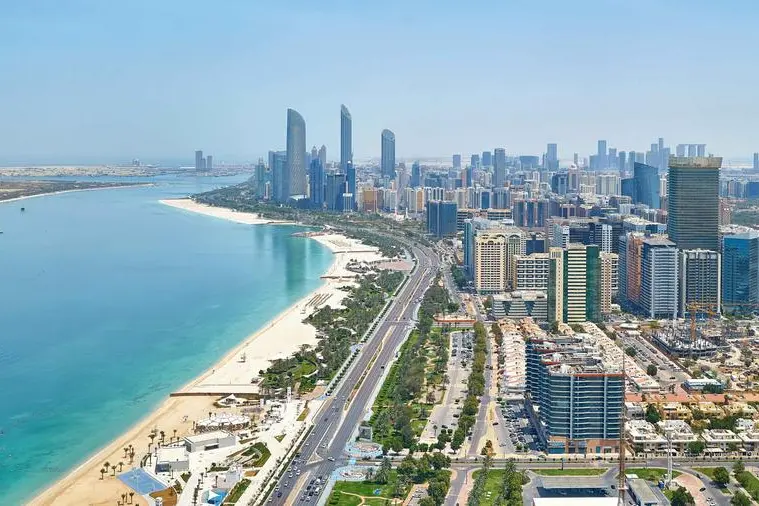
Abu Dhabi’s off-plan market is growing measurably, driven by lifestyle-driven master communities and government initiatives such as Abu Dhabi Real Estate Centre’s (ADREC) digital expression of interest system, which improves transparency and gives investors greater confidence when committing early to projects. Saadiyat Island and Yas Island are leading sales activity, with mid-market off-plan uptake also visible in areas such as Al Bahia. Meanwhile, Ras Al Khaimah’s growth is closely tied to tourism expansion and hospitality-led projects, with Al Marjan Island leading off-plan activity and offering rental yields of 8-9 per cent.
The challenge for developers today is more about differentiation and execution, especially as buyers have matured in their expectations around delivery certainty, quality and long-term value. Developers with consistent delivery track records and market-relevant product offerings are outperforming in sales velocity.
Is competition more intense in luxury and branded projects compared to affordable ones?
Luxury and branded residences have become a major focus, particularly in Dubai. Every developer aims to build something remarkable. However, the buyer pool in the ultra-high-end is still much smaller than mid-market demand. In contrast, the affordable and premium mid-market segments have stronger end-user demand, especially from residents relocating within the UAE or long-term visa holders upgrading their lifestyle.
The difference is that luxury projects compete on brand, exclusivity, and differentiation. While affordable projects compete on price, payment plans, and livability. In our experience, projects that meet the needs of real end-users tend to see more sustainable demand than those positioned purely around prestige. We are currently seeing stronger enquiry volumes in
We are currently seeing enquiry volumes split at approximately 30 per cent for luxury/branded projects and 70 per cent for mid-market and affordable segments, highlighting the deeper demand base in the mid-market compared to the more limited ultra-high-net-worth buyer pool, a pattern consistent with transaction activity across 2025.
How are developers managing flipping in their projects across the UAE?
Resales have always been part of off-plan markets globally, but developers today are more cautious about speculative turnover. Others charge administrative transfer fees or require NOC approvals before allowing resale.
How important is it for developers to deliver projects on time?
For investors, timely delivery is critical as they affect return on investment projections. For end-users, delays affect life decisions, such as relocation, schooling, financing, and rental transitions. In a mature market, the delivery track record becomes one of the strongest differentiators. Buyers today research developer history before committing and a developer who consistently delivers on time builds pricing power in future launches.
We advise clients to evaluate not just the project layout but also the developer’s previous completion timelines. We have observed that projects delivered within the committed time frame exhibit stronger secondary-market performance than delayed ones.
For example, in District One within Mohammed Bin Rashid City, phases delivered on schedule saw firmer resale pricing and stronger secondary demand than projects that faced delays, as timely handover reduced uncertainty and supported market confidence.
Do developers face payment issues when investors or end users buy off-plan?
Payment issues are not widespread, but they do exist, particularly when market sentiment shifts. Developers manage this through structured payment plans tied to construction milestones. This reduces default risk compared to earlier cycles, where payment schedules required larger upfront instalments.
Additionally, buyers today undergo stronger due diligence, particularly when bank financing is involved. In our experience, payment issues are more common among short-term speculative buyers during periods of price correction. However, in the current market environment, payment discipline has been relatively stable.
What three things are investors prioritising when it comes to buying off-plan in projects?
Location, firstly, with infrastructure backing, such as proximity to metro expansions, airports, and commercial hubs, is emerging as a key differentiator for investors. Secondly, the developer's track record, including delivery history, build quality, and brand credibility, has become equally critical in shaping investor decision-making, as buyers seek assurance and reliability in an increasingly competitive market. Lastly, payment flexibility, such as post-handover plans, low booking amounts, and structured instalments are also driving investor confidence by lowering entry barriers and reducing upfront capital requirements. Beyond these, investors are increasingly analysing projected rental yield and exit liquidity rather than purely capital appreciation narratives.
We are also seeing growing demand for projects aligned with lifestyle master communities rather than standalone buildings. Areas such as Dubai South, supported by an airport (Al Maktoum International Airport) and infrastructure expansion, Jumeirah Village Circle with its lifestyle amenities, and Saadiyat Island in Abu Dhabi, known for its cultural and resort appeal, continue to attract consistent demand, offering deeper end-user appeal and stronger long-term resale liquidity.
What financing options are developers offering to off-plan buyers, particularly to non-UAE residents?
Developers are offering extended post-handover payment plans, some stretching 3–5 years after completion. This reduces upfront capital requirements. For non-residents, traditional mortgage options are available but typically require higher down payments. Some developers partner with financial institutions to provide pre-approved mortgage facilities closer to handover.
There are also staggered payment structures such as 1 percent monthly plans, construction-linked instalments, and limited-time promotional waivers of DLD fees in Dubai. However, financing accessibility for non-residents still depends heavily on nationality and banking relationships.
How has the residency visa aided growth in the off-plan market?
The introduction and expansion of long-term residency visas, including the Golden Visa, have significantly strengthened end-user confidence. In Dubai, property owners with real estate valued at AED 2 million or more can apply for a 10-year Golden Visa, subject to eligibility criteria. This link between property and residency has shifted the mindset from short-term speculation to long-term relocation and lifestyle investment.
Buyers who previously would have invested purely for yield are now considering family relocation, education planning, and business establishment. We have observed that this has particularly impacted mid- to upper-tier off-plan segments where buyers view property as part of a broader life decision.
Can investors earn higher returns by investing in off-plan projects versus buying/selling ready units?
Off-plan can offer higher capital appreciation potential because entry prices are typically lower during launch phases. Investors benefit from price appreciation during construction. However, off-plan carries construction risk and timing risk. Ready units offer immediate rental income and clearer valuation benchmarks.
The choice depends on investor strategy. If the goal is capital growth over two to four years, off-plan can outperform. If the goal is steady rental yield, ready properties may provide more predictable returns.
Can you share the costs of selling off-plan properties by investors in the UAE?
Overall, upfront transaction costs for an off-plan purchase typically range between 4 per cent and 7 per cent of the property value, depending on the emirate and the structure of the deal.
In Dubai, the Land Department transfer fee is 4 percent of the property value, in addition to trustee and administrative fees. Meanwhile, in Abu Dhabi, the registration fee is approximately 2 percent, often split between buyer and seller, with additional mortgage and broker fees where applicable. In Ras Al Khaimah, transfer structures are generally similar, typically ranging between 2 per cent and 4 per cent, subject to local fee scales and developer processes.
Beyond these costs, buyers should also consider service charges upon completion and any mortgage-related fees if financing is involved.
(Reporting by P Deol; Editing by Anoop Menon)
Subscribe to our Projects' PULSE newsletter that brings you trustworthy news, updates and insights on project activities, developments, and partnerships across sectors in the Middle East and Africa.