PHOTO
The day was marked with activities at Wasit Wetland Centre and Kalba Bird of Prey Centre
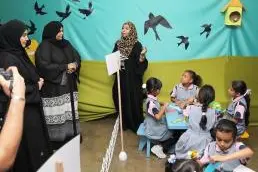
The Sharjah Environment and Protected Areas Authority (EPAA) organised two big celebrations yesterday, Monday, May 15 for International Migratory Bird Day. The first was held at Wasit Wetland Centre, under the theme “Their future is our future”, with participation from Arabia’s Wildlife Centre, Children Farm, and Al Andalus School, while the second was held at Kalba Bird of Prey Centre in the Eastern Region. Since the announcement of the International Migratory Bird Day in 2006 by the International Bird Protection Organisation, EPAA has been keen to celebrate this day in order to protect immigrant birds and highlight the need for conserving them.
HE Hana Saif Al Suwaidi, Chairperson of the Sharjah Environment and Protected Areas Authority (EPAA), said that the event of the International Migratory Bird Day at Wasit Wetland Centre has targeted the centre’s visitors, school and university students, and the staff of government departments and institutions and has received impressive interaction from both the public and visitors.
She pointed out that Wasit Wetland Centre was chosen as a venue for the celebration in order to highlight the importance of the centre as the key nature reserve in the Middle East and the most important rest place for migratory birds. In addition to the opening ceremony, the celebration included the reasons why Wasit Wetland Centre is suitable for immigrant birds, in addition to house gardens, and applied workshops.
Al Suwaidi highlighted the importance of awareness and the need to protect immigrant birds, counter the problems that endanger them, and establish environmental nature reserves in the habitats and places visited by immigrant birds: “Immigrant birds are a good indicator of how they interact with human beings and use nature around them. They keep moving throughout the continents and oceans of the world; the protection of these birds through the protection of their habitats is as important to human beings as to birds themselves.”
She explained that the immigration of birds is a seasonal journey made by flocks of birds over huge distances across the world: “The reasons for the migration of birds are diverse, but this does not preclude the need for theThe Sharjah Environment and Protected Areas Authority (EPAA) Celebrate International Migratory Bird Day
The day was marked with activities at Wasit Wetland Centre and Kalba Bird of Prey Centre
The Sharjah Environment and Protected Areas Authority (EPAA) organised two big celebrations yesterday, Monday, May XX, for International Migratory Bird Day. The first was held at Wasit Wetland Centre, under the theme “Their future is our future”, with participation from Arabia’s Wildlife Centre, Children Farm, and Al Andalus School, while the second was held at Kalba Bird of Prey Centre in the Eastern Region. Since the announcement of the International Migratory Bird Day in 2006 by the International Bird Protection Organisation, EPAA has been keen to celebrate this day in order to protect immigrant birds and highlight the need for conserving them.
HE Hana Saif Al Suwaidi, Chairperson of the Sharjah Environment and Protected Areas Authority (EPAA), said that the event of the International Migratory Bird Day at Wasit Wetland Centre has targeted the centre’s visitors, school and university students, and the staff of government departments and institutions and has received impressive interaction from both the public and visitors.
She pointed out that Wasit Wetland Centre was chosen as a venue for the celebration in order to highlight the importance of the centre as the key nature reserve in the Middle East and the most important rest place for migratory birds. In addition to the opening ceremony, the celebration included the reasons why Wasit Wetland Centre is suitable for immigrant birds, in addition to house gardens, and applied workshops, such as bird nest recycling and tree planting. The inauguration coincided with the return of the human bird from his immigration that began in 2016. He narrated the memories of the migratory birds event in 2016, the dangers he faced during his immigration and his arrival at rest places, such as nature reserves. This was followed by the arrival at the show hall where the globe was displayed and the paths of birds during their immigration were explained, along with the natural dangers that threaten them. An explanation was also provided in relation to how birds recognise safe habitats using preliminary assessment by using their eyesight.
Participants then moved to the house garden where they listened to the main factors that interfere with a bird’s choice of its rest place during its immigration and how to avoid or decrease them. Then they moved to the nature reserve and listened to the reasons why Wasit Nature Reserve was chosen as one of the most important reserves in Middle East, and why it is suitable for immigrant birds. After that, participants moved to the applied educational workshops for school students.
Al Suwaidi highlighted the importance of awareness and the need to protect immigrant birds, counter the problems that endanger them, and establish environmental nature reserves in the habitats and places visited by immigrant birds: “Immigrant birds are a good indicator of how they interact with human beings and use nature around them. They keep moving throughout the continents and oceans of the world; the protection of these birds through the protection of their habitats is as important to human beings as to birds themselves.”
She explained that the immigration of birds is a seasonal journey made by flocks of birds over huge distances across the world: “The reasons for the migration of birds are diverse, but this does not preclude the need for their protection. Thus, the celebration of the International Migratory Bird Day is an occasion for the dissemination of awareness regarding the importance of the conservation of biodiversity, providing support for the world campaign to protect immigrant birds and warning against threats and dangers facing them in their paths. Moreover, the future of these birds is important, not only for wildlife, but also for human society as well.”
© Press Release 2017