PHOTO
Doha, Qatar – In a collaboration led by teams from Pathology and the Genomics Core at Sidra Medicine, a study has been published about a novel point mutation in the SARS-CoV-2 genome that may affect COVID-19 testing by an FDA-approved test.
The study calls to action for testing centers worldwide to monitor mutations in the virus and ensure that testing methods are up to date, and based on multiple gene targets to avoid possible false-negative results.
The findings, which have been published in the Journal of Clinical Microbiology, highlight Sidra Medicine’s continuing role in supporting global efforts to tackle the pandemic and finding efficient, robust and safe testing methods for COVID-19.
Dr. Mohammad Rubayet Hasan, Clinical Molecular Microbiologist from the Pathology Department at Sidra Medicine, who led the study, said: “Since the beginning of the pandemic, worldwide laboratory testing to detect COVID-19 by real-time reverse transcription PCR (RT-qPCR) has played a central role in mitigating the spread of the virus. Soon after the viral genome sequences were available, several RT-qPCR assays were developed and made available by the World Health Organization for public use. However, the large-scale sustained person-to-person transmission of COVID-19 has led to many mutational events, some of which may affect the sensitivity and specificity of available PCR assays (tests).”
In order to diagnose COVID-19, most laboratories test for multiple gene targets. The Sidra Medicine team noticed samples from several unrelated patients were positive for only one viral gene target, which led them to suspect that some of the viruses circulating in Qatar may have this common mutation. By examining the genetic sequence of these viruses, they identified a new mutation in a commonly used gene target for COVID-19 detection and found that the same mutation was present in viruses recovered from epidemiologically unrelated individuals. They also noted that this particular mutation had not been reported by any other country.
“Current testing methods have played a central role in mitigating the virus's spread through early detection, tracing suspected cases, and screening at-risk populations. Therefore the implications of inaccurate test results could cause health authorities to lose track of COVID-19 positive individuals. Infected patients may unknowingly spread the virus, and the erroneous test results could affect infected individuals' medical care. Our study concludes that it is essential to ensure RT-qPCR methods used for COVID-19 testing are up to date and inclusive of such variants in case further mutations make the virus undetectable by existing molecular tests,” continued Dr. Hasan.
The specific mutation specified in the study originated at a viral gene utilized by a WHO-recommended assay developed by the Centers for Disease Control and Prevention (CDC) in the United States.
Dr. Patrick Tang, Division Chief of Microbiology at Sidra Medicine said: “This study is testament to the excellence of our pathology and research expertise at Sidra Medicine. We remain committed to tackling this pandemic. Our efforts are backed by ongoing innovation and a drive to continually enhance current methods. I am very proud our ground-breaking findings and research that will help the population in Qatar as well as the global community.”
“Our findings also highlighted the importance of testing for multiple SARS-CoV-2 gene targets as well as quickly investigating any unusual results with genetic sequencing. This is particularly in other countries where there is rampant spread of COVID-19. Fortunately, the prevalence of this novel SARS-CoV-2 mutation in Qatar is low, and it is unlikely that such viruses will escape detection locally because COVID-19 testing in Qatar is almost all based on detecting multiple viral targets,” continued Dr. Tang.
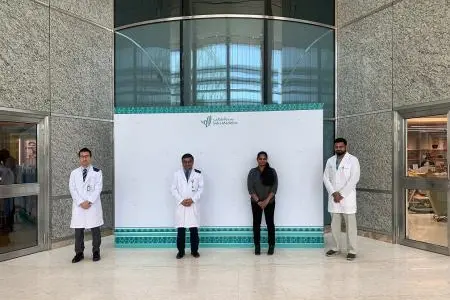
The Sidra Medicine team comprised Dr. Mohammad Rubayet Hasan, Clinical Molecular Microbiologist; Dr. Sathyavathi Sundararaju, Research Specialist; Dr. Chidambaram Manickam, Staff Scientist Associate; Mr. Faheem Mirza, Senior Technologist; Mr. Hamad Al-Hail, Technologist; Dr. Stephan Lorenz, Director, Genomics Core; and Dr. Patrick Tang, Division Chief of Microbiology.
The finding of the study have been published in the peer-reviewed Journal of Clinical Microbiology, published by the American Society of Microbiology: https://jcm.asm.org/content/early/2021/01/19/JCM.03278-20.long
© Press Release 2021
Disclaimer: The contents of this press release was provided from an external third party provider. This website is not responsible for, and does not control, such external content. This content is provided on an “as is” and “as available” basis and has not been edited in any way. Neither this website nor our affiliates guarantee the accuracy of or endorse the views or opinions expressed in this press release.
The press release is provided for informational purposes only. The content does not provide tax, legal or investment advice or opinion regarding the suitability, value or profitability of any particular security, portfolio or investment strategy. Neither this website nor our affiliates shall be liable for any errors or inaccuracies in the content, or for any actions taken by you in reliance thereon. You expressly agree that your use of the information within this article is at your sole risk.
To the fullest extent permitted by applicable law, this website, its parent company, its subsidiaries, its affiliates and the respective shareholders, directors, officers, employees, agents, advertisers, content providers and licensors will not be liable (jointly or severally) to you for any direct, indirect, consequential, special, incidental, punitive or exemplary damages, including without limitation, lost profits, lost savings and lost revenues, whether in negligence, tort, contract or any other theory of liability, even if the parties have been advised of the possibility or could have foreseen any such damages.