Scientific Paper on the Treatment of Produced Water Co-authored by Masdar Institute Faculty Appearing in January 2013 Issue
Abu Dhabi-UAE: 10 December, 2012- Oil producers and petroleum refineries especially in the GCC countries could save up to US$50 billion if membrane distillation techniques are applied to treatment of produced water, according to a paper co-authored by Masdar Institute faculty.
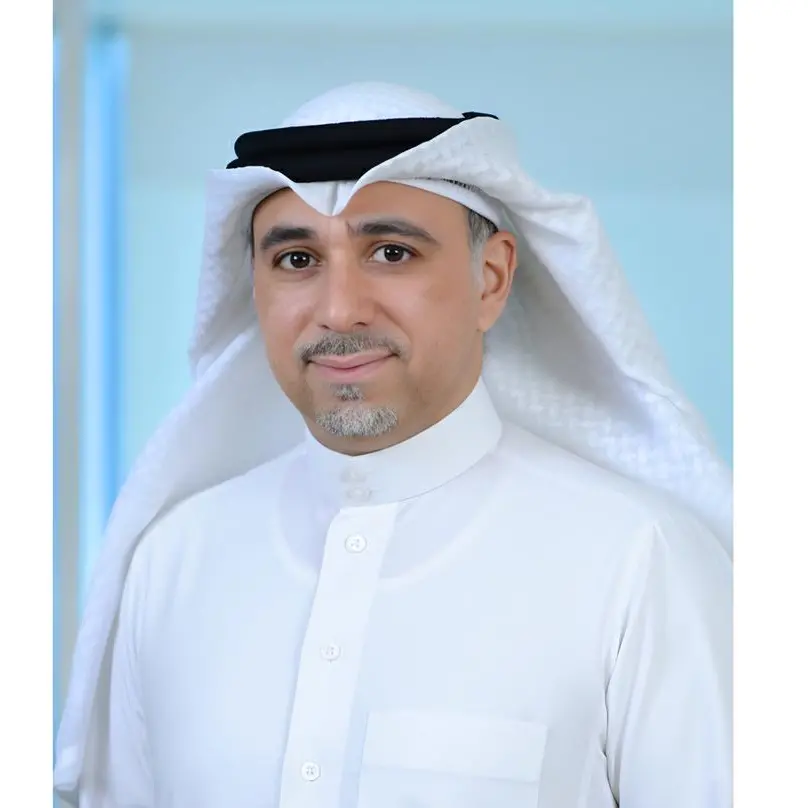
The scientific paper titled 'Produced water treatment: Application of Air Gap Membrane Distillation' is co-authored by Dr. Nidal Hilal, Professor in Nano-membranology and Water Technologies, Masdar Institute of Science and Technology, Dr. Naif Darwish, and Abdullah Alkhudhiri, a student working under Dr Hilal's supervision.
The paper on 'membrane distillation as a new technique for treating produced water from oil industry' has been accepted for publication in the respected international journal 'Desalination' and will be appearing on 15 January 2013, Volume 309. The paper adds that the new technique can also be applied in conjunction with renewable energy such as solar. Membrane distillation or MD, a thermally-driven separation process, is a promising technology for desalting highly saline waters and offers several advantages over other techniques.
Dr. Nidal Hilal said: "In all GCC countries including the UAE, treatment of produced water is a huge challenge faced by the petroleum industry. Current options include discharge into the environment, or re-injection into disposal wells. But environmental regulations strictly govern such measures. Also, exorbitant cost of available technologies and their low efficiency levels plague the scenario. The membrane distillation offers the right solution."
Produced water constitutes one of the largest wastewater streams generated in the petroleum industry where minimum of three barrels of produced water comes out with every barrel of oil, which totaled more than 145 billion barrels in 2011 alone. The total dissolved solids (TDS) can reach up to 200,000 ppm which is around five times the TDS in seawater.
Additionally, current practices of produced water management in the petroleum industry do not ensure even a fraction of the extent and the rate of natural water replenishment required to balance the colossal water consumption by the industry. While water resource sustainability concerns suggest maximal reuse and recycling of water, traditional methods of produced water management are largely inadequate in treating produced water up to discharge and reuse standards.
Membrane distillation (MD) requires significantly lower operating temperatures and therefore lower energy requirements. Since non-volatile solutes cannot be transported across the membrane barrier in an MD system, it is capable of achieving near 100% rejection of dissolved salts and minerals.
Dr. Nidal Hilal is additionally involved in other desalination-related research projects. Holder of a PhD in Chemical Engineering from Swansea University in the UK and a DSc in Nanotechnology and membrane separation from the University of Wales in the UK, Dr Hilal, is also entrusted with the responsibility of working with the faculty to establish a Centre of Excellence for Water Technologies at Masdar Institute. He is also the current Editor-in-Chief of 'Desalination', an international journal on the science and technology of desalting and water purification. Dr. Hilal recently published two major books titled 'Atomic Force Microscopy in Process Engineering: An Introduction to AFM for Improved Processes and Products' by Elsevier and "Membrane Modification: Technology and Applications" by CRC Press.
Serving as a key pillar of innovation and human capital, Masdar Institute remains fundamental to Masdar's core objectives of developing Abu Dhabi's knowledge economy and finding solutions to humanity's toughest challenges such as climate change.
Established as an on-going collaboration with the Massachusetts Institute of Technology (MIT), Masdar Institute integrates theory and practice to incubate a culture of innovation and entrepreneurship, working to develop the critical thinkers and leaders of tomorrow. With its world-class faculty and top-tier students, the Institute is committed to finding solutions to the challenges of clean energy and climate change through education and research.
About Masdar Institute
Masdar Institute of Science and Technology (Masdar Institute) was established by the government of Abu Dhabi as a not-for-profit, private graduate university to develop indigenous R&D capacity in Abu Dhabi addressing issues of importance to the region.
In collaboration with the Massachusetts Institute of Technology (MIT), Masdar Institute has developed an academic and research platform that articulates its mission and vision according to critical energy and sustainability challenges.
An important characteristic of Masdar Institute is its focus on complex real-world problems that require a multidisciplinary approach for the development of solutions from an integrated technology, systems and policy perspective. This multi-interdisciplinary and integrated approach is supported by the structure of its academic programs and by the emphasis placed on engaging external partners from industry, government, and other academic institutions in collaborative activities.
Masdar Institute offers degrees in:
- MSc Engineering Systems and Management
- MSc Computing and Information Science
- MSc Materials Science and Engineering
- MSc Mechanical Engineering
- MSc Water and Environmental Engineering
- MSc Microsystems Engineering
- MSc Electrical Power Engineering
- MSc Chemical Engineering
Please visit our website http://www.masdar.ac.ae/
For more information contact:
Name: Bader Al Zarei
Communications Manager
Public Affairs Department
Email: balzarei@masdar.ac.ae
Phone: +971 02 8109372
© Press Release 2012